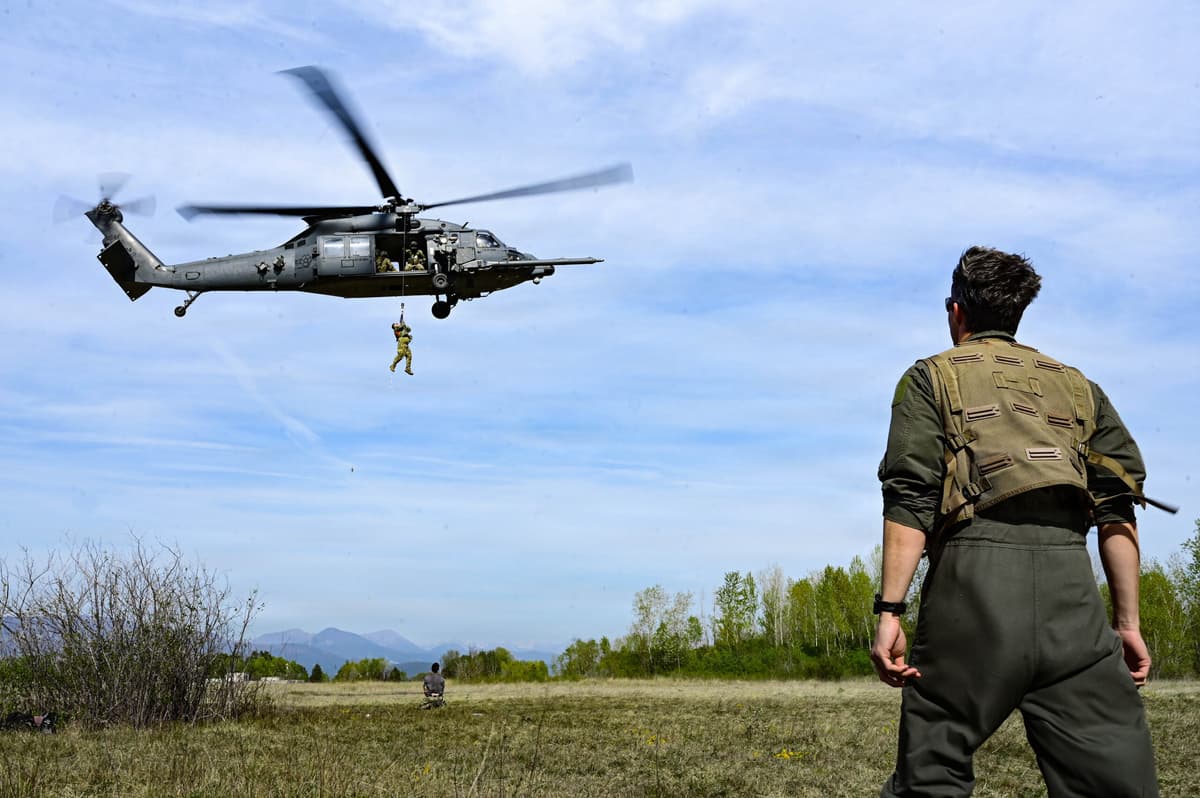
New Laser Defense, VIP Transport Mission in the Works for HH-60W
Companies Mentioned
Why It Matters
Enhanced laser defenses will improve crew survivability and mission success against modern missile threats, while the VIP conversion expands the HH‑60W’s utility and reduces costs compared with acquiring a separate platform.
Key Takeaways
- •Air Force seeks $200M for HH‑60W upgrades
- •Laser jammer integration aims to counter shoulder‑fired rockets
- •26 Whiskeys to be reconfigured for VIP transport
- •First two VIP mods funded with $24M R&D
- •Total VIP conversion projected at $360M
Pulse Analysis
The HH‑60W Jolly Green II, the Air Force’s newest combat‑search‑and‑rescue (CSAR) helicopter, has proven its worth in high‑risk missions, most recently rescuing downed pilots in Iran after an F‑15E was hit by a shoulder‑fired rocket. That encounter exposed a critical vulnerability: the platform currently lacks an advanced infrared countermeasure (IRCM) system, leaving it exposed to heat‑seeking missiles. As the Air Force refines its CSAR doctrine, integrating a laser‑based jammer is seen as essential to safeguard both crew and aircraft in contested environments.
To address the gap, the Air Force Life Cycle Management Center issued a sources‑sought notice for two proven IRCM solutions: Northrop Grumman’s Common Infrared Countermeasure (CI‑CM) and Leonardo DRS’s Distributed Aperture Infrared Countermeasure (DAIRCM). Both employ quantum‑cascading lasers that mimic the helicopter’s exhaust signature, creating false targets that confuse missile seekers. CI‑CM boasts extensive service on Army and Marine platforms, while DAIRCM has already flown on legacy HH‑60 Pave Hawks. Selecting one of these systems will involve integration testing, software updates, and fleet‑wide certification, a process funded by the $87.9 million RDT&E allocation.
Beyond survivability, the Air Force is repurposing 26 HH‑60Ws for a VIP transport role traditionally filled by UH‑1 Hueys and the planned MH‑139s. By retrofitting the cabin for 11 passengers while retaining rescue equipment, the service gains a flexible, cost‑effective platform for senior‑leadership movement in the National Capital Region. The first two conversions receive $24 million in R&D funding, with a total program outlay of about $360 million. This dual‑mission strategy not only stretches the value of each airframe but also aligns with broader defense‑budget pressures, ensuring the HH‑60W remains a versatile asset for years to come.
New Laser Defense, VIP Transport Mission in the Works for HH-60W
Comments
Want to join the conversation?
Loading comments...