New Zealand Buys Tri-Service Uncrewed Kit From Syos Aerospace
•March 3, 2026
0
Why It Matters
The deal signals NZDF’s accelerating shift toward autonomous, multi‑domain operations, enhancing flexibility while containing costs. It also reflects a broader regional trend of integrating unmanned systems into conventional forces.
Key Takeaways
- •NZDF contracts Syos for air, land, sea drones.
- •Platforms include SG400 ground, SM300 surface, SA2/SA7 UAVs.
- •SA7 UAV capable of carrying explosive payloads.
- •Uncrewed kit aims to boost ISR and logistics.
- •Contract value undisclosed, emphasizing cost‑effective procurement.
Pulse Analysis
New Zealand’s defence posture is evolving rapidly as budget pressures push the NZDF toward affordable, high‑impact technologies. Uncrewed systems offer a way to extend surveillance reach and operational tempo without the personnel costs of traditional platforms. By selecting a mixed‑domain kit from Syos Aerospace, the force can field interoperable assets that share data links and command structures, streamlining training and maintenance while preserving strategic agility in the Pacific theater.
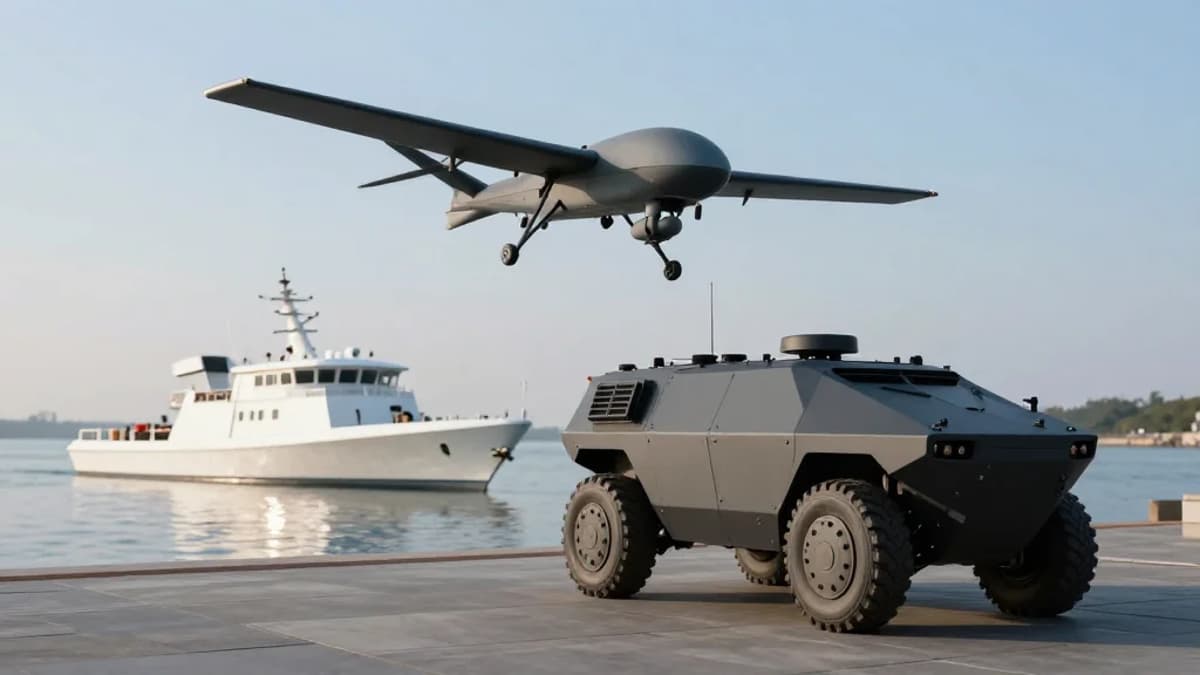
The four platforms in the Syos contract each address a distinct capability gap. The SG400 ground vehicle provides rugged, low‑profile transport for supplies and forward observers, while the SM300 surface vessel adds persistent maritime patrol and quick‑reaction interdiction. The SA2 UAV delivers high‑resolution ISR for land and sea, and the SA7, equipped for payload delivery, introduces a limited strike option without committing manned aircraft. Together, these systems enable joint‑force planners to conduct layered missions—logistics, surveillance, and targeted effects—under a unified command architecture.
Regionally, the acquisition aligns New Zealand with allies such as Australia and the United States, which are also expanding unmanned capabilities. It signals to potential adversaries that the NZDF can project presence across its extensive maritime domain despite a modest defence budget. For the defence industry, the contract showcases Syos Aerospace’s ability to deliver integrated, tri‑service solutions, potentially opening doors to further Pacific market opportunities as neighbouring nations seek similar cost‑effective autonomy.
New Zealand buys tri-service uncrewed kit from Syos Aerospace
0
Comments
Want to join the conversation?
Loading comments...