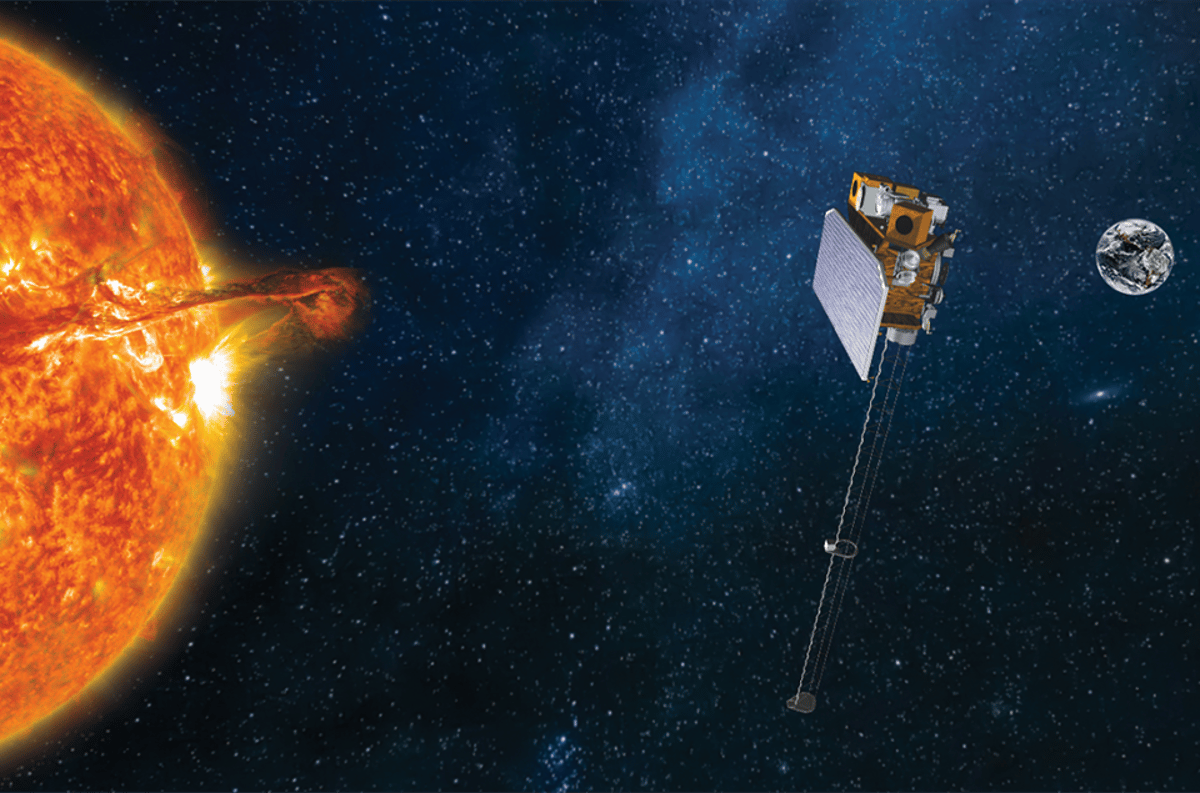
NOAA Activates First Dedicated U.S. Space Weather Satellite One Million Miles From Earth
Why It Matters
By delivering near‑real‑time space‑weather data, SOLAR‑1 gives utilities, satellite operators and mission planners critical lead time to protect assets, reducing economic and safety risks from solar storms.
Key Takeaways
- •SOLAR-1 became first U.S. dedicated space‑weather satellite at L1
- •Provides CME images within 30 minutes, vs. up to eight hours previously
- •In‑situ solar wind data delivered to forecasters in five minutes
- •Enhances protection for power grids, satellites, aviation, and crewed missions
- •Data streamed continuously, publicly available via NOAA’s SWPC website
Pulse Analysis
The Sun’s volatile output has long threatened the modern, technology‑dependent economy, yet reliable observations have been limited to aging research assets such as ESA‑NASA’s SOHO. NOAA’s launch of the Space Weather Observations at L1 to Advance Readiness‑1, or SOLAR‑1, marks the first U.S. satellite built solely for continuous operational monitoring from the Sun‑Earth Lagrange point. Positioned a million miles sunward, the spacecraft fills a critical gap in the nation’s early‑warning architecture, delivering real‑time measurements that underpin forecasts of solar storms.
SOLAR‑1’s payload includes a high‑resolution coronagraph, a solar‑wind plasma sensor, a supra‑thermal ion sensor and a magnetometer, all calibrated for rapid data turnaround. The coronagraph now sends coronal‑mass‑ejection imagery to forecasters within 30 minutes, a stark improvement over the eight‑hour latency of legacy instruments. In‑situ plasma and magnetic field readings reach the Space Weather Prediction Center in just five minutes, enabling more precise modeling of geomagnetic disturbances. This speed translates into longer decision windows for grid operators, satellite controllers and aviation managers facing an incoming solar event.
The operational capability of SOLAR‑1 strengthens national resilience as reliance on satellite‑based navigation, communications and power‑grid control intensifies. By delivering actionable space‑weather alerts, the system supports critical missions such as NASA’s Artemis crew flights and protects high‑value assets in orbit. NOAA plans additional L1 platforms to ensure redundancy and continuous coverage, signaling a long‑term commitment to space‑weather readiness. For industry and policymakers, the faster, public data stream offers a tangible tool to mitigate economic losses from geomagnetic storms. The agency estimates that early warnings could shave billions off potential outage costs.
NOAA Activates First Dedicated U.S. Space Weather Satellite One Million Miles from Earth
Comments
Want to join the conversation?
Loading comments...