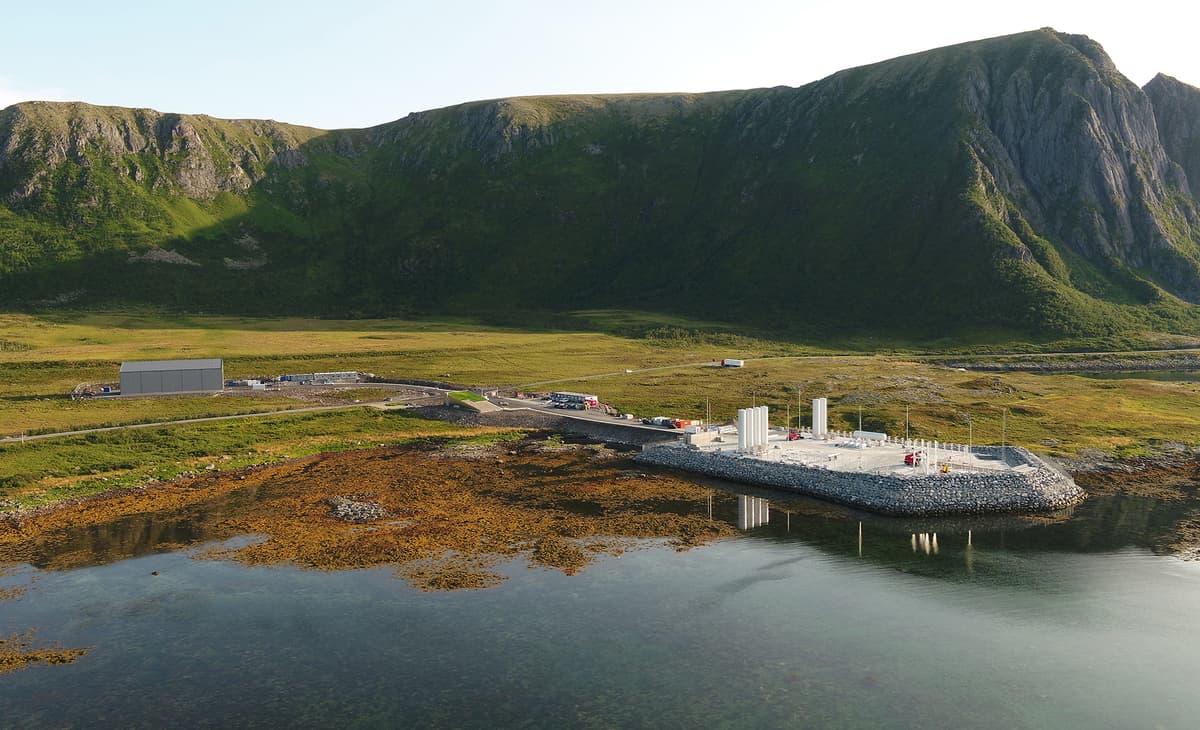
Northern Norway Is Ready to Launch. EU Space Regulation — and Its New Arctic Policy – Is Not.
Companies Mentioned
Why It Matters
Integrating Andøya would give the EU autonomous polar‑orbit launch capability, strengthening security, climate monitoring and reducing reliance on foreign launch providers.
Key Takeaways
- •EU Arctic policy update must address Andøya spaceport integration.
- •Current IRIS² rules treat Norway as third‑country, limiting standard launches.
- •Andøya enables polar launches, cutting Europe’s dependence on non‑EU sites.
- •EU space budget totals $24 bn; Norway contributes $315 m.
Pulse Analysis
The European Commission’s upcoming Arctic policy revision marks a strategic pivot toward security, defence and digital connectivity in a region traditionally framed by climate and sustainability concerns. By explicitly incorporating space infrastructure, the policy could align with the EU’s broader IRIS² Secure Connectivity programme, which seeks resilient, high‑latitude communication links. Recognising launch sites as part of that connectivity matrix would not only bolster Arctic surveillance capabilities but also create a regulatory pathway for satellite constellations that support both civilian and defence applications.
Andøya Spaceport has become the focal point of a nascent Nordic space corridor. The March 13 2026 ceremony, attended by Norway’s prime minister and Germany’s chancellor, underscored the site’s readiness to host Isar Aerospace’s Spectrum missions, making it the first mainland European launchpad for low‑Earth‑orbit payloads. Financially, the initiative is underpinned by a $24 bn EU space budget for 2026‑2028, with Norway committing roughly $315 m and Germany earmarking $38 bn in defence‑related space spending through 2030. Yet the existing IRIS² rulebook confines launches to EU member states, relegating Andøya to occasional “exceptional case” status despite its strategic advantages for polar and sun‑synchronous orbits.
To translate political goodwill into operational reality, the EU must amend IRIS² to treat qualified EEA partners like Norway as eligible launch hosts under defined security safeguards. Such a change would embed Andøya within Europe’s critical launch architecture, ensuring reliable access to high‑latitude orbits essential for Earth‑observation, maritime domain awareness and military reconnaissance. For the European space industry, this regulatory shift could unlock new market opportunities, reduce dependence on non‑EU providers, and reinforce the EU’s strategic autonomy in the increasingly contested Arctic domain.
Northern Norway is ready to launch. EU Space Regulation — and its new Arctic policy – is not.
Comments
Want to join the conversation?
Loading comments...