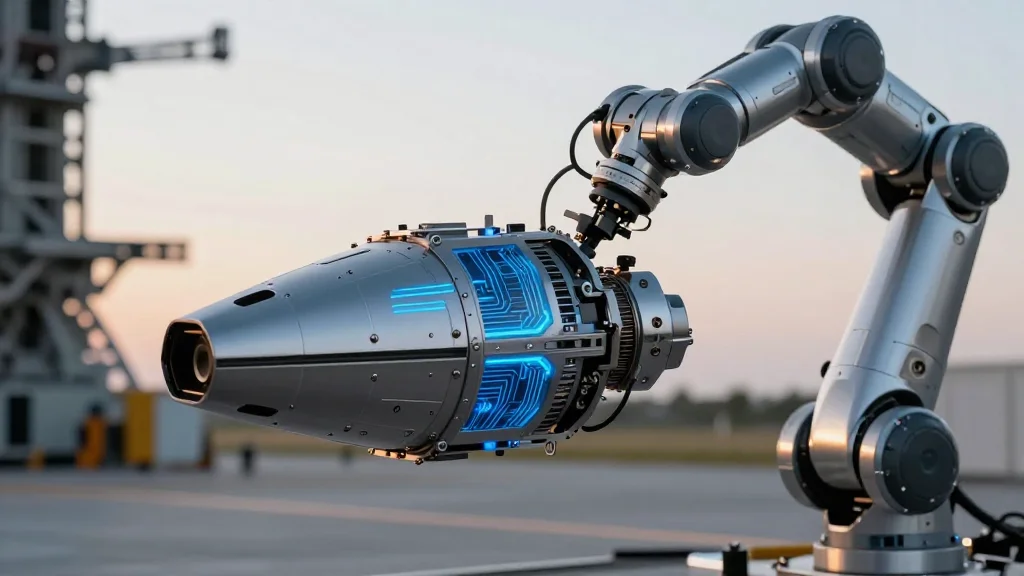
Northrop Grumman Slashes Spacecraft Design Time to Hours with AI

Companies Mentioned
Why It Matters
Accelerating spacecraft design from years to hours could fundamentally alter the economics of space exploration. Shorter cycles lower development overhead, enable more frequent launch windows, and allow operators to respond swiftly to emerging market demands such as megaconstellations and on‑orbit servicing. Moreover, the AI‑driven simulation capability reduces reliance on costly physical testing, potentially democratizing access to high‑performance space hardware for smaller firms and new entrants. The breakthrough also signals a shift in how aerospace firms view software as a strategic asset. By embedding AI across the product lifecycle, Northrop Grumman is positioning itself at the nexus of hardware and data science, a competitive advantage that could reshape procurement decisions and partnership structures throughout the defense and commercial space sectors.
Key Takeaways
- •Northrop Grumman claims AI cuts spacecraft design cycles from years to hours, a 100× speedup.
- •AI model predicts thruster plume impingement in seconds rather than days.
- •Collaboration involves Flexcompute’s NVIDIA‑powered platform and NVIDIA PhysicsNeMo.
- •Potential cost reductions and faster time‑to‑orbit for satellite servicing and lunar missions.
- •Future demonstrations planned for a lunar‑gateway module and a 2027 communications satellite.
Pulse Analysis
The AI‑driven redesign announced by Northrop Grumman is more than a technical curiosity; it is a strategic lever that could redefine the pace of space hardware development. Historically, aerospace has been constrained by long, iterative engineering cycles, where a single design change could cascade into months of re‑analysis and testing. By collapsing that timeline to hours, Northrop is effectively turning a traditionally capital‑intensive, schedule‑driven market into one where agility becomes a primary differentiator.
From a market perspective, the move aligns with the broader trend of software‑centric value creation in aerospace. Companies like SpaceX have already demonstrated how rapid iteration can lower launch costs and accelerate innovation. Northrop’s partnership with Flexcompute and NVIDIA suggests a convergence of defense‑grade engineering rigor with commercial‑grade AI scalability. If the technology scales beyond plume‑impingement to other subsystems—thermal control, structural analysis, or guidance algorithms—the cumulative effect could be a new generation of “software‑first” spacecraft that are cheaper to design, test, and upgrade in orbit.
However, the promise comes with challenges. Validation of AI predictions against real‑world flight data will be essential to gain regulator and customer trust, especially for high‑value defense programs. Moreover, the competitive response is likely to be swift; legacy contractors such as Boeing and Lockheed Martin have already invested heavily in AI research. The next few years will reveal whether Northrop’s early lead translates into sustained market share or whether the AI advantage becomes a commodity as the ecosystem matures.
Northrop Grumman slashes spacecraft design time to hours with AI
Comments
Want to join the conversation?
Loading comments...