NRL to Unveil Sovereign Space Tech at 41st Space Symposium

Why It Matters
The NRL’s push for sovereign‑space capabilities directly addresses the United States’ need for resilient, autonomous space‑domain awareness in an era of crowded orbits and near‑peer competition. By moving robotic servicing from research to fielded capability, the Navy can extend the lifespan of critical satellites, reduce launch costs, and mitigate the risk of debris‑induced failures. Beyond national security, the technology pipeline highlighted at the symposium—solar monitoring, debris detection, and high‑energy astrophysics—has commercial spill‑over potential. Private operators stand to benefit from lower insurance premiums and longer asset lifecycles, while the broader aerospace ecosystem may see a surge in contracts for on‑orbit servicing, sensor integration, and data analytics.
Key Takeaways
- •NRL will showcase three experimental payloads—LARADO, GOSAS, GARI‑1C—launched on April 7 aboard STP‑S29A.
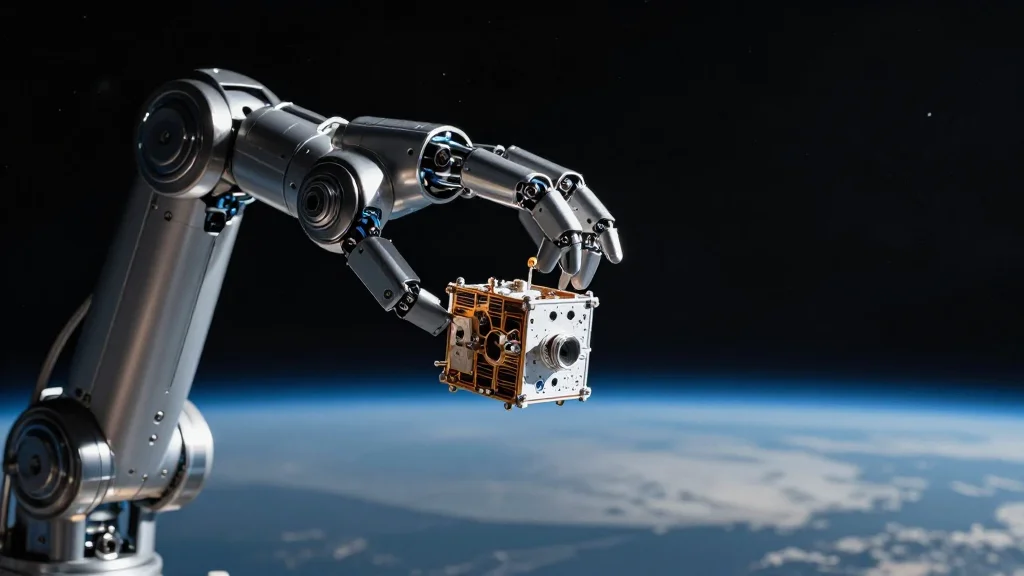
- •Bernard Kelm will lead a panel on April 16 discussing the transition of robotic satellite servicing to a fielded capability.
- •Dr. Bruce Danly highlighted NRL’s century‑long role in space innovation, from GPS to intelligence satellites.
- •Spring 2026 will see the operational debut of CCOR‑2 on NOAA’s SWFO‑L1 observatory.
- •COSI telescope moves to final integration for a 2027 launch to map the soft gamma‑ray sky.
Pulse Analysis
NRL’s emphasis on sovereign‑space technologies reflects a broader shift in U.S. defense strategy toward self‑reliance in orbit. Historically, the Navy has been a pioneer—GPS, early reconnaissance satellites—but the current focus on autonomous servicing marks a qualitative leap. The ability to repair or reposition assets in situ reduces the strategic vulnerability of a constellation that is otherwise dependent on launch windows and ground‑based maintenance.
Commercially, the Navy’s roadmap could catalyze a nascent market for on‑orbit servicing. Companies like Northrop Grumman and SpaceX have hinted at servicing ambitions, yet a clear, government‑backed use case provides the validation needed for large‑scale investment. If the CCOR‑2 and COSI programs deliver on performance promises, they will serve as demonstrators that de‑risk the technology for private firms, potentially accelerating the entry of new players.
Looking forward, the success of the April 16 panel will likely influence the upcoming FY2027 defense appropriations. A favorable assessment could unlock additional funding for robotic servicing fleets, while any technical setbacks might prompt a recalibration toward more incremental upgrades. Either way, NRL’s showcase signals that autonomous, resilient space infrastructure is moving from concept to cornerstone of U.S. space security.
NRL to Unveil Sovereign Space Tech at 41st Space Symposium
Comments
Want to join the conversation?
Loading comments...