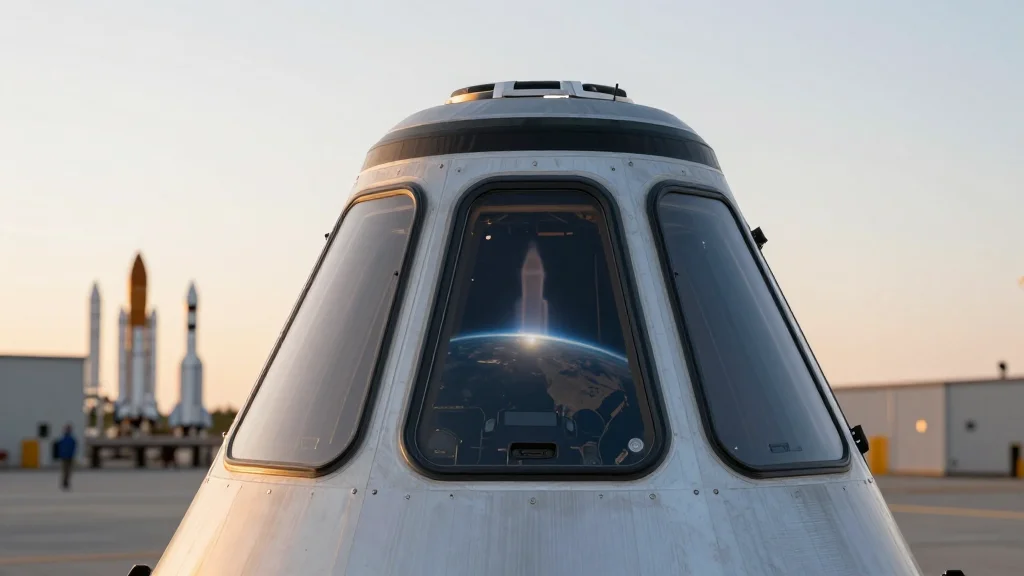
One (More) Small Step for Mankind
Companies Mentioned

Why It Matters
Artemis II demonstrates that public‑private collaboration can revive human spaceflight, while NASA’s steady presence ensures rigorous scientific outcomes and international coordination. This synergy reshapes the industry’s economic and exploratory trajectory.
Key Takeaways
- •Artemis II launched April 1, carrying four astronauts aboard Orion
- •Private firms like SpaceX and Blue Origin now enable commercial space travel
- •NASA provides scientific leadership and standards amid rapid private-sector growth
- •Partnerships between legacy agencies and startups accelerate lunar base development
- •Public enthusiasm from missions fuels next generation of space innovators
Pulse Analysis
The successful launch of Artemis II on April 1 re‑energized public interest in deep‑space exploration and underscored NASA’s renewed commitment to crewed missions beyond low Earth orbit. While the Orion capsule carried four astronauts on a test flight around the Moon, the mission also served as a showcase for the agency’s evolving partnership model, integrating commercial launch services and technology from the burgeoning New Space sector. This collaborative framework reduces costs, accelerates development timelines, and expands the pool of talent that can contribute to ambitious objectives such as a sustainable lunar presence.
New Space companies have fundamentally altered the economics of access to orbit. SpaceX’s reusable rockets, Blue Origin’s sub‑orbital tourism, and Virgin Galactic’s commercial flights have lowered barriers for private investors, research institutions, and even hobbyists. As a result, the market now includes orbital debris mitigation startups, in‑space manufacturing ventures, and lunar‑resource extraction projects. This diversification fuels competition, spurs innovation, and creates a pipeline of capabilities that complement NASA’s long‑term scientific agenda. However, the rapid pace of private development also raises concerns about safety standards, regulatory oversight, and the preservation of shared scientific data.
The convergence of government expertise and private agility positions the United States to lead a new era of space activity. NASA’s role as a steward of scientific integrity, international cooperation, and deep‑space infrastructure remains indispensable, especially as plans for a lunar gateway and eventual Mars missions mature. By leveraging commercial launch providers and fostering joint research initiatives, NASA can focus resources on high‑risk, high‑reward endeavors while ensuring that the broader ecosystem adheres to rigorous standards. This partnership model not only sustains the momentum generated by Artemis II but also cultivates the next generation of engineers, entrepreneurs, and explorers inspired by the mission’s historic launch.
One (more) Small Step for Mankind
Comments
Want to join the conversation?
Loading comments...