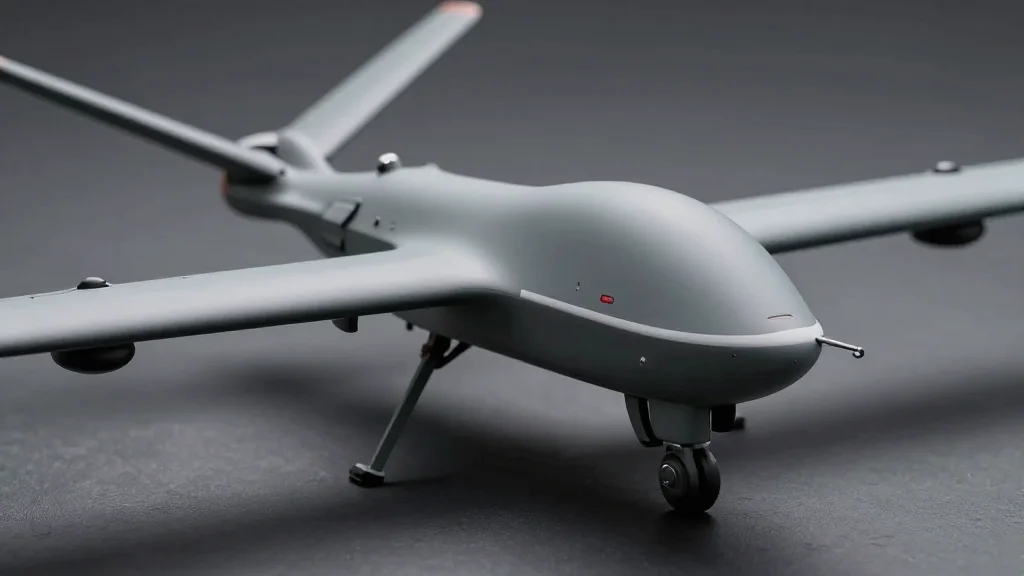
Pentagon Requests $54.6 B for Drone Warfare Unit, 243‑Fold Budget Jump

Why It Matters
The DAWG budget request marks the most aggressive investment in autonomous unmanned combat systems in U.S. history, reflecting a doctrinal shift that could redefine airpower in contested environments. By prioritizing cheap, expendable drones, the Pentagon aims to reduce the cost per kill and mitigate the threat posed by adversary swarms, potentially altering the calculus of future conflicts. Beyond the battlefield, the infusion of billions of dollars into low‑cost drone technology is likely to accelerate commercial innovation, driving down prices for civilian applications such as precision agriculture, infrastructure inspection and disaster response. However, it also raises proliferation risks, as the same technologies could be reverse‑engineered or exported to near‑peer competitors, reshaping the global aerospace security landscape.
Key Takeaways
- •Pentagon seeks $54.6 billion for DAWG in FY 2027, a 243‑fold increase from FY 2026's $225 million.
- •Funding targets mass production of low‑cost kamikaze drones and autonomous swarm capabilities.
- •Budget would dwarf typical service‑level allocations, making DAWG one of the largest single‑program requests.
- •Potential impact on defense contractors: boost for lightweight composites and sensor firms, possible decline for high‑cost missile makers.
- •Congressional review expected in the coming weeks; approval could enable prototype fielding by 2029.
Pulse Analysis
The Pentagon’s request is less about a single weapon system and more about establishing an industrial base capable of delivering millions of inexpensive autonomous platforms. Historically, the U.S. has favored high‑performance, high‑cost aircraft; this budget flips that paradigm, betting on quantity and algorithmic lethality. The shift mirrors how the Russian invasion of Ukraine exposed the vulnerability of traditional air defenses to cheap, swarming drones, prompting a reassessment of cost‑effectiveness in air combat.
From a market perspective, the $54.6 billion allocation could catalyze a new wave of mergers and acquisitions as larger aerospace firms seek to absorb niche drone specialists. Companies that can demonstrate rapid prototyping, modular payload integration and AI‑driven decision‑making will likely secure the most lucrative contracts. At the same time, the emphasis on low‑cost solutions may pressure legacy defense budgets, forcing a reallocation of resources away from legacy platforms toward next‑generation autonomy.
Strategically, the budget underscores a broader geopolitical calculation: the United States anticipates that future conflicts will be fought in densely contested, electronic‑warfare‑heavy environments where traditional air superiority is harder to achieve. By fielding swarms of cheap drones, the U.S. can saturate enemy defenses, create multiple dilemmas for adversaries, and preserve high‑value assets. The success of this approach will hinge on the ability to integrate autonomous systems safely, maintain robust command‑and‑control, and navigate the ethical debates surrounding lethal AI. The upcoming congressional hearings will be a litmus test for how quickly the Pentagon can move from budget request to operational capability.
Pentagon Requests $54.6 B for Drone Warfare Unit, 243‑Fold Budget Jump
Comments
Want to join the conversation?
Loading comments...