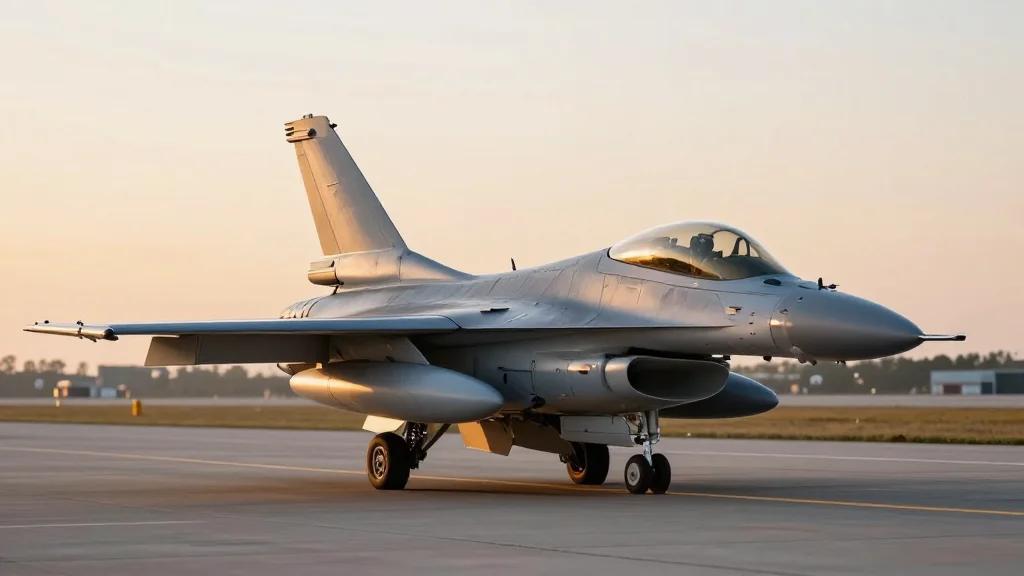
Peru Postpones $3.5 B Fighter Jet Purchase Until Post‑election Government Takes Office

Companies Mentioned
Why It Matters
The postponement of Peru’s $3.5 billion fighter jet purchase underscores how political instability can directly impact high‑value aerospace contracts. A delayed decision not only stalls revenue for Lockheed Martin but also reshapes the strategic calculus of South America’s air forces, where modern jet capabilities are a key deterrent and diplomatic lever. The outcome will signal whether emerging markets can sustain large defense procurements amid electoral uncertainty, influencing future bids from European manufacturers seeking to break Lockheed’s dominance. Beyond the immediate contract, the episode highlights the growing reliance of Latin‑American nations on external financing for defense spend. If the new government opts for a different financing structure or a different aircraft, it could set a precedent for how regional powers manage sovereign debt while pursuing modernization, potentially prompting a shift toward joint‑venture or lease‑back models in future deals.
Key Takeaways
- •Interim President José María Balcázar defers $3.5 billion F‑16 Block 70 purchase until after the June runoff.
- •The contract would have been funded by $2 billion in 2025 and $1.5 billion in 2026 through domestic borrowing.
- •Competing bids came from Sweden’s Saab and France’s Dassault Aviation, adding pressure on Lockheed Martin.
- •The deal would have modernized Peru’s air force and altered the Andean regional balance of power.
- •Lockheed Martin’s projected 2026 international sales could lose up to $1.2 billion if the contract stalls.
Pulse Analysis
Lockheed Martin’s F‑16 Block 70 program has relied on a handful of high‑profile export deals to sustain its growth trajectory after the U.S. Air Force shifted focus to the F‑35. Peru’s $3.5 billion order represented the largest single‑sale prospect in Latin America for the next decade. By pausing the deal, the interim government not only protects its political legitimacy but also forces Lockheed to confront a market that is increasingly price‑sensitive and open to European alternatives. Saab’s Gripen and Dassault’s Rafale have been gaining traction by offering lower acquisition costs and offset packages that include technology transfer—appeals that resonate in countries wary of ballooning debt.
Historically, defense procurement in the region has been a barometer of political stability. Brazil’s Embraer deals, for instance, surged after the 2018 election when a stable government could guarantee long‑term funding. Peru’s current volatility mirrors the 2020 Argentine experience, where a change in administration led to the cancellation of a $1.5 billion aircraft contract, prompting a shift toward refurbished platforms. The current postponement may therefore catalyze a broader reassessment of how Latin American states structure defense financing, possibly moving toward multiyear, multi‑partner agreements that dilute political risk.
Looking ahead, the decisive factor will be the policy stance of the runoff winner. A pro‑U.S. administration could fast‑track the F‑16 deal, leveraging the pending financing plan and reinforcing bilateral ties. Conversely, a leader favoring diversification might renegotiate terms, invite European bidders back into the mix, or explore joint‑development options with regional partners. Either scenario will reverberate through the aerospace supply chain, influencing future contract negotiations, offset obligations, and the strategic posture of the Andean region for years to come.
Peru postpones $3.5 B fighter jet purchase until post‑election government takes office
Comments
Want to join the conversation?
Loading comments...