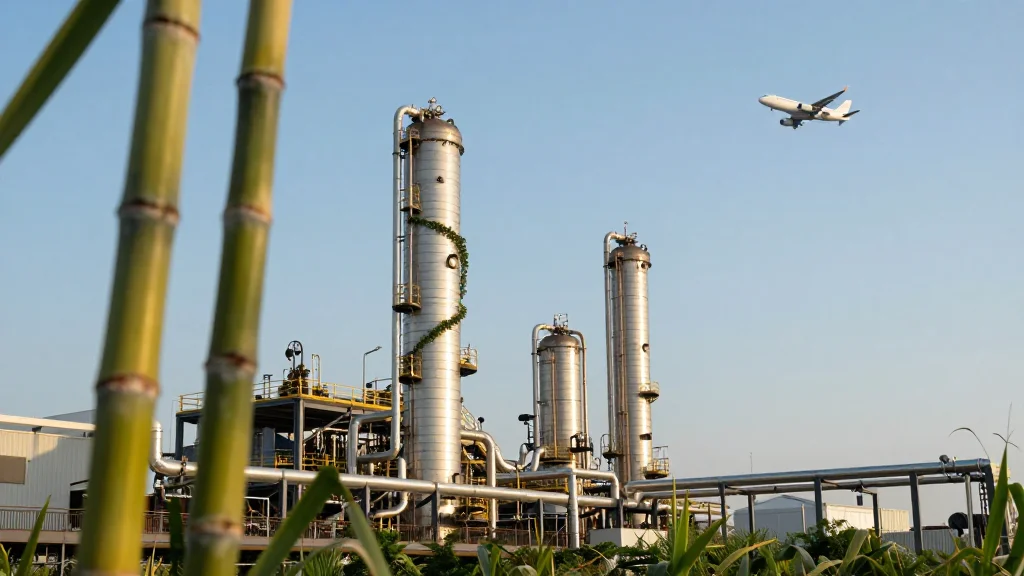
Petrobras Progresses Sao Paulo SAF Plant
Companies Mentioned
Why It Matters
The plant gives Petrobras a foothold in the fast‑growing SAF market, offering airlines a domestic, lower‑cost renewable fuel and helping Brazil meet international climate commitments.
Key Takeaways
- •Petrobras selects Honeywell UOP's ETJ tech for SAF plant
- •Plant will process 10,000 bpd, producing 153.3 M gallons annually
- •Ethanol sourced from Brazilian sugarcane ensures low-cost feedstock
- •Commercial start-up slated for post‑2029, enabling rapid scale‑up
Pulse Analysis
Sustainable aviation fuel is rapidly becoming a strategic priority for airlines seeking to curb carbon emissions, and Brazil’s abundant sugarcane resources give it a competitive edge. Petrobras’s decision to develop a 10,000‑barrel‑per‑day SAF plant at the Replan refinery signals a shift from traditional petroleum refining toward renewable jet fuel production. By leveraging Honeywell UOP’s Ethanol‑to‑Jet (ETJ) technology, the project can transform low‑cost, domestically produced ethanol into a drop‑in replacement for conventional jet fuel, meeting stringent sustainability standards while keeping costs manageable.
The ETJ process offers several technical advantages: it operates at relatively low pressure, requires minimal hydrogen, and can be integrated into existing refinery infrastructure. This reduces capital expenditures compared with other SAF pathways such as Fischer‑Tropsch or hydroprocessed esters and fatty acids (HEFA). Moreover, using sugarcane‑derived ethanol—already a cornerstone of Brazil’s bio‑fuel industry—ensures a stable, high‑volume feedstock, mitigating supply‑chain risks that have plagued other SAF projects worldwide. The plant’s projected output of 153.3 million gallons per year could satisfy a significant share of Brazil’s domestic aviation demand and generate export opportunities to regions with SAF mandates.
From a business perspective, the post‑2029 timeline aligns with the anticipated acceleration of SAF mandates in Europe and North America, positioning Petrobras to capture early market share. The venture also supports Brazil’s broader climate agenda, potentially unlocking green financing and carbon‑credit revenues. As airlines increasingly commit to net‑zero targets, the availability of cost‑competitive, locally produced SAF will be a decisive factor in route planning and fuel procurement, making Petrobras’s initiative a pivotal development in the global transition to sustainable aviation.
Petrobras Progresses Sao Paulo SAF Plant
Comments
Want to join the conversation?
Loading comments...