PhilSA Warns vs Chinese Rocket Debris Near Palawan
Why It Matters
Debris from the Long March 7 poses a direct threat to commercial shipping and aviation routes in the South China Sea, underscoring the need for robust regional space‑debris monitoring. The incident highlights gaps in coordination between launch nations and neighboring jurisdictions.
Key Takeaways
- •Long March 7 launched Monday, debris may fall near Palawan
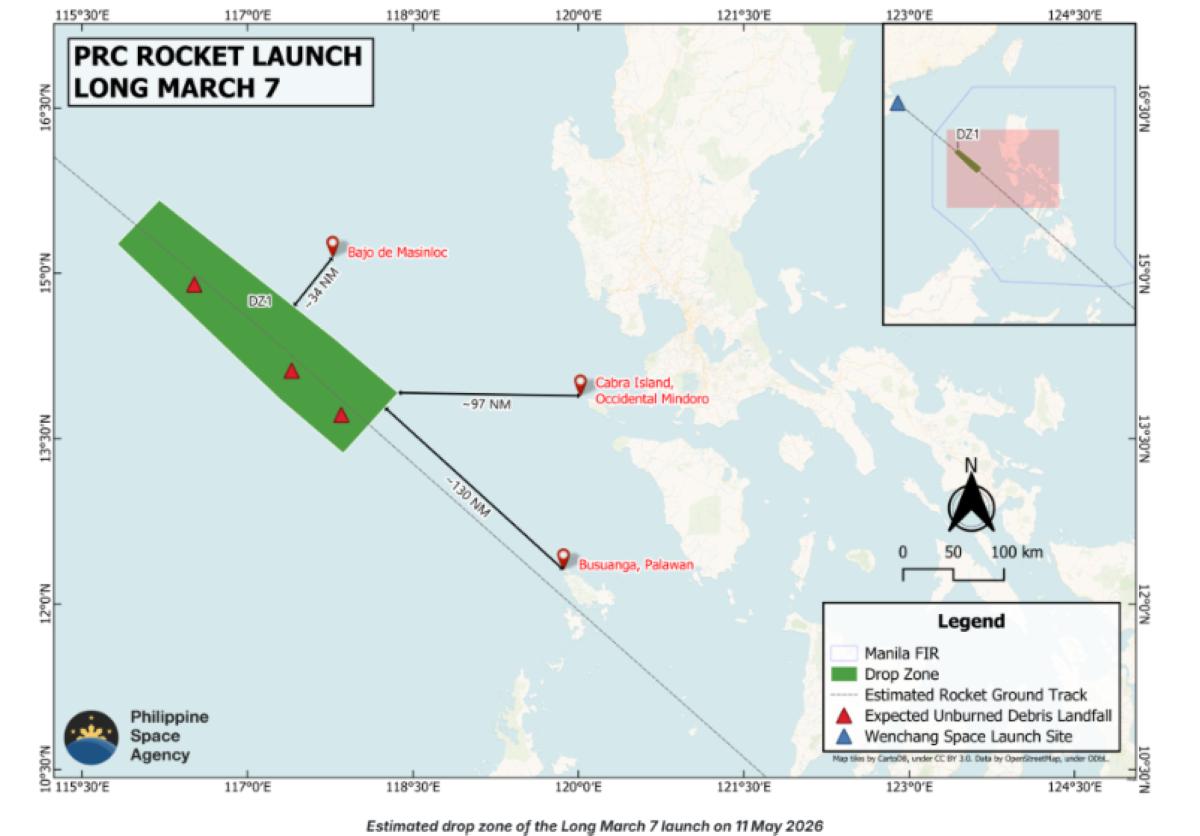
- •PhilSA issued advisory for mariners and aviators within 130 NM
- •Closest predicted impact point 34 NM from Bajo de Masinloc
- •Potential hazards include damage to vessels and aircraft
- •Incident highlights need for regional space debris monitoring
Pulse Analysis
The surge in commercial and government launches has amplified concerns over orbital debris, especially in densely trafficked maritime corridors like the South China Sea. While most fragments burn up, larger components from rockets such as China’s Long March 7 can survive re‑entry and pose tangible hazards to surface vessels and aircraft. Nations bordering these waters are increasingly forced to grapple with the unpredictable nature of debris paths, prompting agencies like PhilSA to issue timely advisories.
PhilSA’s latest warning pinpoints three zones where debris could intersect with busy shipping lanes and flight paths near Palawan. The agency’s advisory specifically targets mariners operating within 34 nautical miles of Bajo de Masinloc, as well as pilots navigating the airspace above Cabra Island and Busuanga. By delineating clear exclusion zones, PhilSA aims to prevent collisions that could result in costly vessel damage, environmental contamination, or aviation incidents. The prompt communication also reflects growing operational maturity in the Philippines’ nascent space program.
Beyond immediate safety, the event spotlights a broader strategic challenge: the lack of a unified regional framework for space‑situational awareness. As neighboring countries launch more payloads, coordinated tracking and data‑sharing become essential to mitigate cross‑border risks. Strengthening partnerships through mechanisms like the Asia‑Pacific Space Cooperation Forum could enable real‑time debris monitoring, joint response protocols, and shared liability guidelines, ultimately safeguarding both economic interests and national security in the region.
PhilSA warns vs Chinese rocket debris near Palawan
Comments
Want to join the conversation?
Loading comments...