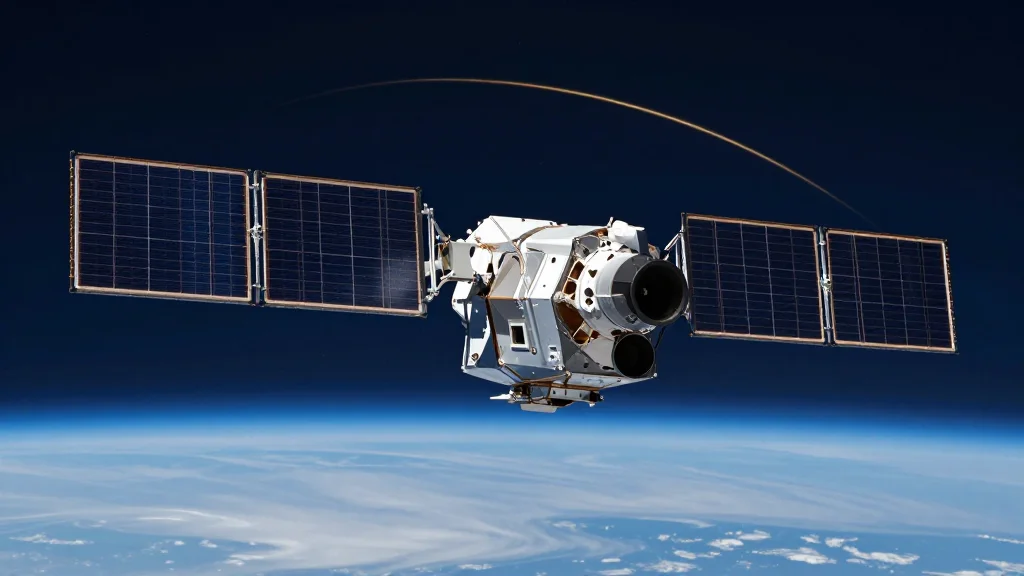
PlanetiQ Wins $15 Million U.S. Air Force Contract to Build Next‑Gen GNSS Weather Constellation

Why It Matters
The Air Force’s $15 million investment underscores the growing importance of space‑based environmental data for national security. Accurate, real‑time atmospheric information can enhance mission planning, improve AI‑driven predictive models, and reduce the operational risk of weather‑related disruptions. For the broader aerospace industry, the contract validates the commercial viability of multi‑sensor GNSS constellations, encouraging further private investment in dual‑use satellite technologies that serve both defense and civilian markets. Beyond immediate military benefits, the integration of GNSS‑RO, GNSS‑PRO and GNSS‑R promises richer datasets for climate scientists, disaster responders and agricultural stakeholders. By delivering higher‑quality precipitation profiles and surface‑condition metrics, PlanetiQ’s constellation could sharpen forecasts of severe storms, improve flood‑risk modeling, and support more precise soil‑moisture assessments, thereby contributing to resilience against climate change impacts.
Key Takeaways
- •PlanetiQ awarded a $15 million, four‑year STRATFI contract by the U.S. Air Force on March 31 2026.
- •Contract funds development of a satellite platform that combines GNSS‑RO, GNSS‑PRO and GNSS‑R sensors.
- •PlanetiQ currently provides 7,000 GNSS‑RO profiles per day, including 500 high‑SNR profiles.
- •Previous NOAA contract in September 2025 was $24.3 million, the agency’s largest commercial weather data purchase.
- •AFWERX, the Air Force innovation arm, has awarded over $7.24 billion in contracts since 2019.
Pulse Analysis
PlanetiQ’s STRATFI win signals a maturation of the commercial GNSS‑weather market, where private firms are moving from data providers to full‑system integrators. Historically, GNSS radio occultation has been the domain of government‑run missions like COSMIC and MetOp. By bundling three distinct measurement techniques into a single bus, PlanetiQ reduces launch costs, simplifies ground‑segment operations and offers a richer data product suite that can be monetized across multiple customers.
The defense angle is equally compelling. The Air Force’s push for AI‑ready weather data reflects a broader Pentagon strategy to embed predictive analytics into operational planning. Space‑based precipitation and surface‑condition data can feed high‑resolution models that support everything from flight‑path optimization to amphibious assault timing. If PlanetiQ’s prototype demonstrates the promised data‑assimilation gains, we could see a cascade of similar contracts from the Army, Navy and even allied forces, accelerating the transition of commercial satellite capabilities into core defense assets.
Looking ahead, the success of this program may reshape procurement norms. AFWERX’s willingness to fund a relatively modest $15 million effort suggests a shift toward rapid, iterative development cycles rather than the multi‑year, multi‑billion programs that have traditionally dominated defense space acquisition. For investors and competitors, the message is clear: the market is rewarding firms that can deliver integrated, high‑value data streams from low‑Earth orbit, and the next wave of funding will likely follow the same multi‑sensor, dual‑use paradigm that PlanetiQ is pioneering.
PlanetiQ Wins $15 Million U.S. Air Force Contract to Build Next‑Gen GNSS Weather Constellation
Comments
Want to join the conversation?
Loading comments...