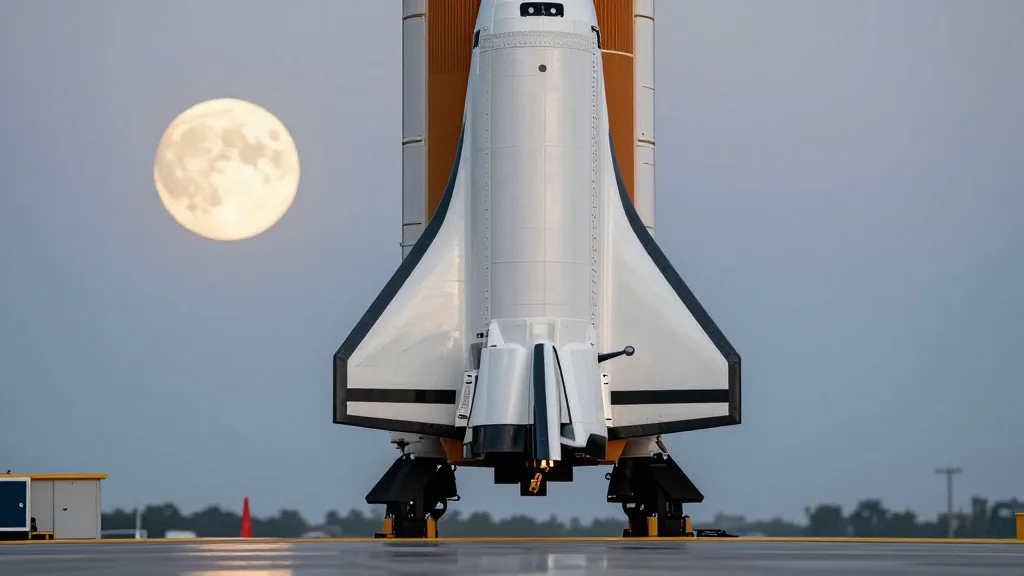
Podcast: Space Competition: AIAA’s Clay Mowry on What The Commercial Sector Wants
Companies Mentioned

NASA
Why It Matters
Increasing lunar launch frequency is critical for maintaining U.S. strategic advantage and unlocking commercial opportunities in the emerging lunar economy.
Key Takeaways
- •NASA urges faster lunar launch cadence amid Chinese crewed mission plans
- •Clay Mowry emphasizes cost‑effective, reusable launch systems for commercial demand
- •Industry seeks streamlined licensing and clearer government procurement pathways
- •Partnerships between NASA and private firms expected to accelerate lunar infrastructure
- •AIAA calls for sustained funding to keep US leadership in space
Pulse Analysis
The race to return humans to the Moon has entered a new phase of competition, spurred by China's announced intention to send taikonauts on a lunar flyby. In response, NASA Administrator Jared Isaacman used the AIAA ASCEND conference to stress that the United States must increase its launch cadence to maintain strategic advantage. This call to action underscores the growing reliance on commercial launch providers, whose rapid‑turnaround capabilities can bridge the gap between government‑driven missions and the aggressive timelines set by emerging spacefaring nations.
Clay Mowry, chief executive of the American Institute of Aeronautics and Astronautics, elaborated on what the commercial sector expects from both industry and policymakers. He highlighted the need for cost‑effective, reusable launch vehicles that can deliver payloads on a weekly or even daily basis, and called for a more predictable regulatory environment that reduces the time and expense of licensing. Mowry also pointed to the importance of clear procurement frameworks from NASA, enabling private firms to align their development cycles with government objectives and secure long‑term revenue streams.
The implications for the U.S. aerospace market are significant. Investors are likely to channel capital into firms that can demonstrate rapid launch turnaround and robust lunar‑orbit capabilities, while Congress may face pressure to sustain or increase funding for lunar infrastructure projects. A more frequent launch schedule could also accelerate the development of lunar habitats, in‑situ resource utilization, and surface logistics, creating a cascade of downstream opportunities for manufacturers, software providers, and service companies. Ultimately, aligning commercial incentives with national goals could preserve American leadership in deep‑space exploration.
Podcast: Space Competition: AIAA’s Clay Mowry on What The Commercial Sector Wants
Comments
Want to join the conversation?
Loading comments...