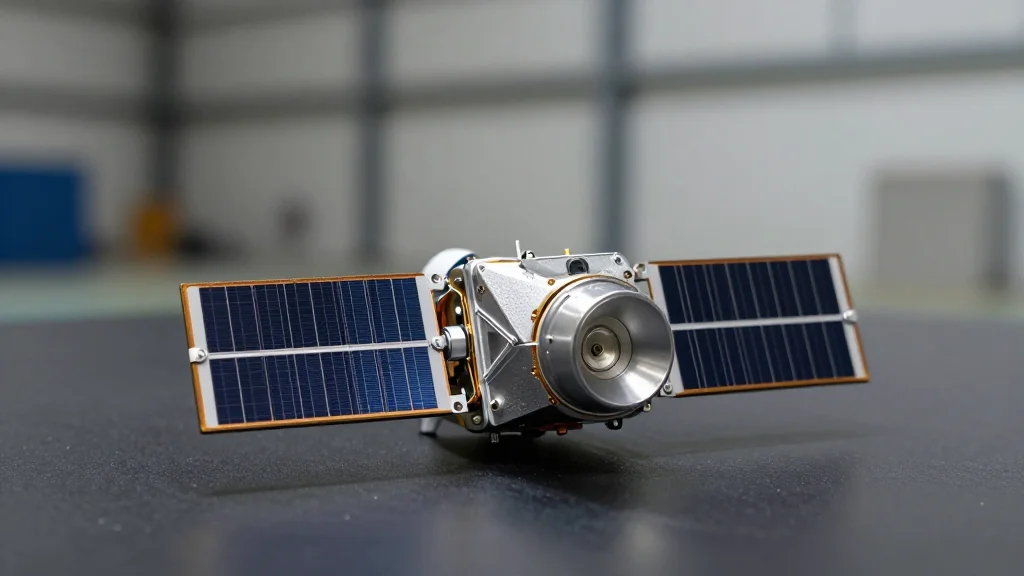
Quantum Space to Build Tulsa Facility for Ranger Small‑Sat Production, Adding 50 Jobs

Why It Matters
The Tulsa plant marks a significant step toward a more resilient, U.S.-based supply chain for small‑sat propulsion components, a sector traditionally dependent on foreign manufacturers. By localizing production, Quantum Space can accelerate delivery schedules, lower logistics costs, and better align with the Space Force’s emphasis on sustained maneuverability for dynamic space operations. The creation of up to 50 high‑skill jobs also strengthens the aerospace workforce in Oklahoma, a state actively courting space‑related investment. Beyond national security, the facility positions Quantum Space to capture a share of the rapidly expanding commercial small‑sat market, where customers demand rapid, cost‑effective access to orbit. The ability to produce propulsion tanks and precision parts domestically could become a differentiator as satellite operators seek to minimize supply‑chain disruptions and meet tighter launch windows.
Key Takeaways
- •Quantum Space announced a new Tulsa manufacturing facility for Ranger small‑sat production.
- •The plant will create up to 50 high‑skill jobs and occupy 25,000‑40,000 sq ft.
- •Modifications start July 2026; initial operational capability targeted for Q1 2027.
- •Facility will handle large propulsion‑tank manufacturing, CNC machining, friction‑stir welding and testing.
- •Expansion supports both U.S. Space Force needs and growing commercial small‑sat demand.
Pulse Analysis
Quantum Space’s decision to locate a propulsion‑tank hub in Tulsa reflects a broader industry shift toward domesticizing critical satellite components. Historically, small‑sat manufacturers have relied on overseas suppliers for propulsion hardware, exposing programs to geopolitical risk and extended lead times. By building a vertically integrated capability within the United States, Quantum Space not only insulates its supply chain but also aligns with the Space Force’s strategic push for “competitive endurance” – the ability to sustain maneuverability over long mission durations. This alignment could translate into preferential procurement contracts, especially as the Department of Defense tightens requirements around supply‑chain security.
The timing of the Tulsa expansion is also noteworthy. The small‑sat market is projected to exceed $30 billion by 2030, driven by constellations for broadband, Earth observation and on‑orbit servicing. Quantum Space’s Ranger platform, marketed as a mission‑adaptable vehicle, is positioned to serve these emerging use cases. The distributed manufacturing model—spanning California, Maryland and now Oklahoma—offers redundancy that can mitigate disruptions from natural disasters or geopolitical events, a lesson learned from recent supply‑chain shocks in the broader aerospace sector.
Looking ahead, the success of the Tulsa facility will hinge on Quantum Space’s ability to scale production while maintaining the high‑precision tolerances required for propulsion systems. If the Q1 2027 operational target is met, the company could set a new benchmark for rapid, domestic small‑sat manufacturing, potentially prompting competitors to follow suit. This could accelerate the overall maturation of the U.S. small‑sat ecosystem, fostering a more robust industrial base that supports both national security and commercial innovation.
Quantum Space to Build Tulsa Facility for Ranger Small‑Sat Production, Adding 50 Jobs
Comments
Want to join the conversation?
Loading comments...