Why It Matters
The surge in planned lunar missions underscores a geopolitical contest that will shape funding, commercial partnerships, and technology roadmaps for the next decade. Understanding the hardware challenges highlighted in the book helps investors gauge realistic timelines for lunar‑related revenue streams.
Key Takeaways
- •NASA targets 21 lunar landings by 2028, intensifying competition.
- •Intuitive Machines' IM‑1 landed upright, while IM‑2 tipped over.
- •China’s south‑pole ambitions drive U.S. urgency in lunar planning.
- •Ariosto’s book blends mission detail with broader space‑technology trends.
- •Hardware challenges, not launch frequency, remain the bottleneck.
Pulse Analysis
NASA’s latest lunar roadmap, unveiled in March 2026, calls for an unprecedented 21 landings over three years, a clear signal that the United States is racing to secure a foothold before China stakes a claim on the Moon’s south pole. This aggressive schedule has spurred a flurry of commercial contracts, with companies scrambling to prove they can deliver reliable landers on tight timelines. The policy shift not only reshapes the government’s procurement strategy but also drives venture capital toward lunar‑service startups, making the Moon a new frontier for both national security and private profit.
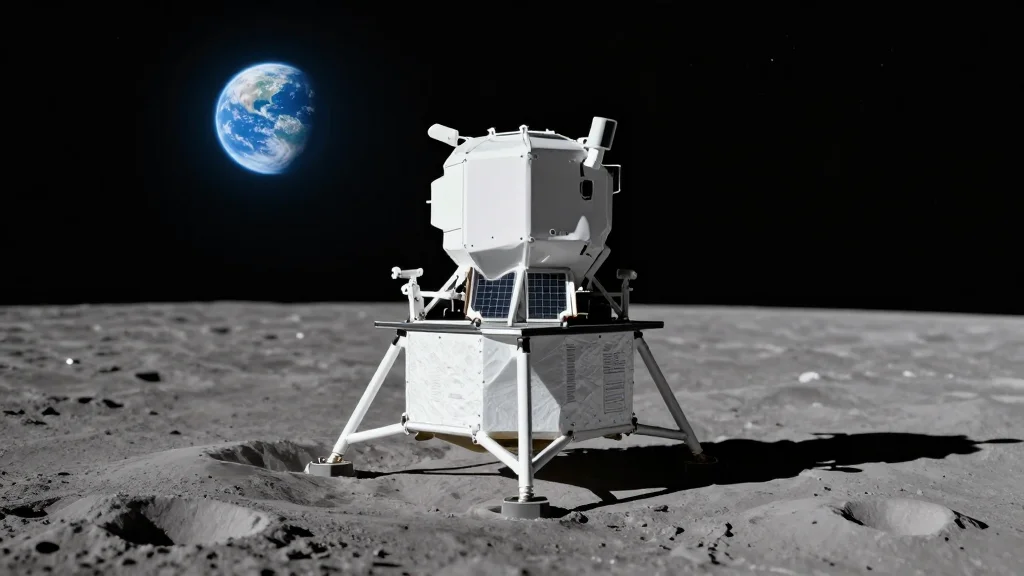
Yet the path to the lunar surface remains fraught with technical risk. Intuitive Machines’ IM‑1 succeeded in staying upright, but its follow‑on IM‑2 toppled and shut down after a brief operation, echoing earlier setbacks from Firefly’s Blue Ghost 1 and Astrobotic’s Peregrine. These mixed results highlight that while launch capacity is expanding, the engineering of soft‑landing systems, propulsion, and autonomous navigation is still maturing. Industry analysts see this as a catalyst for deeper R&D investment, especially in precision guidance, hazard‑avoidance sensors, and reusable lander architectures that could lower costs and improve mission success rates.
Ariosto’s *Open Space* captures this moment of high ambition and stark reality, weaving the Intuitive Machines story with broader themes like orbital debris, planetary defense, and even speculative concepts such as faster‑than‑light travel. By juxtaposing concrete mission failures with visionary ideas, the book illustrates the dual nature of today’s space economy: a pragmatic push for near‑term lunar infrastructure alongside long‑term bets on transformative technologies. For investors, policymakers, and engineers, the narrative underscores that while the market for lunar services is set to expand, success will hinge on overcoming the hard‑won lessons of early lander attempts.
Review: Open Space
Comments
Want to join the conversation?
Loading comments...