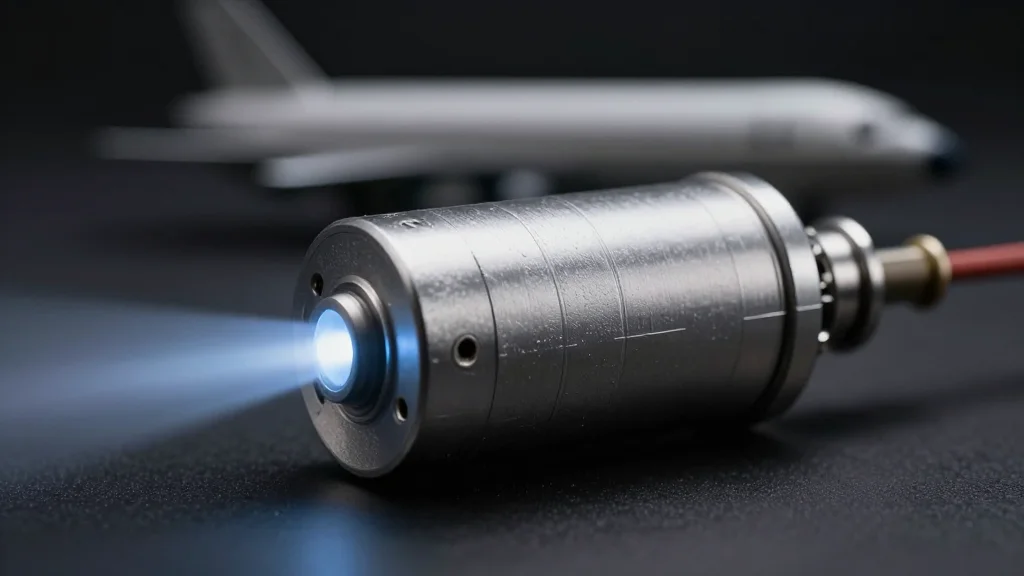
Rocket Lab Launches Gauss Electric Thruster, Targeting 200+ Units Annually

Companies Mentioned
Why It Matters
The Gauss thruster addresses a critical bottleneck in the satellite industry: the scarcity of affordable, high‑performance electric propulsion at scale. As operators launch ever larger constellations to deliver global broadband, Earth observation, and low‑latency communications, the need for reliable station‑keeping and orbit‑raising capabilities grows in parallel. By delivering more than 200 thrusters per year, Rocket Lab not only eases supply constraints but also lowers the overall cost of constellation deployment, potentially accelerating the rollout of services that depend on ubiquitous connectivity. Beyond commercial implications, the Gauss system strengthens national‑security satellite programs that require rapid, on‑demand propulsion solutions. Domestic production reduces exposure to foreign supply‑chain disruptions, aligning with broader policy goals of securing critical space infrastructure. The thruster’s higher specific impulse also opens pathways for more ambitious deep‑space missions, expanding the utility of electric propulsion beyond low‑Earth orbit.
Key Takeaways
- •Rocket Lab unveiled the Gauss electric thruster, a Hall‑effect system for satellite propulsion.
- •The company’s production line targets output of over 200 thrusters per year.
- •Gauss offers higher specific impulse, enabling lighter satellites and longer mission durations.
- •Designed for both commercial broadband constellations and national‑security applications.
- •Initial deliveries are slated for later 2026, with orders from commercial and defense customers.
Pulse Analysis
Rocket Lab’s entry into high‑volume electric propulsion marks a strategic diversification beyond its launch services. Historically, the company has leveraged its rapid‑manufacturing expertise to dominate the small‑sat launch market; extending that capability to thruster production creates a vertically integrated supply chain that can capture more of the satellite value chain. This move mirrors a broader industry trend where launch providers are adding satellite‑bus services, positioning themselves as one‑stop shops for space operators.
From a competitive standpoint, the Gauss thruster directly challenges incumbents such as Aerojet Rocketdyne and Safran, which have traditionally dominated the electric propulsion market but have struggled to scale output. Rocket Lab’s ability to produce thrusters in a dedicated line could force legacy suppliers to reassess their manufacturing models, potentially spurring a wave of automation and cost reductions across the sector. The pricing advantage, while not disclosed, is likely to be significant given Rocket Lab’s emphasis on in‑house design and economies of scale.
Looking ahead, the success of Gauss will hinge on adoption rates among constellation builders. If operators can integrate the thrusters without extensive redesign, the technology could become a de‑facto standard for next‑generation satellites. Moreover, the platform’s scalability may enable Rocket Lab to explore derivative products—such as higher‑thrust variants for larger spacecraft or modular units for on‑orbit servicing. In a market where launch cadence and satellite performance are increasingly intertwined, Rocket Lab’s propulsion push could reshape how the industry balances cost, capability, and schedule.
Rocket Lab launches Gauss electric thruster, targeting 200+ units annually
Comments
Want to join the conversation?
Loading comments...