Rocket Lab’s Second JAXA Dedicated Launch Boosts Small‑Sat Partnership

Companies Mentioned
Why It Matters
The mission deepens the strategic partnership between a U.S. commercial launch provider and Japan’s national space agency, offering JAXA a reliable, low‑cost pathway for rapid technology demonstration. By proving that eight heterogeneous satellites can be placed accurately in a single launch, Rocket Lab showcases a model that could accelerate the development cycle for small‑sat innovators worldwide. For the broader aerospace ecosystem, the collaboration signals a shift toward more frequent, dedicated small‑sat launches, reducing dependence on larger, less flexible launch schedules. This could spur increased investment in miniaturized payloads, drive down unit costs, and encourage other national agencies to adopt similar launch‑service contracts, reshaping the global launch market dynamics.
Key Takeaways
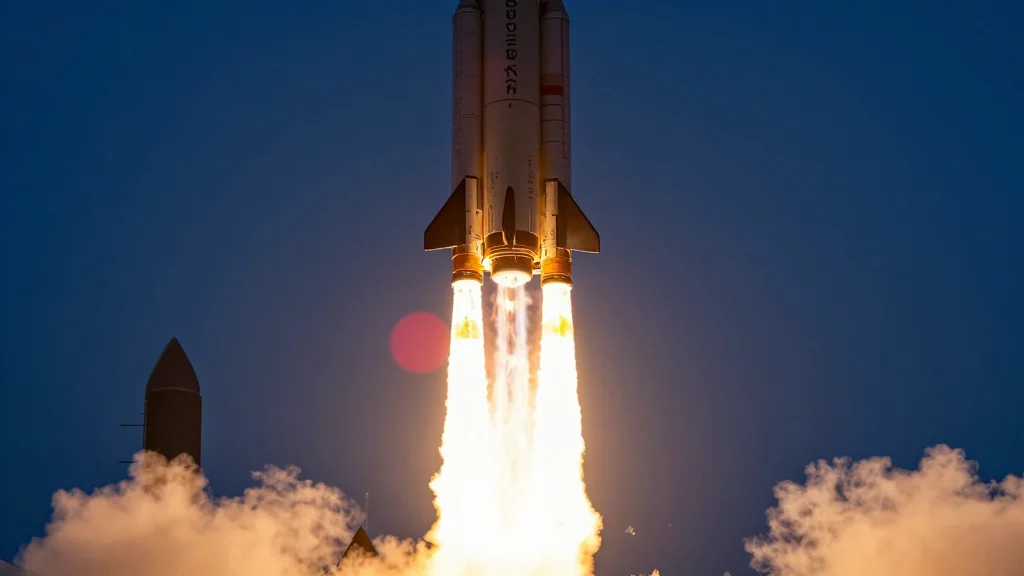
- •Rocket Lab’s Electron lifted off at 3:09 p.m. NZT from Launch Complex 1, New Zealand.
- •Eight JAXA satellites were deployed, including an ocean‑monitoring sat and an origami antenna that expands 25×.
- •Mission “Kakushin Rising” is Rocket Lab’s second dedicated JAXA launch, following December 2025’s RAISE‑4 flight.
- •The launch marks Rocket Lab’s 8th mission of 2025 and its 87th overall.
- •CEO Sir Peter Beck highlighted the back‑to‑back success as proof of Electron’s reliability for national agencies.
Pulse Analysis
Rocket Lab’s back‑to‑back JAXA missions illustrate a maturing business model where national space agencies outsource entire payload manifests to commercial providers. Historically, agencies like JAXA relied on legacy launchers such as Japan’s H‑IIA/H‑II B or foreign heavy‑lift vehicles for small‑sat deployments. The shift to a dedicated small‑launcher reduces lead times and offers greater control over orbital parameters, which is critical for technology‑demonstration missions that often require precise sun‑synchronous orbits.
The partnership also positions Rocket Lab as a de‑facto gateway for Asian small‑sat developers seeking rapid access to space. As Japan’s domestic launch capabilities face budgetary constraints and limited launch windows, the reliability demonstrated by Electron could attract additional payloads from Japanese universities and startups, fostering a domestic ecosystem that feeds into Rocket Lab’s launch cadence. Competitors will need to match Rocket Lab’s launch frequency, precision, and cost structure to remain viable.
Looking forward, the upcoming introduction of Rocket Lab’s Neutron vehicle could expand the scope of the partnership beyond low‑Earth orbit. If JAXA opts to use Neutron for lunar or cislunar missions, it would cement a trans‑Pacific supply chain that blends U.S. launch infrastructure with Japanese payload expertise. Such a development would not only diversify Rocket Lab’s revenue streams but also reinforce the strategic interdependence of U.S. and Japanese space ambitions, potentially influencing policy decisions on export controls and bilateral cooperation.
Rocket Lab’s Second JAXA Dedicated Launch Boosts Small‑Sat Partnership
Comments
Want to join the conversation?
Loading comments...