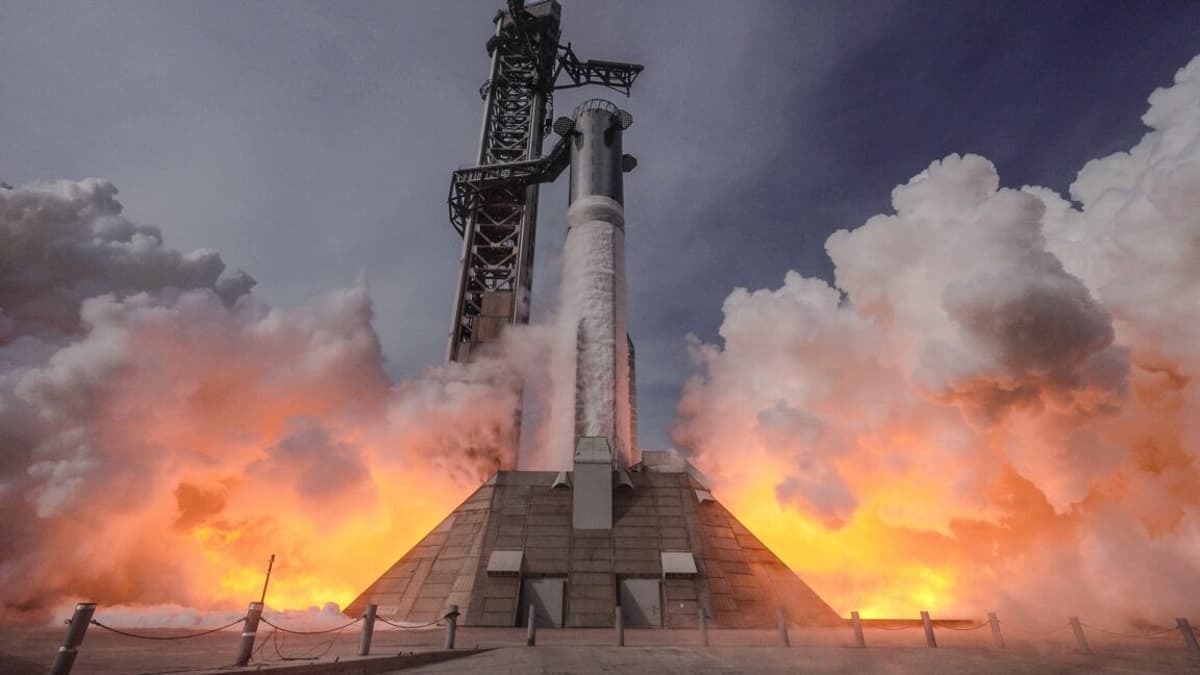
Rocket Report: Starship V3 Test-Fired; ESA's Tentative Step Toward Crew Launch
Companies Mentioned


Why It Matters
These milestones speed commercial orbital access, enhance crew‑safety infrastructure, and intensify competition that could reshape launch pricing and reliability across the industry.
Key Takeaways
- •Starship V3 static fire succeeded; Super Heavy ignited 33 Raptor engines
- •ESA allocated €1 M (~$1.1 M) for crew abort demonstrator
- •Rocket Lab can produce up to 200 Gauss electric thrusters annually
- •Moonshot Space signed MOU for Alaska electromagnetic launch accelerator
- •ULA's Vulcan grounded again; only four flights since Jan 2024
Pulse Analysis
SpaceX’s latest test campaign underscores the company’s aggressive push toward full‑scale Starship operations. The static‑fire of the Version 3 prototype confirmed the integration of upgraded Raptor engines, while the Super Heavy’s 33‑engine ignition demonstrated the booster’s raw thrust capability. Parallel to this, the European Space Agency’s €1 million (≈$1.1 million) crew‑launch‑abort demonstrator program signals a renewed focus on astronaut safety, leveraging Ariane 6’s performance to develop a rapid‑escape system that could become a benchmark for future European crew missions.
Meanwhile, propulsion innovation is gaining momentum beyond traditional chemical rockets. Rocket Lab’s new Gauss thruster line, capable of producing up to 200 xenon‑powered units annually, addresses a growing bottleneck for large constellations that need reliable, high‑efficiency station‑keeping. In Alaska, Moonshot Space’s MOU with the Alaska Aerospace Corporation aims to field an electromagnetic accelerator that propels payloads at hypersonic speeds, potentially lowering launch costs for in‑space manufacturing. China’s wet‑dress rehearsal of the Long March 10B, a reusable booster designed for satellite delivery, further illustrates the global race to master reusable launch technology.
The competitive landscape is also being reshaped by operational setbacks and new contracts. United Launch Alliance’s Vulcan rocket, grounded for a second time, has completed only four flights since its debut, prompting the U.S. Space Force to consider reallocating missions to SpaceX’s Falcon 9 or Falcon Heavy. Conversely, Blue Origin is moving forward with its third New Glenn launch, targeting high‑inclination orbits from Vandenberg. NASA’s decision to award a Falcon Heavy launch for ESA’s Rosalind Franklin Mars rover, slated for as early as late 2028, marks SpaceX’s first Mars‑mission contract, highlighting the firm’s expanding role in deep‑space logistics. Together, these developments suggest a rapidly evolving market where flexibility, reusability, and advanced propulsion will dictate the next wave of commercial space growth.
Rocket Report: Starship V3 test-fired; ESA's tentative step toward crew launch
Comments
Want to join the conversation?
Loading comments...