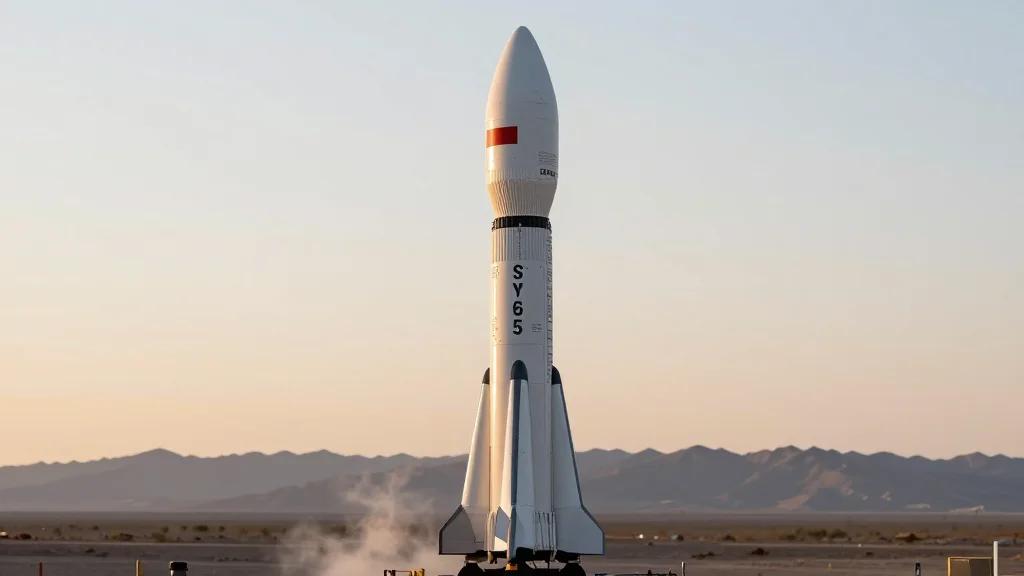
Roscosmos Launches Soyuz‑5, New Heavy‑Lift Rocket Targeting Falcon 9 Market

Why It Matters
Soyuz‑5 re‑enters Russia in the fiercely competitive commercial launch sector, offering a domestic alternative to SpaceX’s Falcon 9 and reducing reliance on foreign launch services. Its payload capacity and pricing could attract satellite‑constellation firms that have so far favored Western providers, potentially shifting market share and influencing launch‑price benchmarks worldwide. Beyond economics, the vehicle demonstrates Russia’s ability to modernize legacy technology without imported components—a geopolitical advantage amid ongoing sanctions and supply‑chain constraints. Successful deployment may also accelerate Russia’s parallel reusable‑launch programs, narrowing the technology gap with SpaceX and reshaping the strategic balance of space access.
Key Takeaways
- •Soyuz‑5’s first flight occurred on April 30 from Baikonur, with all stages performing nominally.
- •Payload capacity of 17 tonnes to low‑Earth orbit, three tonnes more than Zenit‑3.
- •Launch cost estimated at $55‑56 million, positioned below Falcon 9’s $62‑67 million price range.
- •First‑stage RD‑171MV engine delivers 250,000 hp, touted as the most powerful liquid‑propellant engine ever built.
- •Russia plans further test flights and aims to certify Soyuz‑5 for commercial missions, while developing reusable systems like Amur‑SPG.
Pulse Analysis
The Soyuz‑5 launch marks a watershed for Russia’s launch industry, but its impact will hinge on how quickly the vehicle can transition from expendable test flights to a reliable, cost‑competitive service. Historically, Russia’s launch market has been dominated by legacy Soyuz and Proton rockets, which, while dependable, have struggled to match the price‑performance curve set by SpaceX. By pricing Soyuz‑5 at $55 million, Roscosmos is attempting to undercut the market leader, yet the lack of reusability could limit its appeal to cost‑sensitive satellite operators.
If Roscosmos can demonstrate a high launch cadence and maintain the advertised price, Soyuz‑5 could become the backbone for a nascent Russian commercial launch ecosystem, supporting domestic satellite constellations and attracting foreign customers wary of geopolitical risk. However, the vehicle’s fully expendable nature may compel Roscosmos to accelerate its reusable projects—Amur‑SPG, Korona, and Krylo‑SV—to stay relevant as the industry moves toward rapid‑turnaround, multi‑flight boosters.
In the broader context, Soyuz‑5’s debut may also trigger a pricing response from SpaceX and other providers, potentially compressing launch margins industry‑wide. The next six months will be critical: successful orbital flights, certification for commercial payloads, and the rollout of a reusable variant could redefine Russia’s position from a legacy player to a credible competitor in the global launch market.
Roscosmos Launches Soyuz‑5, New Heavy‑Lift Rocket Targeting Falcon 9 Market
Comments
Want to join the conversation?
Loading comments...