Russia Calls for Expanded International Space Cooperation on Gagarin's 65th Anniversary

Why It Matters
Russia’s renewed emphasis on international space cooperation could reshape the global launch market. By leveraging its extensive launch infrastructure and new low‑cost rocket technologies, Moscow aims to attract foreign payloads and joint research projects, potentially offsetting the impact of Western sanctions. The initiative also signals a strategic pivot toward multilateralism in a sector increasingly dominated by a few major players, offering emerging space nations alternative pathways for access to orbit. If successful, Russia’s outreach may foster a more diversified ecosystem of launch services, stimulate competition on price and technology, and open avenues for collaborative deep‑space missions, such as lunar exploration using revived nuclear propulsion concepts. Conversely, failure to secure partners could isolate Russia’s space industry, limiting its commercial viability and weakening its geopolitical leverage.
Key Takeaways
- •Russia reports $6.5 bn in space industry revenue for 2025, a 10 % increase year‑on‑year.
- •President Putin and Roscosmos chief Dmitry Bakanov call for expanded international cooperation on the 65th anniversary of Gagarin’s flight.
- •New "New Start" project will receive 600 bn rubles (≈ $7.8 bn) from a private investor to develop a reusable launch vehicle by 2027.
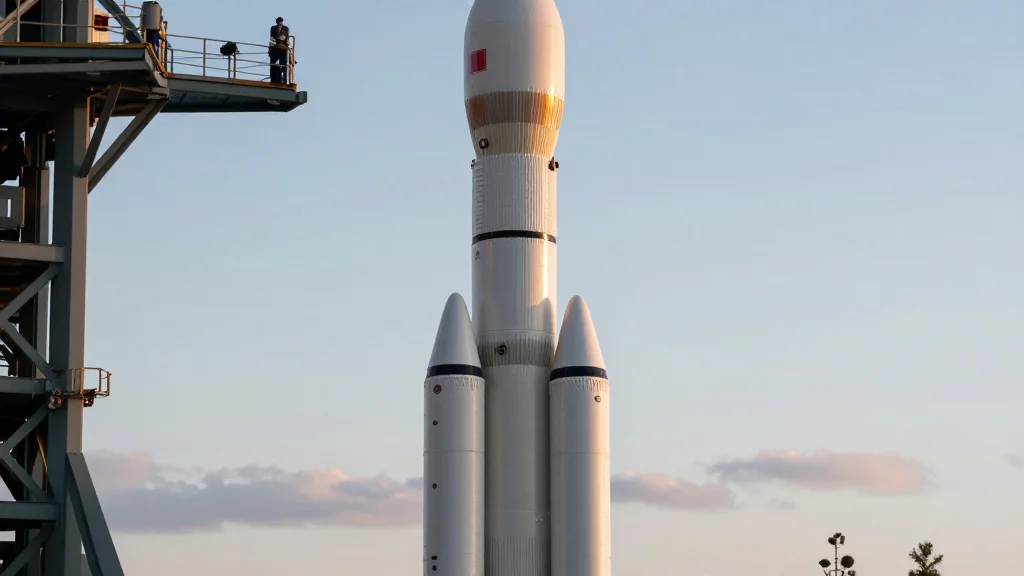
- •Amur‑SPG returnable first‑stage rocket prototype slated for launch in 2028 to reduce launch costs.
- •Roscosmos plans a national orbital station to replace the ISS, targeting 2028 for initial deployment.
Pulse Analysis
Moscow’s diplomatic overture is as much a market strategy as it is a soft‑power exercise. By framing space as a domain above politics, Russian officials are attempting to sidestep the sanctions that have choked off Western technology transfers. The $7.8 bn private investment in the New Start project mirrors the commercial financing models that have propelled SpaceX and Blue Origin, suggesting Russia is finally courting private capital at scale. If the Amur‑SPG can deliver on its promised cost reductions, it could undercut the price advantage that SpaceX’s Falcon 9 currently enjoys, especially for medium‑class payloads.
However, the path to international partnership is fraught. The recent launch that survived "serious strike attempts" underscores the security risks perceived by potential collaborators. Moreover, the lack of concrete joint missions announced at the forum hints that the call for cooperation may be more rhetorical than operational at this stage. Countries like India and China, while expressing goodwill, are already entrenched in their own launch ecosystems and may view Russian overtures with caution.
In the longer term, Russia’s ambition to replace the ISS with a higher‑inclination orbital station could fill a niche for polar‑region research, a capability the current ISS lacks. If the station attracts scientific payloads from Europe, Japan, or even the United States, it could become a rare platform for truly global cooperation. Yet, achieving that will require not only technical success but also a credible guarantee of uninterrupted access, something that geopolitical volatility currently threatens. The next few years will test whether Moscow’s diplomatic push can translate into tangible, market‑driven partnerships that reshape the aerospace landscape.
Russia Calls for Expanded International Space Cooperation on Gagarin's 65th Anniversary
Comments
Want to join the conversation?
Loading comments...