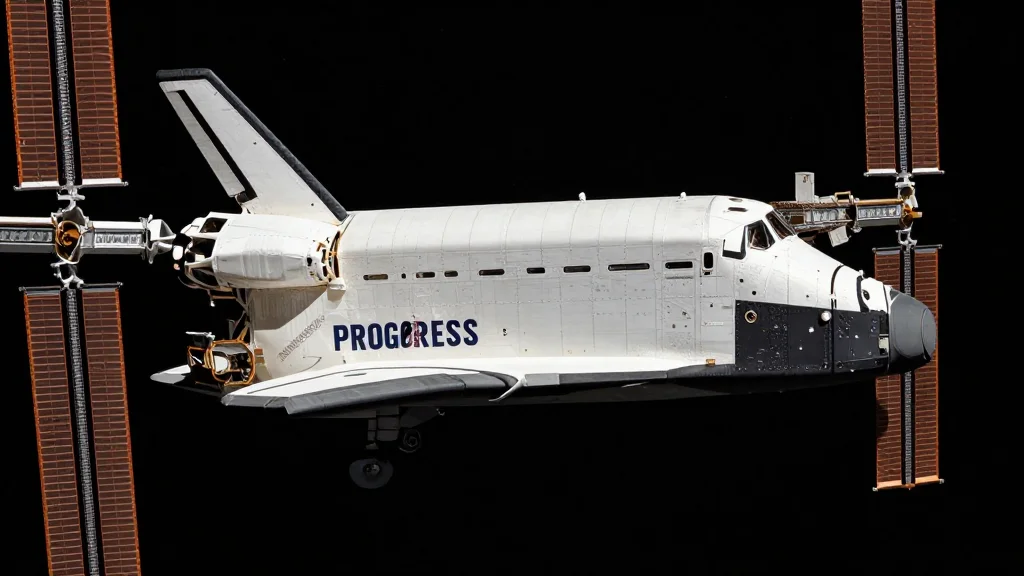
Russia Launches 3‑ton Progress 95 Cargo Mission to the ISS

Companies Mentioned
Why It Matters
The Progress 95 launch demonstrates that Russia remains a vital logistics provider for the ISS, a role that underpins daily life aboard the station and the continuity of multinational scientific research. By delivering 3 tons of essential supplies, the mission helps avoid potential shortages that could delay experiments or compromise crew health. In the broader aerospace ecosystem, the successful operation reinforces confidence in legacy launch systems while the industry transitions to newer commercial vehicles. The mission also serves as a barometer for the health of the ISS partnership amid shifting political landscapes. Consistent cargo deliveries from all partners are essential for the station’s planned de‑orbit timeline in the late 2020s, and any disruption could accelerate discussions about the station’s future or the need for alternative platforms.
Key Takeaways
- •Progress 95 launched on a Soyuz rocket from Baikonur at 6:21 p.m. EDT on April 25
- •The cargo ship carries roughly 3 tons of food, propellant and supplies for the ISS
- •Docking is scheduled for April 27 at 8 p.m. EDT, using the port vacated by Progress 93
- •Progress 94, launched on March 22, remains attached after overcoming a docking‑antenna failure
- •The mission underscores Russia’s continued logistical importance for the multinational ISS program
Pulse Analysis
Roscosmos’s ability to field a fully loaded Progress freighter on schedule reaffirms the reliability of its Soyuz‑based launch architecture, a system that has underpinned human spaceflight for decades. While commercial providers in the United States are scaling up, the Russian segment still delivers a larger proportion of cargo mass per flight, a factor that keeps the ISS’s supply chain diversified. The 3‑ton payload of Progress 95 is comparable to a typical Cygnus or Dragon cargo vehicle, highlighting that legacy hardware can still compete on payload capacity.
From a strategic perspective, the mission’s smooth execution helps mitigate the risk of supply chain fragmentation that could arise from geopolitical friction. The ISS’s governance model, which mandates equal access to resources, benefits from each partner meeting its logistical commitments. Any shortfall on the Russian side would force NASA and its commercial partners to accelerate their own launch cadence, potentially straining budgets and launch windows.
Looking ahead, the success of Progress 95 may influence Roscosmos’s planning for the next generation of Russian cargo vehicles, such as the planned Angara‑A5‑L launch system. Demonstrated performance now could secure funding and international confidence for future missions, including potential contributions to the Lunar Gateway. For the ISS, the continued flow of Russian cargo buys time for the station’s operators to negotiate its post‑2028 future, whether that involves extending its life, transitioning to commercial platforms, or de‑orbiting in a controlled manner.
Russia launches 3‑ton Progress 95 cargo mission to the ISS
Comments
Want to join the conversation?
Loading comments...