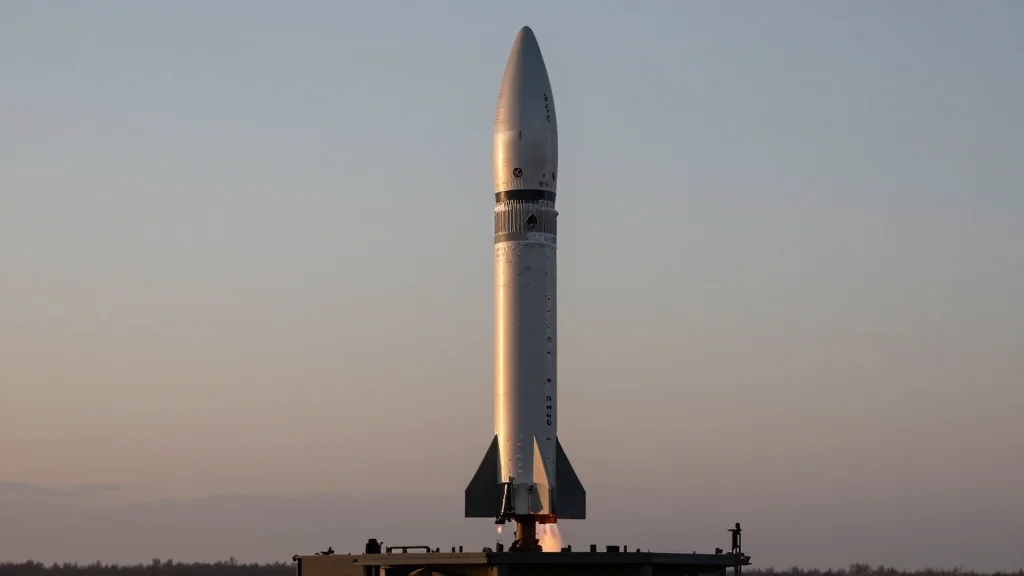
Russia Tests RS‑28 Sarmat ‘Satan II’ ICBM, Plans Combat Deployment by Year‑End

Why It Matters
The RS‑28 Sarmat represents a qualitative leap in Russia’s strategic nuclear capability, potentially rendering current NATO missile‑defence systems ineffective. By fielding a missile that can carry up to ten MIRVs and fly sub‑orbital trajectories, Moscow signals its intent to maintain a credible deterrent despite the collapse of the New START framework. This development forces the United States and its allies to reassess both offensive and defensive postures, accelerating investments in next‑generation interceptors, space‑based sensors, and diplomatic efforts to prevent an unchecked arms race. Beyond the immediate military calculus, the Sarmat test amplifies geopolitical risk. The weapon’s advertised ability to strike any point on the globe within minutes heightens the stakes of miscalculation, especially as both sides modernise their nuclear triads. The test also serves as a domestic propaganda tool for President Putin, reinforcing a narrative of Russian resilience and technological prowess at a time when the war in Ukraine remains a focal point of international scrutiny.
Key Takeaways
- •Russia announced a successful test of the RS‑28 Sarmat ICBM, known as “Satan II,” on May 13, 2026.
- •President Vladimir Putin called it “the most powerful missile system in the world” and said its warhead power is over four times that of any Western counterpart.
- •The missile weighs 208 tons, stands 35 metres tall, can carry up to 10 tons of payload and has a range exceeding 35,000 km.
- •Colonel General Sergei Karakayev confirmed the first Sarmat regiment will be combat‑ready by the end of 2026 in Krasnoyarsk Krai.
- •The test comes after the New START treaty expired, raising concerns of a new nuclear arms race and prompting NATO to review missile‑defence strategies.
Pulse Analysis
The Sarmat test is less a surprise launch and more a strategic statement. By finally fielding a heavy ICBM that can out‑maneuver and out‑payload current U.S. and European systems, Russia is attempting to re‑assert its deterrent credibility after years of perceived erosion due to U.S. missile‑shield deployments and the 2024‑25 series of failed Sarmat tests. The timing is deliberate: with New START dead, Moscow can no longer rely on treaty‑based caps to limit its arsenal, so showcasing a platform that can theoretically overwhelm any defensive shield serves both as a bargaining chip and a warning.
From a technical standpoint, the Sarmat’s sub‑orbital flight path and MIRV capacity make it a formidable challenge for existing early‑warning radars, which are optimized for traditional ballistic arcs. NATO’s current Aegis and THAAD systems were designed against older Soviet‑era ICBMs; adapting them to detect a missile that can dip into the upper atmosphere and re‑emerge on a polar trajectory will require costly upgrades and possibly new sensor constellations in space. The United States, meanwhile, is likely to accelerate its own heavy‑weight ICBM programs, such as the Ground Based Strategic Deterrent (GBSD), to preserve a credible counter‑balance.
Politically, the test reinforces President Putin’s narrative of a resilient, technologically advanced Russia, a narrative that bolsters domestic support amid a protracted conflict in Ukraine. Internationally, it raises the spectre of a destabilising spiral: each side’s pursuit of more penetrative, faster, and more numerous warheads can erode crisis stability, making accidental escalation more probable. The Sarmat’s debut therefore not only reshapes the technical balance of power but also re‑opens the diplomatic arena, where renewed arms‑control talks may become the only viable path to prevent a runaway nuclear competition.
Russia Tests RS‑28 Sarmat ‘Satan II’ ICBM, Plans Combat Deployment by Year‑End
Comments
Want to join the conversation?
Loading comments...