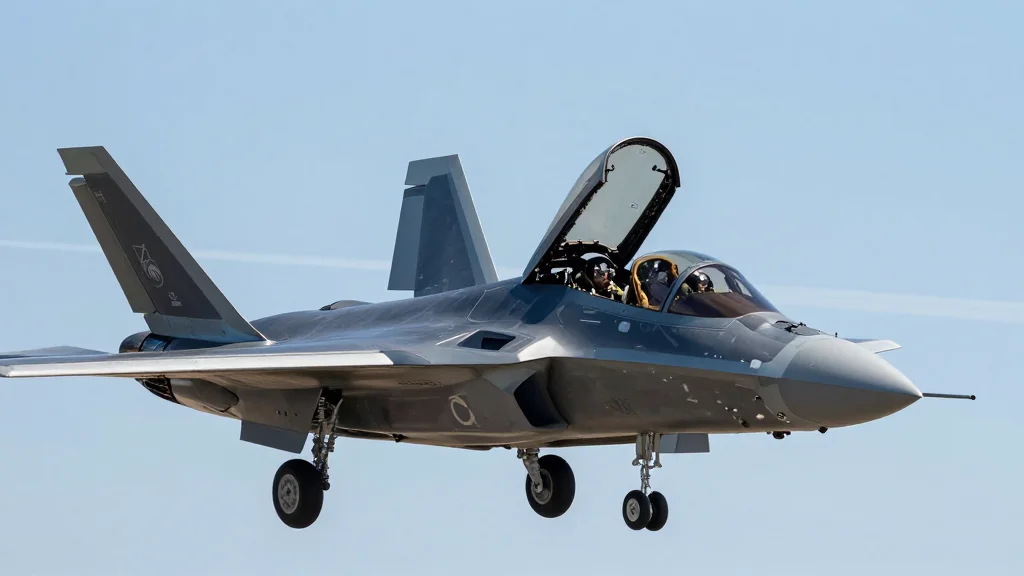
Russia’s UAC Flies Su‑57D Two‑Seat Fighter Prototype, Expanding Fifth‑Gen Capabilities

Why It Matters
The Su‑57D prototype signals a shift in how Russia intends to field its fifth‑generation fleet, blending combat, training and command functions into a single airframe. By embedding a second crew member, the aircraft can sustain high‑tempo operations while accelerating pilot proficiency, a critical advantage given the attrition and recruitment challenges facing the Russian Air Force. If the Su‑57D successfully integrates with unmanned platforms like the S‑70 Okhotnik, it could give Moscow a credible manned‑unmanned teaming capability, enhancing situational awareness and strike coordination in contested airspace. Such a capability would narrow the technology gap with Western forces that are already fielding similar concepts, potentially reshaping the strategic calculus in Europe and the Asia‑Pacific.
Key Takeaways
- •May 19, 2026: UAC completes 40‑minute maiden flight of Su‑57D two‑seat prototype at Zhukovsky.
- •Prototype converted from T‑50‑5R airframe (first flight 2013, rebuilt after 2014 engine fire).
- •Chief test pilot Sergei Bogdan reports performance matches single‑seat Su‑57.
- •Rostec and Deputy PM Denis Manturov highlight roles in training, command‑and‑control, and manned‑unmanned teaming.
- •Next steps include envelope‑expansion tests and integration with S‑70 Okhotnik drone, targeting 2028 delivery.
Pulse Analysis
The Su‑57D’s debut reflects a pragmatic approach by Russia to stretch the utility of its limited fifth‑generation inventory. Rather than waiting for a brand‑new two‑seat design, UAC repurposed an existing airframe, shaving years off development and conserving scarce resources. This mirrors a broader trend in Russian defense procurement: incremental upgrades that deliver new capabilities without the cost overruns typical of clean‑sheet programs.
From a market perspective, the Su‑57D could open export opportunities for nations seeking a cost‑effective fifth‑generation platform with built‑in training capacity. Countries that cannot afford a full fleet of single‑seat stealth fighters may find value in a dual‑role aircraft that doubles as a command hub for indigenous UAVs. However, geopolitical sanctions and the reliance on legacy components could limit the variant’s appeal outside the Russian sphere of influence.
Strategically, the integration of manned‑unmanned teaming is the most consequential aspect. If the Su‑57D can reliably command the S‑70 Okhotnik and future loyal‑wingman drones, Russia will possess a force multiplier that can overwhelm enemy air defenses through coordinated swarms. This capability forces NATO planners to reconsider air superiority doctrines that assume a clear separation between manned fighters and unmanned assets. The coming years of testing will reveal whether the Su‑57D can deliver on this promise or remain a niche trainer‑combat hybrid.
Russia’s UAC Flies Su‑57D Two‑Seat Fighter Prototype, Expanding Fifth‑Gen Capabilities
Comments
Want to join the conversation?
Loading comments...