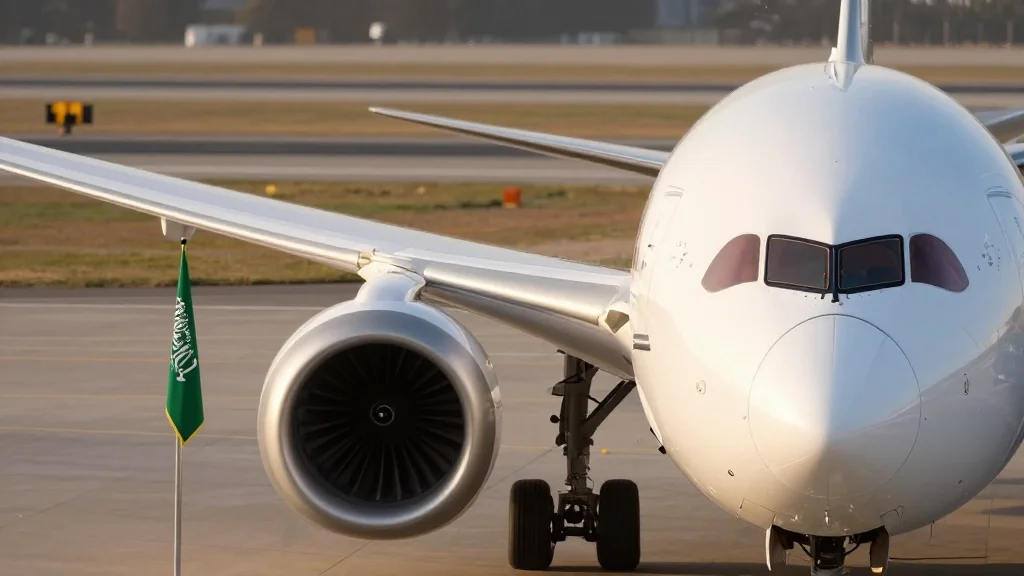
Saudi's New National Carrier Gets Off Ground Despite War, Delays
Companies Mentioned


Why It Matters
Riyadh Air gives Saudi Arabia a high‑profile tool to develop Riyadh as a global aviation hub, creating hundreds of thousands of jobs and reducing reliance on oil‑based revenues. Its entry intensifies competition in an already saturated Gulf market, testing the kingdom’s Vision 2030 diversification strategy.
Key Takeaways
- •Riyadh Air launched with inaugural Boeing 787 Dreamliner flight
- •PIF ordered 132 Dreamliners and 25 A350‑1000s, option for 50 more
- •New Riyadh airport aims for 120 million passengers annually by 2030
- •Airline targets 200,000 jobs and 100+ international destinations in five years
Pulse Analysis
The debut of Riyadh Air marks a bold statement from Saudi Arabia amid geopolitical turbulence and supply‑chain hiccups that have plagued Boeing’s production line. By finally getting a Dreamliner off the tarmac, the kingdom signals its determination to build a world‑class carrier that can rival Emirates, Qatar Airways, and Etihad. The airline’s launch also underscores the broader Vision 2030 agenda, which seeks to transform the Saudi economy from oil dependence to a diversified, service‑oriented model, leveraging its strategic location and growing domestic market of 35 million people.
Riyadh Air’s fleet strategy is ambitious: 132 Boeing 787 Dreamliners and an initial batch of 25 Airbus A350‑1000s, with options for 50 more aircraft, position it to serve a network of over 100 international destinations within five years. Coupled with the planned new Riyadh airport—projected to handle 120 million passengers a year by 2030—the carrier aims to turn the capital into a major transit hub, complementing Saudi’s hosting of the 2030 World Expo, the 2034 FIFA World Cup, and the annual pilgrimage influx. The airline’s chairman projects 200,000 direct and indirect jobs, highlighting the sector’s potential as a catalyst for employment and ancillary industries.
Despite the optimism, Riyadh Air enters a saturated Gulf market where Emirates, Qatar Airways, and Etihad have entrenched brand loyalty and extensive route maps. The carrier’s success will hinge on differentiating through service quality, strategic partnerships, and leveraging the kingdom’s sizable domestic travel base. If it can achieve its connectivity goals and sustain profitability, Riyadh Air could become a cornerstone of Saudi Arabia’s economic diversification, reinforcing the Vision 2030 narrative and reshaping Middle Eastern aviation dynamics.
Saudi's new national carrier gets off ground despite war, delays
Comments
Want to join the conversation?
Loading comments...