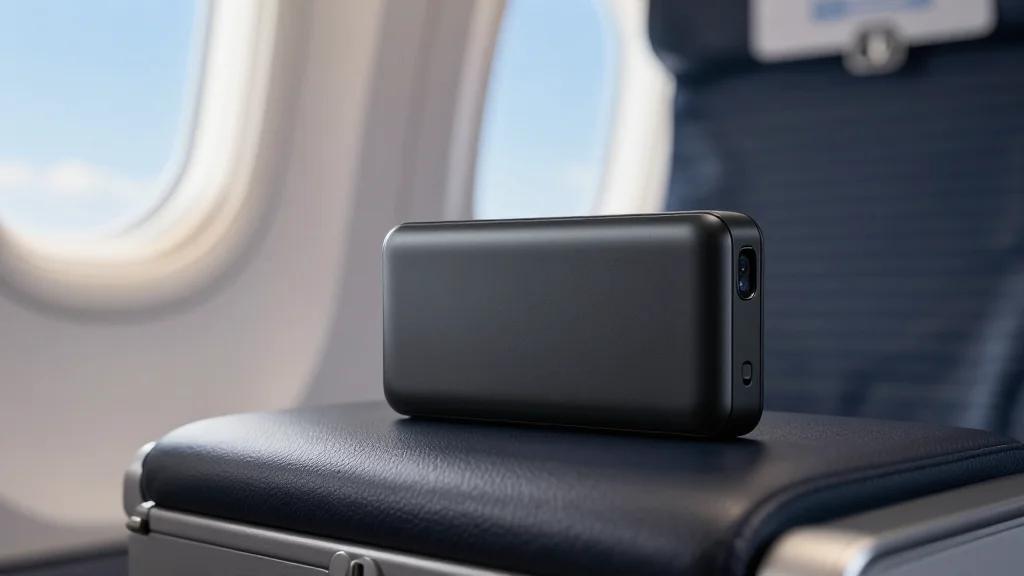
Southwest Airlines Is Tightening Its Power Bank Rules Even Further… Now Passengers Are Limited to Just One
Key Takeaways
- •One power bank per passenger, visible at all times.
- •Overhead bins prohibited for power banks; no checked luggage.
- •Rule targets thermal runaway incidents from lithium batteries.
- •Southwest exceeds IATA’s two‑bank recommendation.
- •Could trigger industry‑wide tightening of battery policies.
Pulse Analysis
The surge in lithium‑ion battery failures has become a top safety concern for commercial aviation. Thermal runaway—where a single overheated cell ignites neighboring cells—can turn a modest power bank into a fireball that spreads rapidly in the confined cabin environment. High‑profile incidents, such as the January 2025 Air Busan fire that erupted from a concealed charger, have forced airlines and regulators to reassess how portable energy devices are handled on board. As a result, the International Air Transport Association (IATA) and the International Civil Aviation Organization (ICAO) have issued guidance limiting the number of chargers and mandating visual supervision.
Southwest Airlines is taking the next step by capping passengers at a single power bank and requiring it to remain in plain sight, effectively banning overhead‑bin storage. This policy, slated for April 20, 2026, goes beyond IATA’s recommendation of two units and mirrors the stricter approach already adopted by Dubai‑based carriers. By eliminating hidden stowage, Southwest aims to reduce the likelihood of an unnoticed thermal event that could force an emergency diversion. The airline also prohibits charging the bank from in‑seat power, further limiting heat generation during flight.
Southwest’s aggressive stance may reshape the U.S. market, prompting legacy carriers such as American, Delta and United to tighten their own lithium‑battery rules. Regulators could soon codify these practices, turning airline‑specific policies into industry standards. For travelers, the change means planning ahead—consolidating power sources and keeping chargers accessible—while still enjoying device connectivity. In the longer term, manufacturers are likely to respond with safer battery chemistries and built‑in fire‑suppression features, creating a feedback loop that enhances overall aviation safety.
Southwest Airlines is Tightening its Power Bank Rules Even Further… Now Passengers Are Limited to Just One
Comments
Want to join the conversation?