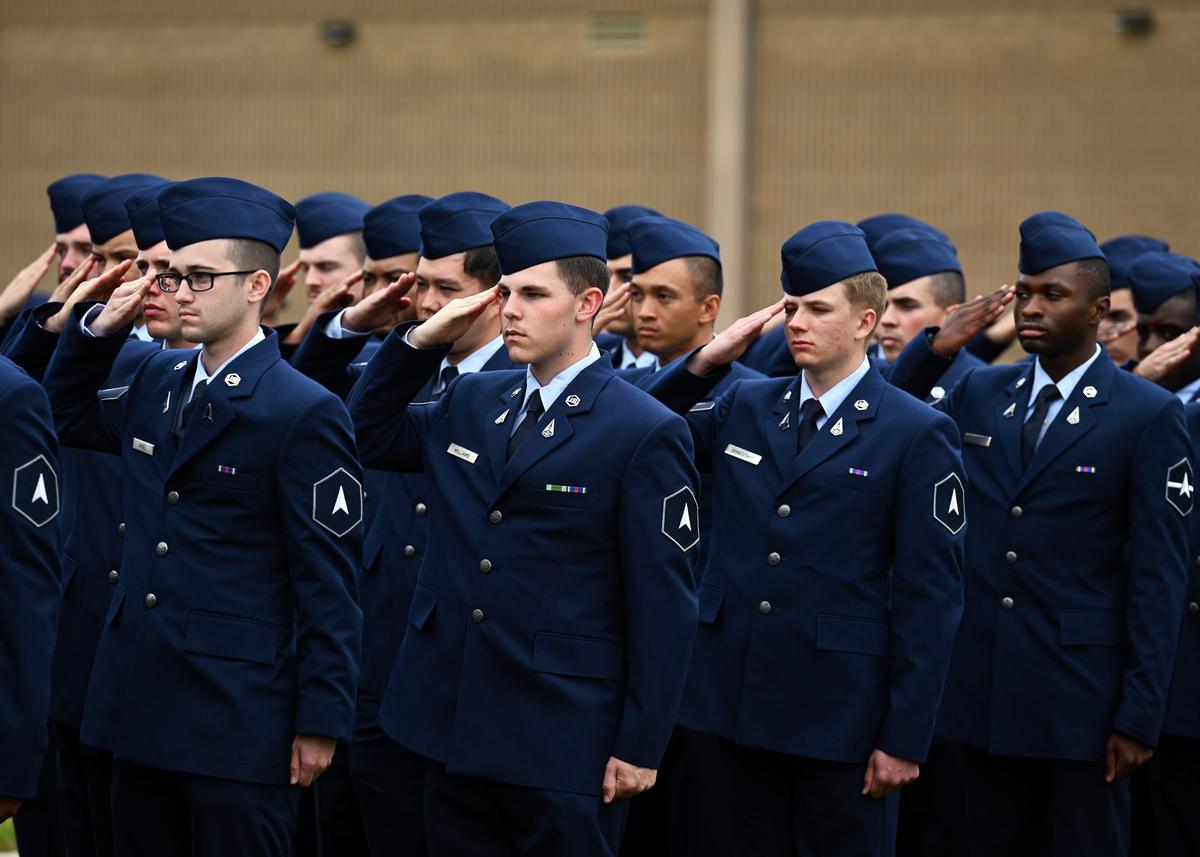
Space Force, Aiming to Double in Size, Blows Past Recruiting Goal
•February 12, 2026
0
Why It Matters
Doubling the Space Force’s workforce will reshape U.S. space dominance and drive substantial defense‑budget allocations, influencing both national security strategy and the aerospace industrial base.
Key Takeaways
- •Recruiting goal 730; actual 912, 125% achieved
- •Service seeks to double Guardians from 10,000 to 20,000
- •New dedicated recruiting squadron launched 2025 accelerates growth
- •FY2026 budget near $40 billion, supporting expansion
- •Leadership urges infrastructure investment alongside personnel increase
Pulse Analysis
The Space Force’s rapid recruitment surge reflects a broader strategic pivot toward space as a contested domain. By exceeding its FY 2026 enlistment target by 25 percent, the service demonstrates both a growing pool of technically skilled candidates and an effective messaging campaign that positions space service as a high‑impact career. This momentum is crucial as the Pentagon confronts sophisticated anti‑satellite capabilities from near‑peer adversaries, prompting a need for more Guardians to staff satellite‑operations, cyber‑defense, and orbital‑debris mitigation units.
Financially, the near‑$40 billion FY 2026 budget underscores Congress’s willingness to fund a larger force, but scaling personnel without parallel infrastructure upgrades could create bottlenecks. The Space Force must invest in training facilities, test ranges, and acquisition offices to translate headcount gains into operational readiness. Compared with the Air Force’s 33,000‑person recruitment drive, the Space Force’s proportional growth is modest, yet its niche focus demands specialized hardware and software ecosystems that are cost‑intensive and time‑sensitive.
Looking ahead, policymakers face a trade‑off between expanding the Guardian corps and ensuring sustainable support structures. If the service achieves its doubling ambition, it could justify a budget that rivals traditional services, attracting further private‑sector partnerships and spurring innovation in launch, navigation, and space‑situational‑awareness technologies. However, without deliberate planning for facilities, acquisition pipelines, and talent retention, the force risk overextending its resources, potentially diluting the very capabilities it seeks to enhance. Strategic alignment of personnel, infrastructure, and fiscal policy will be key to cementing the United States’ long‑term advantage in space.
Space Force, Aiming to Double in Size, Blows Past Recruiting Goal
0
Comments
Want to join the conversation?
Loading comments...