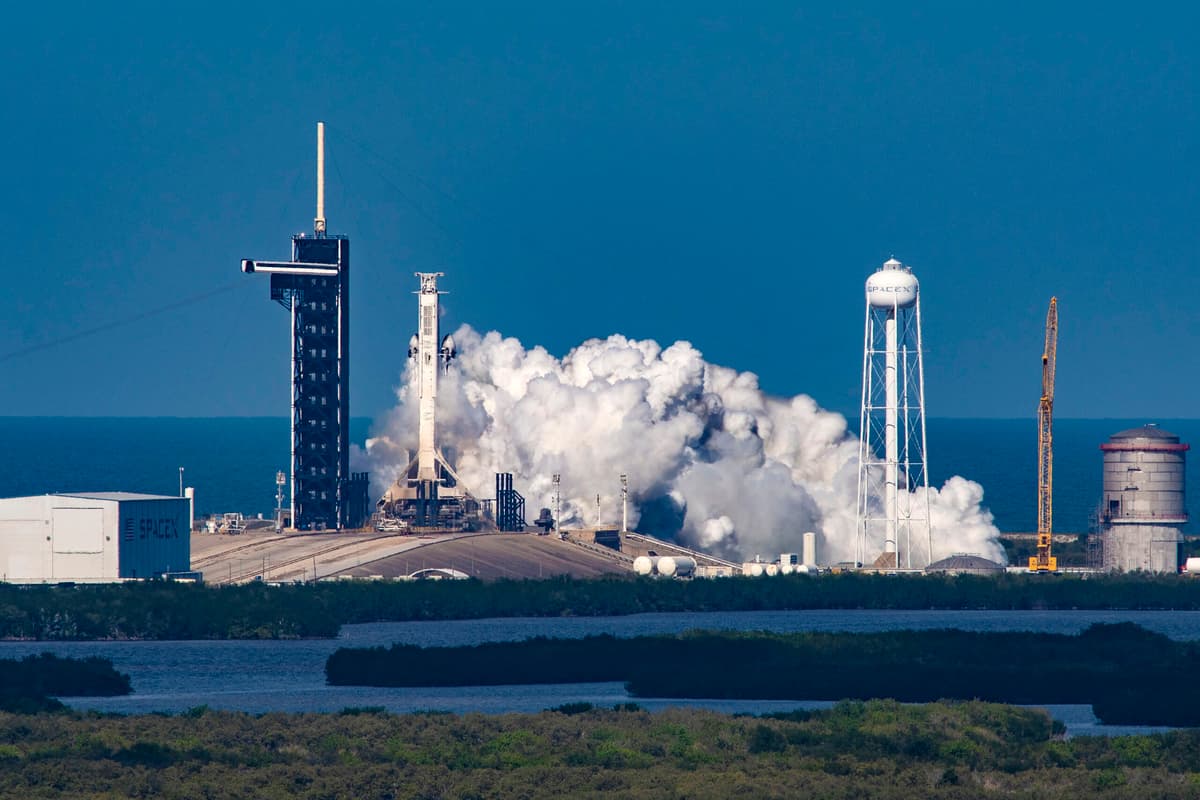
Space Force Faces Surge in Demand for Heavy-Lift Launches
Companies Mentioned

Why It Matters
The surge intensifies pressure on the limited pool of certified heavy‑lift launch providers, potentially affecting launch schedules, costs, and national‑security timelines. It also underscores the strategic importance of certifying additional providers to sustain U.S. launch capability.
Key Takeaways
- •Space Force adds 25 heavy‑lift launches to NSSL Phase 3.
- •Lane 2 missions rise by nearly 50%, stressing limited providers.
- •Only SpaceX and ULA currently certified; ULA’s Vulcan grounded.
- •Blue Origin’s New Glenn certification uncertain after recent setback.
- •Pentagon FY2027 budget requests $5 billion for 31 national security launches.
Pulse Analysis
The Space Force’s decision to augment its heavy‑lift launch slate reflects a broader shift toward more ambitious orbital missions, such as direct insertion of multi‑ton payloads into geosynchronous and medium‑Earth orbits. These high‑energy trajectories demand rockets with proven reliability and thrust, narrowing the field to a handful of NSSL‑certified vehicles. As the demand climbs, the market dynamics resemble a capacity‑constrained environment where each launch slot carries heightened strategic value, prompting the Pentagon to allocate significantly more funding to secure the necessary lift capability.
For launch providers, the expanded Lane 2 workload presents both opportunity and risk. SpaceX, already operating NSSL missions, stands to capture a larger share of government contracts, reinforcing its dominant market position. ULA, meanwhile, faces a paradox: its Vulcan rocket remains grounded amid a solid‑rocket booster anomaly investigation, limiting its ability to meet the surge despite being a certified provider. Blue Origin’s path to certification for its New Glenn vehicle is fraught with technical setbacks, meaning its entry into the lane could be delayed, leaving the two existing players to shoulder the bulk of the upcoming demand.
The fiscal implications are equally significant. The FY2027 request of roughly $5 billion—more than double the $2 billion allocated for 2026—signals the government’s willingness to invest heavily in national‑security space assets. Yet the concentration of launch capability raises policy questions about resilience and competition. Industry observers anticipate that sustained pressure may accelerate certification pathways for new entrants, prompting a potential reshaping of the U.S. heavy‑lift launch ecosystem in the coming decade.
Space Force faces surge in demand for heavy-lift launches
Comments
Want to join the conversation?
Loading comments...