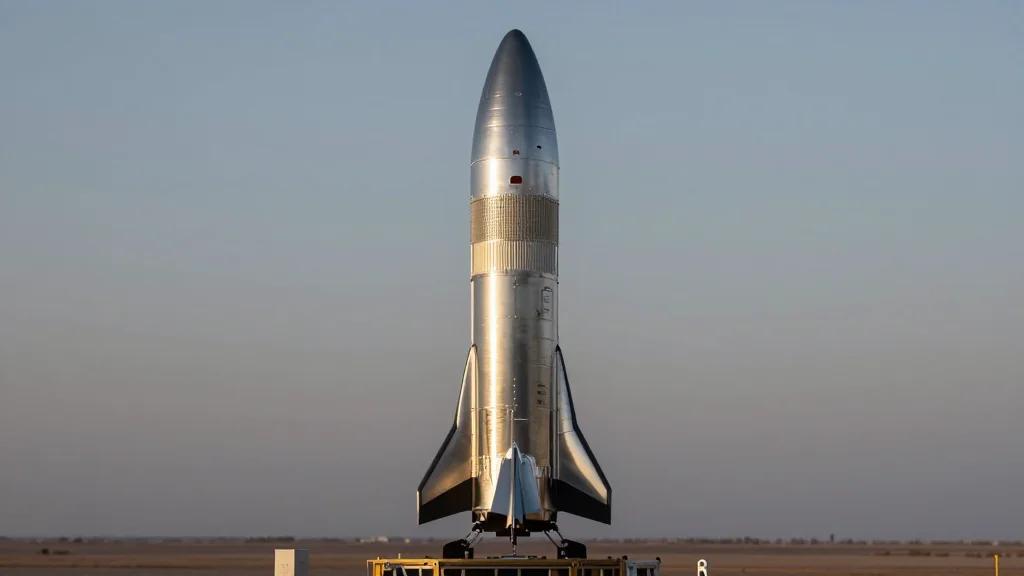
SpaceX Accelerates Shift to Starship, Targets 12 Test Flights by Q3 2026

Companies Mentioned

Why It Matters
The accelerated Starship rollout reshapes the economics of heavy‑lift launch services, potentially lowering launch costs and enabling new classes of large‑scale space infrastructure such as lunar bases and orbital data centers. By freeing Falcon 9 for rapid, smaller missions, SpaceX can address divergent market needs—high‑volume commercial payloads and responsive defense launches—simultaneously. The shift also pressures competitors to accelerate their own heavy‑lift programs, intensifying competition and innovation across the sector. For satellite manufacturers, the prospect of regularly accessing 100‑ton lift capacity may drive a redesign of payloads, favoring larger, more capable platforms over the current trend of extreme miniaturization. This could alter supply chains, component standards, and the overall cost structure of satellite production, with downstream effects on telecom, Earth observation, and defense services.
Key Takeaways
- •SpaceX targets launch‑on‑demand Starship capability by Q3 2026.
- •12 orbital Starship flight tests are planned for 2026.
- •Starship payload capacity exceeds 100 metric tons to LEO, over five times Falcon 9.
- •Falcon 9 projected to conduct 150 missions in 2026 before gradual phase‑out.
- •Competitors Blue Origin and ULA are scaling heavy‑lift offerings, intensifying market pressure.
Pulse Analysis
SpaceX’s decision to fast‑track Starship reflects a strategic bet that the economics of full reusability will outweigh the operational certainty of Falcon 9. Historically, launch providers have struggled to transition from proven workhorses to untested heavy‑lift systems without market disruption. By committing to a dense test schedule and a launch‑on‑demand model, SpaceX is attempting to lock in a new cost baseline before rivals achieve comparable capability.
If Starship delivers on its promised cost per kilogram, the entire launch market could see a compression of price points, forcing legacy providers to either innovate or consolidate. The move also aligns with U.S. defense priorities that emphasize rapid, high‑mass launch capability for large satellite constellations and future lunar logistics. However, the technical challenges of rapid refurbishment and in‑space propellant transfer remain significant; any delay could erode the perceived monopoly SpaceX enjoys in the super‑heavy segment.
In the longer term, the Starship architecture could become the de‑facto logistics platform for a multi‑planetary economy. By establishing a reliable, high‑capacity launch service now, SpaceX positions itself to capture the bulk of future lunar and Martian cargo contracts, potentially shaping the commercial space supply chain for decades. The next twelve months will be a litmus test for whether the Starship vision can transition from prototype to operational mainstay.
SpaceX Accelerates Shift to Starship, Targets 12 Test Flights by Q3 2026
Comments
Want to join the conversation?
Loading comments...