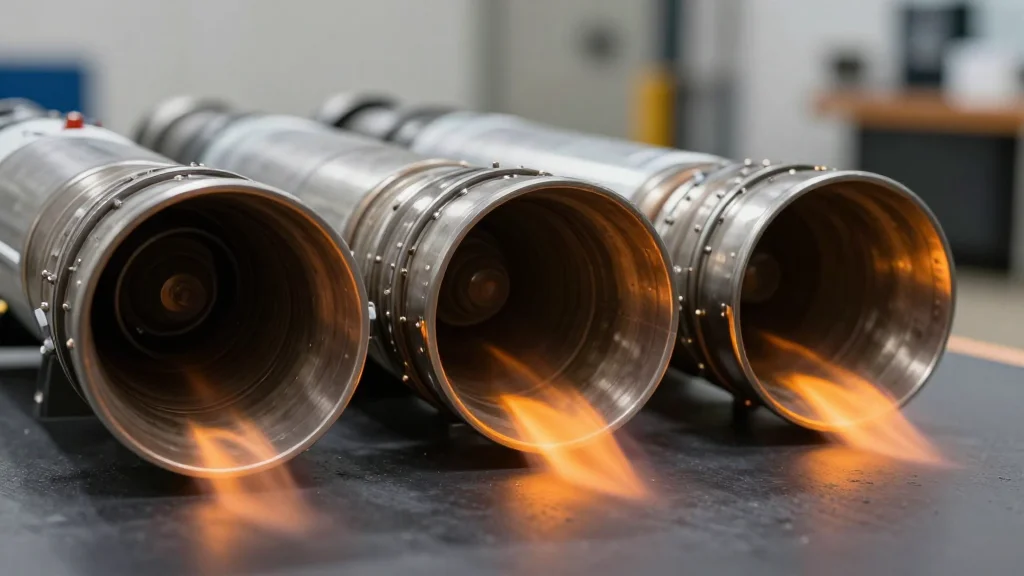
SpaceX Fires All 33 Starship V3 Engines, but Lawsuit Threatens Launch Cadence

Companies Mentioned
SpaceX

NASA
Why It Matters
The successful static fire of Starship V3’s 33‑engine Super Heavy booster removes the final propulsion barrier to a flight that could cement SpaceX’s role as the primary launch provider for NASA’s Artemis lunar missions. Demonstrating orbital refueling at this scale would unlock a new class of deep‑space missions, from crewed lunar landings to Mars cargo deliveries, reshaping the economics of space exploration. Conversely, the homeowners’ lawsuit introduces a legal lever that could throttle launch frequency, forcing NASA to reconsider its reliance on a single provider and potentially opening market share to competitors like Blue Origin or United Launch Alliance. The interplay between technical progress and regulatory risk underscores how aerospace projects now hinge as much on community relations and court rulings as on engineering breakthroughs. If SpaceX can navigate the legal challenge while delivering on its V3 performance promises, the company will solidify a dominant position in both government and commercial heavy‑lift markets. A setback, however, could delay Artemis lunar lander deliveries, increase program costs, and shift the strategic balance toward alternative launch architectures, influencing investment decisions across the sector for years to come.
Key Takeaways
- •SpaceX completed a full‑duration static fire of all 33 Raptor engines on Starship V3’s Super Heavy booster.
- •The V3 stack stands 124 m tall, the tallest rocket ever assembled, and carries 22 % more powerful Raptor 3 engines.
- •NASA plans to use Starship’s upper stage as a crewed lunar lander for the Artemis program, pending orbital refueling demos.
- •A lawsuit by South Texas homeowners could impose launch‑frequency caps, threatening the May 12‑18 launch window.
- •Payload capacity is advertised at up to 150 metric tons to low Earth orbit, a significant increase over previous versions.
Pulse Analysis
SpaceX’s rapid iteration on the Starship platform reflects a broader industry shift toward reusable, high‑payload launchers that can support deep‑space missions. The V3 upgrades—larger tanks, more powerful Raptor 3 engines, and heat‑shield improvements—are not merely incremental; they aim to solve the orbital refueling problem that has long been a bottleneck for lunar and Mars architectures. By clearing the propulsion hurdle, SpaceX shortens the critical path to an orbital test, a milestone that, if successful, could force a re‑evaluation of launch‑service pricing across the sector. Competitors will need to accelerate their own heavy‑lift development to stay relevant.
However, the legal front illustrates a growing friction point between launch sites and surrounding communities. The South Texas lawsuit could set a precedent for how acoustic and vibration impacts are quantified and mitigated, potentially leading to stricter environmental licensing for all launch operators. If courts enforce launch‑frequency limits, SpaceX may be compelled to stagger its test schedule, eroding the aggressive cadence that underpins its cost‑reduction model. This could also give NASA leverage to diversify its launch portfolio, reducing single‑point‑of‑failure risk.
Looking ahead, the next 12‑month window will be decisive. A successful Flight 12 and subsequent orbital demonstration would cement Starship V3 as the workhorse for Artemis and commercial payloads, driving a wave of investment into lunar infrastructure and Mars transit concepts. Conversely, a protracted legal battle or technical setbacks could delay Artemis lander integration, push NASA to contract alternative providers, and dampen the market enthusiasm that has so far propelled SpaceX’s valuation. Stakeholders should monitor court filings, FAA licensing updates, and SpaceX’s integration milestones to gauge the trajectory of the heavy‑lift market and its ripple effects on the broader aerospace ecosystem.
SpaceX fires all 33 Starship V3 engines, but lawsuit threatens launch cadence
Comments
Want to join the conversation?
Loading comments...