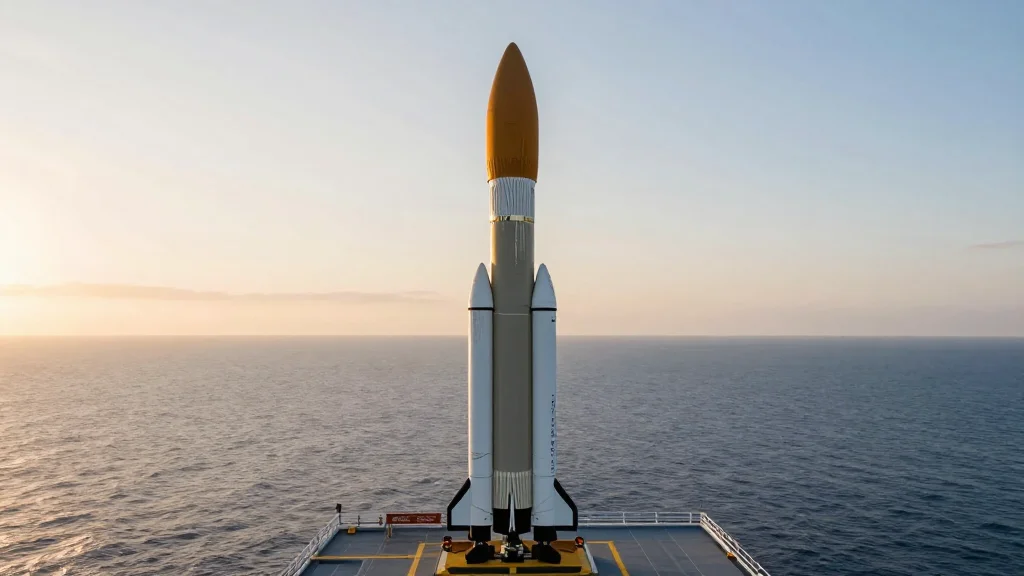
SpaceX Flies 25 Starlink Satellites to Orbit on Its 50th Falcon 9 Launch of the Year
Why It Matters
The launch accelerates SpaceX’s rollout of next‑generation internet coverage while demonstrating the economic advantage of its highly reusable launch system.
Key Takeaways
- •25 V2 Mini satellites launched, expanding Starlink broadband constellation
- •Falcon 9 booster B1088 completed its 15th flight, showing durability
- •Landing marked 193rd on “Of Course I Still Love You,” 603 overall
- •50th Falcon 9 launch of 2026 highlights SpaceX’s high launch cadence
- •Starlink deployment supports global internet coverage and future revenue growth
Pulse Analysis
SpaceX’s 50th Falcon 9 flight of the year underscores the company’s relentless launch tempo, a critical factor as it scales the Starlink V2 Mini constellation. The V2 Mini satellites, smaller and cheaper than their predecessors, are designed to deliver higher‑throughput broadband to underserved regions. By launching 25 of these units in a single mission, SpaceX adds roughly 1.5 terabits per second of capacity, edging closer to its goal of global coverage and reinforcing its position against emerging low‑Earth‑orbit competitors.
The reusable nature of the B1088 booster highlights SpaceX’s cost‑saving engine. On its 15th flight, the booster achieved its 193rd landing on the *Of Course I Still Love You* drone ship, bringing the total booster landings to 603. Each successful recovery trims launch expenses by an estimated 30‑40%, allowing SpaceX to price Starlink services competitively while maintaining healthy margins. The high flight count also validates the durability of the Merlin engines and the robustness of the refurbishment process, setting a new industry benchmark for launch vehicle longevity.
Beyond the technical feats, the launch signals broader market implications. As Starlink expands its footprint, it fuels demand for satellite‑enabled services ranging from remote education to maritime connectivity, opening new revenue streams for SpaceX and its partners. The accelerated deployment also pressures rivals like OneWeb and Amazon’s Project Kuiper to fast‑track their own constellations. Regulators and investors are watching closely, as the scale of Starlink’s network could reshape global broadband economics and influence future spectrum allocations.
SpaceX flies 25 Starlink satellites to orbit on its 50th Falcon 9 launch of the year
Comments
Want to join the conversation?
Loading comments...