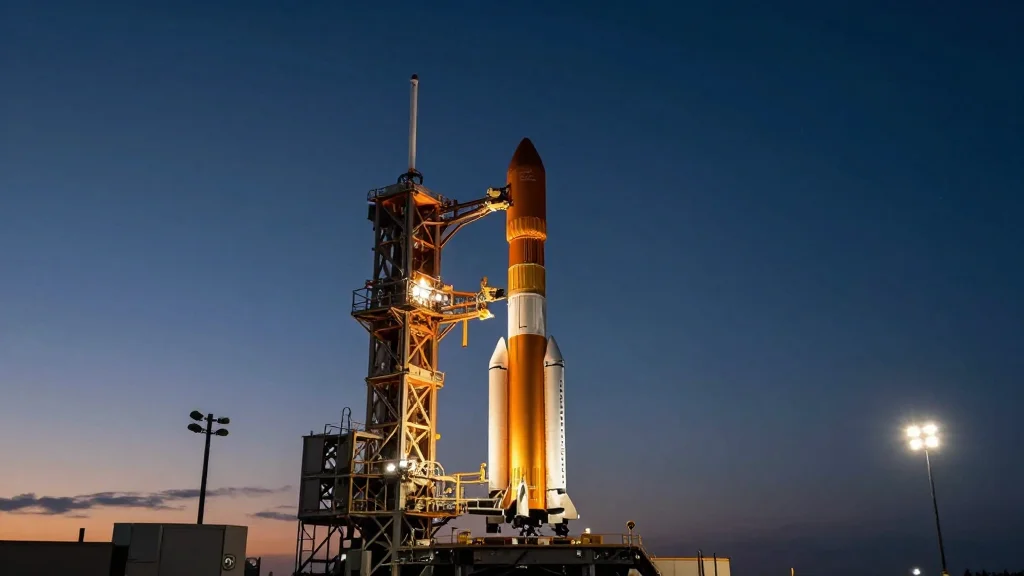
SpaceX Launches 24 Starlink Satellites on Falcon 9 Rocket From Vandenberg SFB
Companies Mentioned
Why It Matters
The addition of 24 satellites expands SpaceX’s low‑Earth‑orbit internet constellation, strengthening its competitive edge in global broadband services. The repeatable booster landing underscores the economic viability of reusable launch systems, lowering costs for future missions.
Key Takeaways
- •24 new Starlink satellites launched, bringing total 2025 deployments this year
- •Falcon 9 booster B1093 completed its 13th flight and successfully landed
- •Landing marked the drone ship’s 194th recovery
- •This launch was SpaceX’s 42nd Starlink mission in 2025
- •Booster landing contributed to SpaceX’s 606 total successful recoveries
Pulse Analysis
SpaceX’s latest Starlink deployment reflects the company’s aggressive push to dominate the satellite‑based internet market. By adding 24 low‑Earth‑orbit units, the constellation now supports a denser network capable of delivering lower latency and higher throughput to underserved regions. Competitors such as Amazon’s Project Kuiper and OneWeb are racing to secure spectrum and launch capacity, but SpaceX’s rapid cadence and vertical integration give it a distinct advantage in scaling the service globally.
The technical feat of reusing booster B1093 for its 13th mission highlights the maturity of SpaceX’s reusable launch architecture. Each successful landing on the autonomous drone ship reduces the marginal cost of a launch, a factor that investors closely monitor. With 606 booster recoveries to date and the drone ship’s 194th touchdown, the data points to a robust, repeatable process that can sustain high launch frequencies without compromising reliability—a critical metric for both commercial and defense customers.
From a market perspective, the expanded Starlink footprint strengthens SpaceX’s bargaining power with telecom operators and governments seeking resilient connectivity solutions. The increased satellite count also improves coverage in high‑latitude areas, where traditional fiber infrastructure is impractical. As regulatory bodies evaluate spectrum allocations and orbital debris mitigation, SpaceX’s demonstrated operational efficiency positions it to influence policy and capture a larger share of the burgeoning space‑based broadband revenue stream.
SpaceX launches 24 Starlink satellites on Falcon 9 rocket from Vandenberg SFB
Comments
Want to join the conversation?
Loading comments...