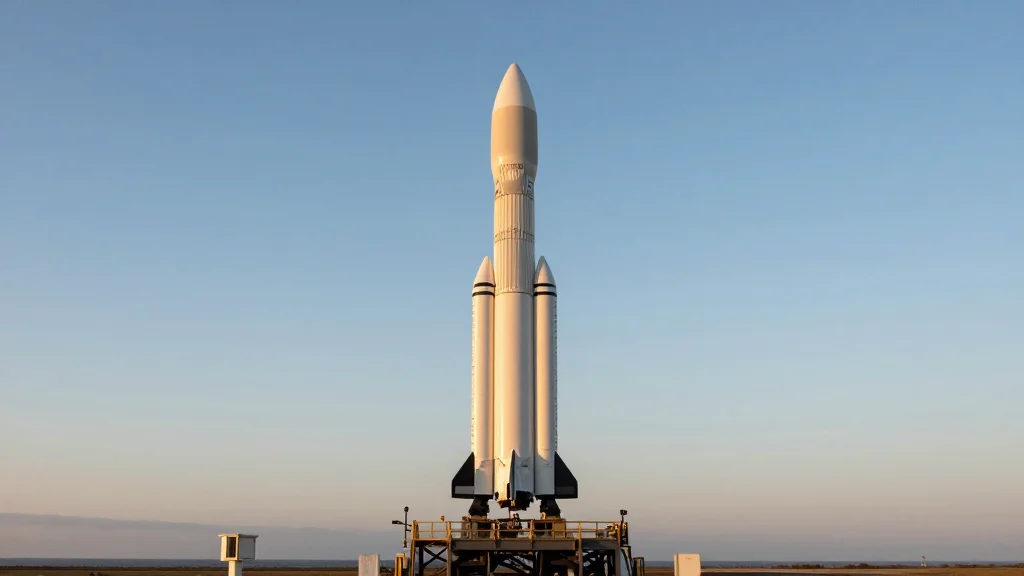
SpaceX Sends South Korean Imaging Satellite, 44 More Payloads to Orbit on Falcon 9
Why It Matters
The flight highlights SpaceX’s dominance in the commercial rideshare market while giving South Korea a rapid path to operational imaging assets, accelerating both revenue streams and strategic autonomy in space.
Key Takeaways
- •SpaceX launched 45 payloads on a single Falcon 9 rideshare
- •Primary payload is KAI's Compact Advanced Satellite 500‑2 for Earth observation
- •Mission marks South Korea's second satellite in the CAS500 Phase 1 series
- •Launch from Vandenberg underscores West Coast rideshare demand
- •Demonstrates SpaceX’s growing role in commercial small‑sat deployments
Pulse Analysis
SpaceX’s latest rideshare from Vandenberg underscores the company’s expanding role as the go‑to launch provider for small‑sat operators. By cramming 45 payloads onto a single Falcon 9, SpaceX continues to prove that high‑frequency, low‑cost access to low‑Earth orbit is achievable, reinforcing its competitive edge over legacy launch houses. The West Coast launch also diversifies launch site utilization, reducing bottlenecks at Florida’s Cape Canaveral and offering customers more orbital inclination options.
The centerpiece of the mission, Korea Aerospace Industries’ Compact Advanced Satellite 500‑2, is the second spacecraft in the CAS500 Phase 1 program. Designed for precision ground‑based observation, the satellite will deliver high‑resolution imagery for agriculture, disaster monitoring, and national security. South Korea’s investment in the CAS500 series reflects a broader national strategy to secure independent remote‑sensing capabilities and to nurture a domestic satellite manufacturing ecosystem that can compete globally.
Industry analysts view the successful deployment as a bellwether for the growing demand of rideshare slots among emerging space nations and commercial constellations. As constellations scale to thousands of units, providers like SpaceX that can reliably batch dozens of satellites per launch will capture a larger share of launch revenue. The mission also pressures competitors to accelerate their own rideshare services, potentially driving further price reductions and innovation in small‑sat deployment mechanisms, a trend that will shape the commercial space landscape for years to come.
SpaceX Sends South Korean Imaging Satellite, 44 More Payloads to Orbit on Falcon 9
Comments
Want to join the conversation?
Loading comments...