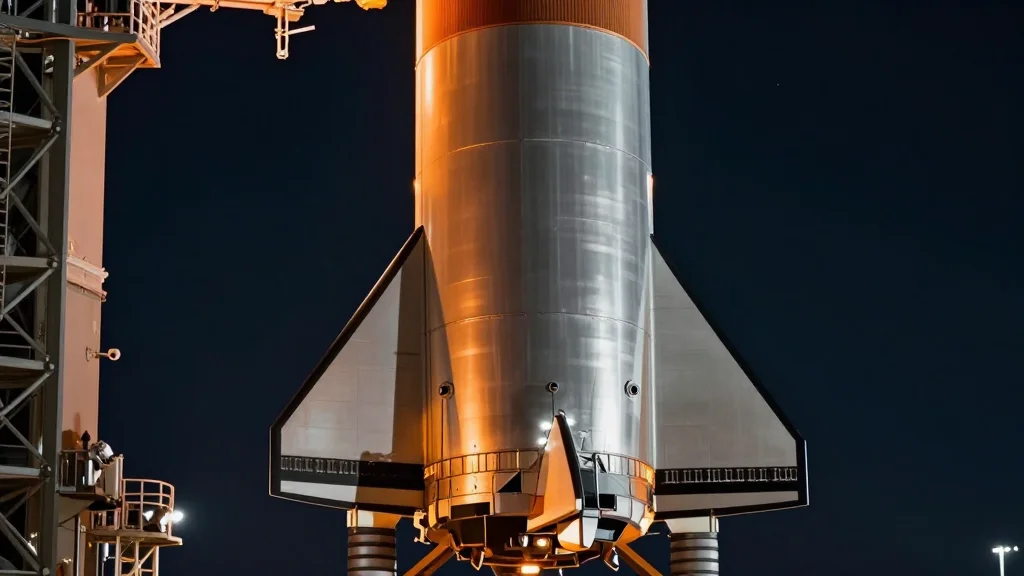
SpaceX Starship 12 Orbits Earth, Ends in Planned Fireball Splashdown in Indian Ocean

Companies Mentioned
Why It Matters
Starship 12’s orbital flight proves that SpaceX can reliably place payloads into orbit and recover the vehicle’s massive booster under controlled conditions, a prerequisite for the commercial viability of the Starship system. By demonstrating a planned fireball splashdown, SpaceX reduces the risk profile for future crewed missions, easing regulatory concerns and paving the way for NASA’s Artemis lunar lander contracts. The test also signals to competitors—Blue Origin, United Launch Alliance, and emerging Chinese launch firms—that SpaceX is closing the gap between prototype testing and operational service, potentially reshaping launch market dynamics for the next decade. The flight’s impact on regional airspace management illustrates how high‑performance launch vehicles are becoming integral to global aviation planning. As Starship moves from sub‑orbital hops to full orbital loops, coordination with civil aviation authorities will be essential to maintain safety and minimize disruptions, setting a new standard for aerospace‑aviation integration.
Key Takeaways
- •Starship 12 achieved orbit on May 23, 2026, releasing 20 mock Starlink satellites
- •Vehicle re‑entered over the Indian Ocean and ignited in a planned fireball splashdown
- •Partial engine outage reduced booster thrust, but upgraded grid fins maintained control
- •NASA administrator Jared Isaacman called the flight a step closer to the moon
- •JCAA issued temporary Caribbean airspace restrictions during the test
Pulse Analysis
SpaceX’s incremental approach—testing individual subsystems on each flight while pushing the envelope on mission complexity—has paid off with Starship 12. The vehicle’s ability to survive a controlled re‑entry, even with fewer engines firing, demonstrates robustness that investors and regulators will scrutinize ahead of the anticipated IPO. The upcoming public offering, projected to target a valuation near $2 trillion, hinges on proving that Starship can transition from testbed to revenue‑generating workhorse for satellite constellations, lunar logistics, and eventually Mars cargo.
From a competitive standpoint, the test narrows the lead SpaceX holds over Blue Origin’s New Glenn and United Launch Alliance’s Vulcan Centaur, both of which lack a fully reusable, super‑heavy lift capability. The successful orbital loop also strengthens SpaceX’s bargaining position with NASA, which is under pressure to meet Artemis timelines. By delivering a vehicle that can lift heavy payloads and return safely, SpaceX reduces the need for multiple launch contracts and consolidates market share.
Looking forward, the next challenge will be scaling the fireball splashdown into a soft‑landing capability, which would unlock rapid turnaround and lower per‑launch costs. If SpaceX can achieve a controlled ocean recovery, it could open new commercial markets such as point‑to‑point suborbital transport and large‑scale space tourism. The regulatory environment will evolve in tandem, with agencies like the FAA and JCAA likely to tighten oversight on re‑entry corridors and splashdown safety zones. The interplay between technical progress, market expectations, and regulatory frameworks will define whether Starship becomes the cornerstone of a new era in aerospace or remains a high‑profile test program.
SpaceX Starship 12 Orbits Earth, Ends in Planned Fireball Splashdown in Indian Ocean
Comments
Want to join the conversation?
Loading comments...