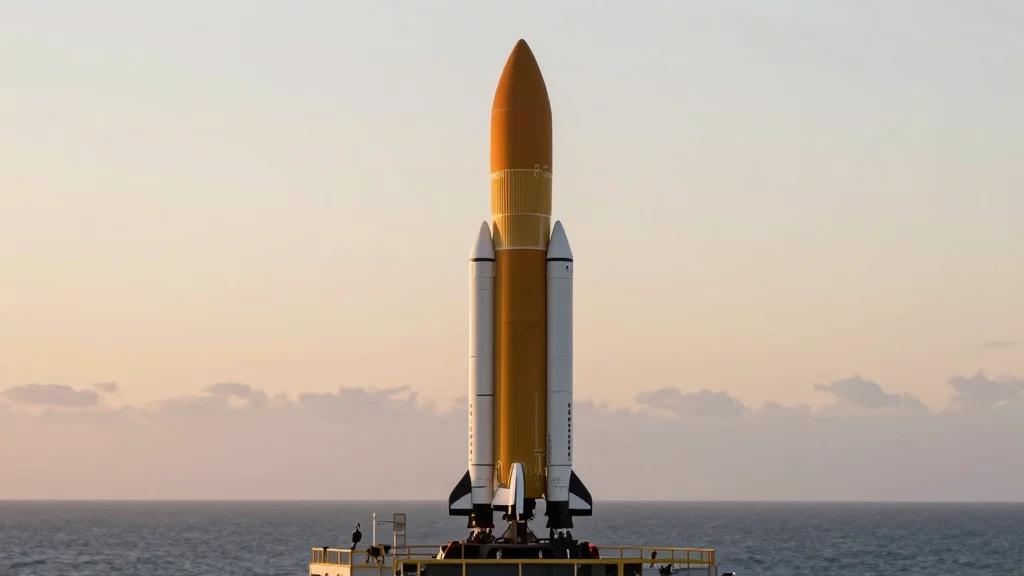
SpaceX to Launch NASA's 34th Commercial Resupply Mission with 6,500‑lb Cargo to ISS

Companies Mentioned
Why It Matters
The 34th CRS mission reinforces the commercial model that has become the backbone of ISS logistics, demonstrating that private launch providers can reliably sustain a multinational research platform. By delivering new experiments like ODYSSEY, the flight directly contributes to the scientific foundation needed for Artemis lunar habitats and future Mars missions. The continued flow of supplies also ensures that the ISS can maintain its role as a microgravity laboratory, preserving the United States’ leadership in low‑Earth‑orbit research. Moreover, the mission highlights the strategic interdependence between Earth‑orbit operations and deep‑space ambitions. Each successful resupply not only keeps astronauts fed and safe but also accelerates the development of technologies that will enable humanity to live and work beyond low‑Earth orbit.
Key Takeaways
- •SpaceX to launch NASA's 34th CRS mission in mid‑May using a Falcon 9 from LC‑40, Cape Canaveral
- •Dragon spacecraft carries approximately 6,500 pounds of supplies and scientific payloads
- •Mission includes the ODYSSEY experiment to test Earth‑based microgravity simulators
- •ISS research supports over 4,000 experiments from scientists in 110+ countries
- •Resupply underpins Artemis lunar‑exploration objectives and future Mars missions
Pulse Analysis
SpaceX’s role as the primary CRS provider has reshaped the economics of low‑Earth‑orbit logistics. The company’s ability to reuse first‑stage boosters and turn around rockets quickly has driven launch costs down, freeing NASA to invest more heavily in exploration hardware rather than expendable launch services. This cost structure is now a de‑facto standard, pressuring other launch firms to adopt similar reusability pathways or risk losing government contracts.
The 34th CRS flight also illustrates how the ISS remains a vital stepping stone for Artemis. While the lunar program garners most headlines, the day‑to‑day operations of the station generate the data that de‑risk lunar surface activities. Experiments like ODYSSEY, which evaluate ground‑based testing fidelity, can shorten development cycles for habitat modules and life‑support systems, delivering tangible savings and schedule benefits for Artemis.
Looking ahead, the cadence of CRS missions will likely increase as NASA expands its commercial partnerships to include lunar logistics under the Commercial Lunar Payload Services (CLPS) program. SpaceX’s demonstrated reliability positions it to capture a larger share of that market, potentially extending its Falcon 9 heritage into lunar transfer vehicles. The success of this mission will therefore be a bellwether for how quickly the commercial sector can pivot from low‑Earth‑orbit supply chains to the more demanding environment of cislunar space.
In the broader context, the continued reliance on commercial launch services signals a shift in how national space agencies allocate resources. By outsourcing routine cargo delivery, agencies can focus on high‑risk, high‑reward endeavors such as crewed lunar landings and deep‑space habitats, accelerating the overall pace of human space exploration.
SpaceX to Launch NASA's 34th Commercial Resupply Mission with 6,500‑lb Cargo to ISS
Comments
Want to join the conversation?
Loading comments...