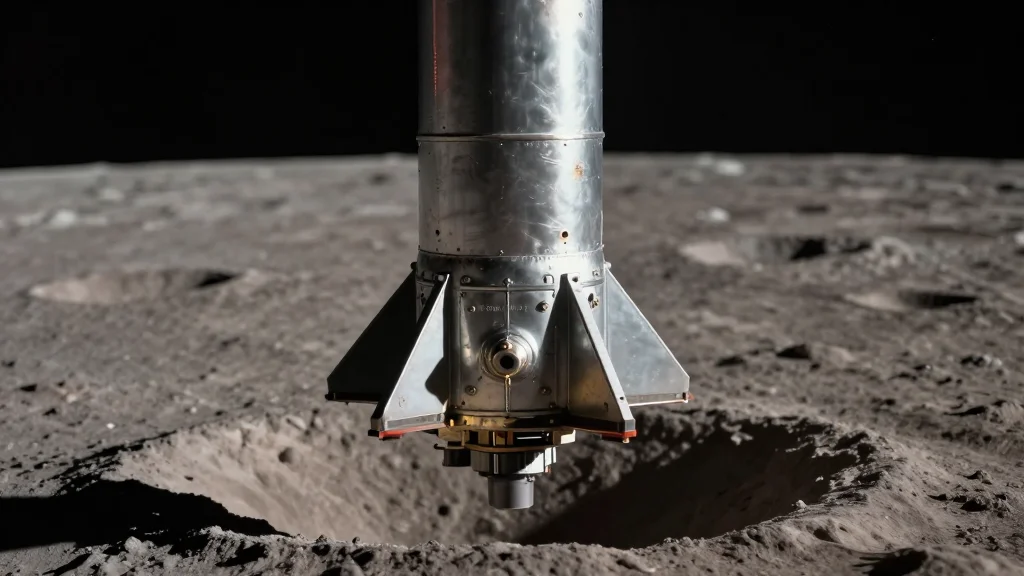
SpaceX Upper Stage Predicted to Strike Moon’s Einstein Crater on Aug. 5

Companies Mentioned
Why It Matters
The impending crash highlights a gap in current space‑debris mitigation policies, especially for lunar‑bound missions. As the United States, China, and private firms race to establish a sustained presence on the Moon, unmanaged hardware could jeopardize critical infrastructure, from habitats to communication relays. Moreover, the incident underscores the need for international standards governing the disposal of upper stages, echoing concerns raised after earlier predictions of lunar impacts. Beyond safety, the event offers a rare natural experiment. The freshly formed crater will provide a controlled site for studying high‑velocity impacts on regolith, informing future landing‑site selection and shielding designs. However, the scientific upside does not outweigh the operational risk, making proactive debris management a strategic priority for the emerging lunar economy.
Key Takeaways
- •A 45‑foot Falcon 9 upper stage is predicted to hit the Moon’s Einstein crater on Aug. 5 at ~5,400 mph.
- •Bill Gray’s Project Pluto analysis used >1,000 observations to forecast the impact with high certainty.
- •The stage delivered the Blue Ghost (Firefly) and Hakuto‑R (ispace) landers in early 2025.
- •SpaceX celebrated a flawless Falcon Heavy double‑booster landing on the same day, highlighting reusable tech vs. lingering debris.
- •Experts warn that growing lunar traffic could be threatened by unmanaged hardware unless disposal practices improve.
Pulse Analysis
SpaceX’s dual narrative—reusable boosters landing flawlessly while an orphaned upper stage heads for the Moon—exposes a structural tension in the commercial space sector. Reusability has slashed launch costs, fueling a surge in lunar payloads, yet the economics of stage recovery still leave upper stages in Earth‑Moon orbit. As launch cadence accelerates, the cumulative mass of such debris will rise, potentially creating a cascade of lunar impacts that could interfere with scientific observations and future habitats.
Historically, space‑debris mitigation has focused on low‑Earth orbit, where the risk to operational satellites is immediate. The Einstein‑crater prediction forces regulators and industry leaders to broaden that lens to cislunar space. Implementing a policy that mandates end‑of‑life disposal to heliocentric orbits—similar to the current practice for some high‑energy missions—could become a prerequisite for launch licensing, especially for missions that intend to operate near the lunar surface.
In the short term, the impact will likely be a footnote for lunar scientists, but it serves as a cautionary tale. If the industry does not address the downstream hazards now, the cost of cleaning up—or worse, repairing damage to early lunar infrastructure—could erode the economic advantages that reusability promises. The coming years will test whether the space community can translate the engineering triumphs of booster landings into responsible stewardship of the entire launch vehicle lifecycle.
SpaceX Upper Stage Predicted to Strike Moon’s Einstein Crater on Aug. 5
Comments
Want to join the conversation?
Loading comments...