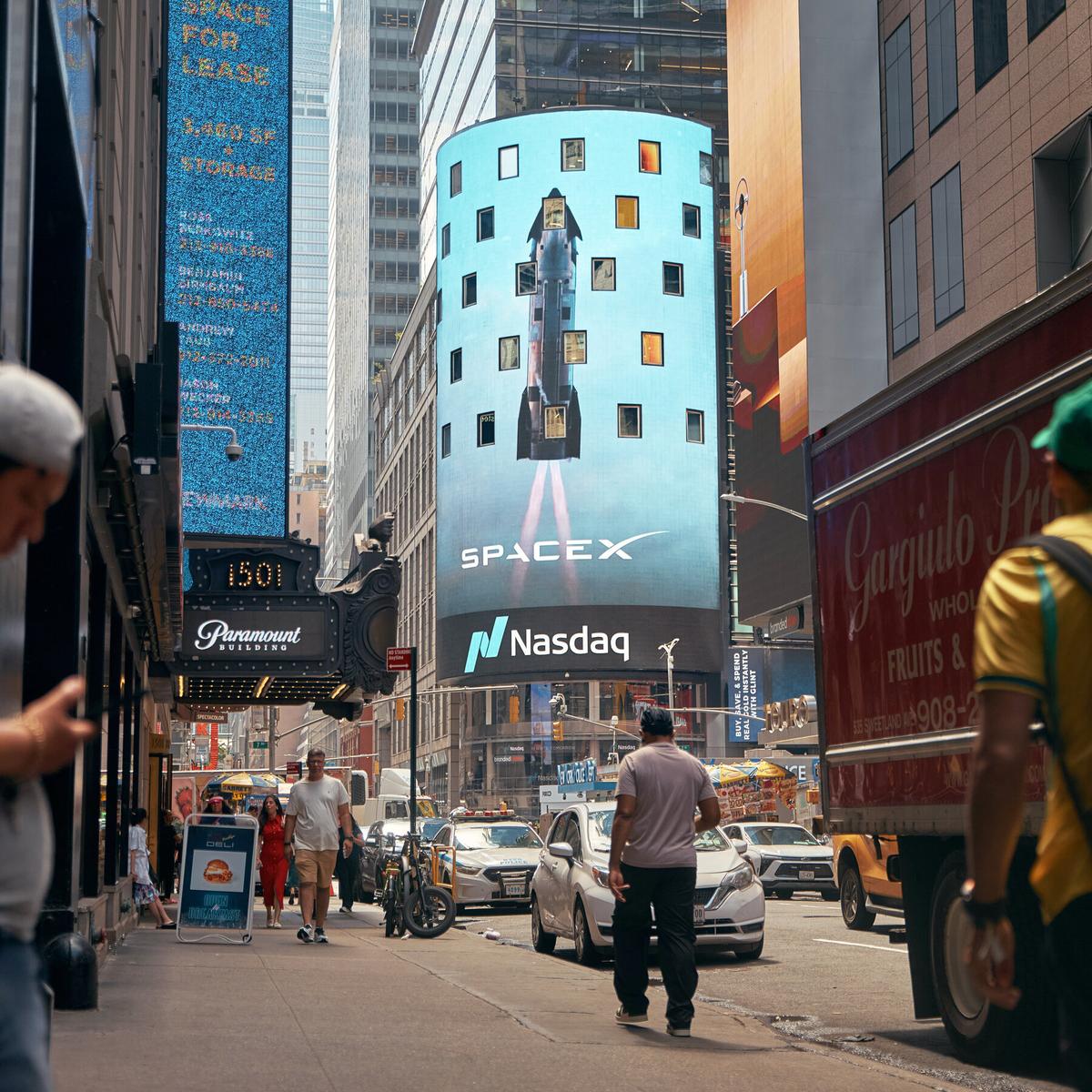
SpaceX’s Unlikely Journey From Far-Out Idea to $2 Trillion Juggernaut
Companies Mentioned
Why It Matters
The public listing gives SpaceX unprecedented access to capital, speeding up satellite broadband expansion and deep‑space missions, while redefining valuation standards for the commercial aerospace sector.
Key Takeaways
- •SpaceX IPO valued at $2 trillion, world’s largest debut
- •Elon Musk becomes first trillionaire after offering
- •Starlink now serves over 500 million global users
- •Company integrates rockets, AI, and social platform X under one umbrella
- •25‑year evolution from $50 million startup to market leader
Pulse Analysis
SpaceX’s June 2026 IPO shattered previous records, delivering a $2 trillion market cap that eclipses the combined value of many legacy aerospace firms. Analysts attribute the valuation to the company’s diversified revenue streams—launch services, a subscription‑based satellite internet platform, and emerging AI and social‑media ventures—creating a resilient business model that appeals to both growth‑focused and infrastructure‑oriented investors. The infusion of public capital also positions SpaceX to fund next‑generation launch vehicles and expand Starlink’s footprint in underserved regions, reinforcing its role as a critical component of global connectivity.
Beyond the headline numbers, SpaceX’s operational scale has transformed industry economics. Its reusable rocket technology has driven launch costs down by roughly 70 percent compared with traditional providers, prompting a wave of commercial satellite deployments and government contracts. Starlink’s constellation, now serving over half a billion users, generates recurring revenue that subsidizes research and development for ambitious projects like the Starship Mars transport system. By consolidating AI research and the X social platform under the same corporate umbrella, SpaceX is creating cross‑functional synergies that could accelerate data processing for autonomous spacecraft and real‑time communications.
The IPO signals a broader shift in how capital markets view space as a mainstream sector rather than a niche venture. Institutional investors now have a direct stake in the commercialization of low‑Earth orbit and interplanetary travel, potentially spurring competition from both legacy aerospace giants and emerging startups. For policymakers, the public listing raises questions about regulatory oversight, spectrum allocation, and the geopolitical implications of a single entity controlling a substantial portion of orbital infrastructure. As SpaceX leverages its newfound financial muscle, the next decade could see accelerated timelines for lunar bases, Mars colonization, and a more connected planet, reshaping the economic landscape of the final frontier.
SpaceX’s Unlikely Journey From Far-Out Idea to $2 Trillion Juggernaut
Comments
Want to join the conversation?
Loading comments...