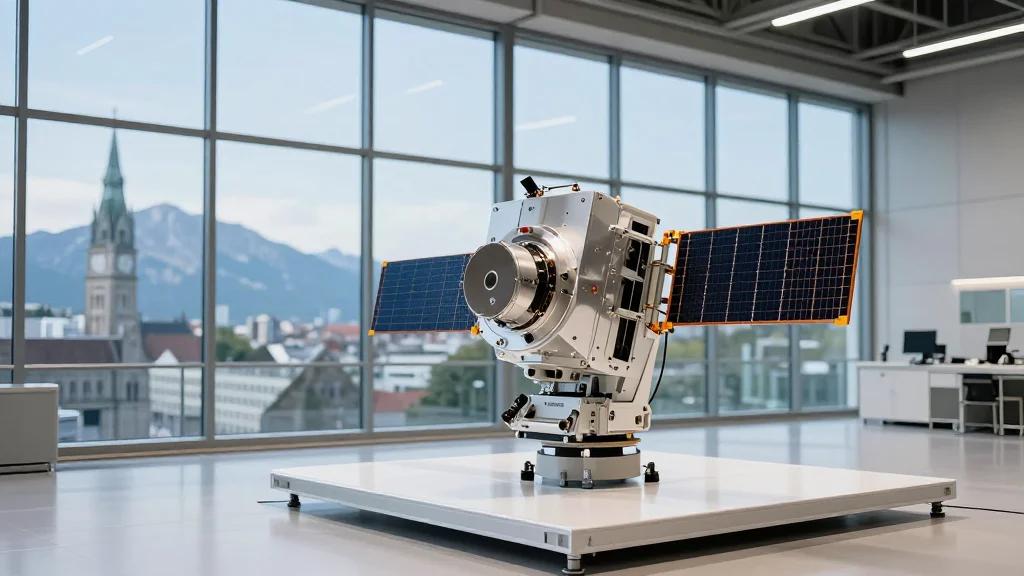
Spire Global Opens Munich Facility to Build Small Satellites for ESA’s Eurialo Program

Companies Mentioned
Why It Matters
Spire Global’s Munich facility directly supports Europe’s ambition to build a self‑sufficient space infrastructure, reducing dependence on U.S. and Chinese supply chains for critical intelligence assets. By anchoring production in Germany, the company aligns with EU policy goals and opens pathways for future public‑private partnerships that could accelerate the deployment of resilient, low‑cost satellite constellations. The move also reshapes the competitive dynamics of the small‑sat market, where speed, cost, and sovereign control are increasingly decisive factors. European customers now have a domestic alternative that can deliver rapid‑turnaround satellite builds, potentially shifting procurement preferences away from legacy aerospace giants.
Key Takeaways
- •Spire Global opened a satellite manufacturing plant in Munich on May 7, 2026
- •Facility will produce small satellites for ESA’s Eurialo program
- •Initial production run targets 12‑kilogram nanosatellites for sovereign intelligence
- •Plant creates 150 engineering and manufacturing jobs in Germany
- •Supports EU’s goal of a €10 billion sovereign space market by 2030
Pulse Analysis
Spire’s decision to locate a manufacturing hub in Munich reflects a strategic response to Europe’s tightening export regimes and its push for indigenous space capabilities. Historically, U.S. firms have dominated the small‑sat supply chain, but the EU’s recent funding commitments and the establishment of the European Space Agency’s Eurialo program create a fertile environment for local players. By embedding production within the EU, Spire not only sidesteps potential licensing hurdles but also gains direct access to European defence budgets that increasingly require "Made in Europe" certification.
From a market perspective, the Munich plant could trigger a cascade of investment in ancillary services—component suppliers, testing facilities, and launch providers—strengthening the European space ecosystem. Competitors such as Airbus Defence and Space may feel pressure to accelerate their own low‑cost satellite lines, while newer entrants will need to demonstrate comparable local content to win contracts. The dual‑hemisphere model Spire is adopting may become a template for other U.S. space firms seeking to navigate the geopolitical complexities of the next decade.
Looking ahead, the success of the Eurialo satellites will be a litmus test for Spire’s European strategy. If the Munich‑built constellation meets performance and schedule targets, it could unlock further contracts across the EU’s defence and civil sectors, cementing Spire’s role as a bridge between American space innovation and European sovereign requirements. Conversely, any delays or cost overruns could reinforce skepticism about transatlantic satellite production models, prompting policymakers to double down on home‑grown alternatives.
Spire Global Opens Munich Facility to Build Small Satellites for ESA’s Eurialo Program
Comments
Want to join the conversation?
Loading comments...