Aerospace News and Headlines
  • All Technology
  • AI
  • Autonomy
  • B2B Growth
  • Big Data
  • BioTech
  • ClimateTech
  • Consumer Tech
  • Crypto
  • Cybersecurity
  • DevOps
  • Digital Marketing
  • Ecommerce
  • EdTech
  • Enterprise
  • FinTech
  • GovTech
  • Hardware
  • HealthTech
  • HRTech
  • LegalTech
  • Nanotech
  • PropTech
  • Quantum
  • Robotics
  • SaaS
  • SpaceTech
AllNewsDealsSocialBlogsVideosPodcastsDigests

Aerospace Pulse

EMAIL DIGESTS

Daily

Every morning

Weekly

Sunday recap

NewsDealsSocialBlogsVideosPodcasts
AerospaceNewsStrong Jet Stream Pushes JetBlue Airbus A321neo To Reach Speed Of 755mph Over New Mexico
Strong Jet Stream Pushes JetBlue Airbus A321neo To Reach Speed Of 755mph Over New Mexico
Aerospace

Strong Jet Stream Pushes JetBlue Airbus A321neo To Reach Speed Of 755mph Over New Mexico

•February 18, 2026
0
Simple Flying
Simple Flying•Feb 18, 2026

Companies Mentioned

Airbus

Airbus

Shutterstock

Shutterstock

SSTK

Why It Matters

The event highlights how natural high‑altitude winds can improve fuel efficiency and on‑time performance, while underscoring climate‑induced volatility that could disrupt airline schedules and passenger experience.

Key Takeaways

  • •Jet stream pushed A321neo ground speed to 755 mph.
  • •Flight arrived 39 minutes early, saving fuel without extra strain.
  • •Eastbound tailwinds cut travel time; westbound face delays.
  • •Clear‑air turbulence risk rises at jet‑stream edges.
  • •Climate change may increase jet‑stream extremes, affecting schedules.

Pulse Analysis

Jet streams are fast‑moving rivers of air that sit near the tropopause, often exceeding 150 knots. When an aircraft flies with the flow, its ground speed is the sum of its true airspeed and the wind component, effectively turning a standard cruise into a high‑speed transit without extra thrust. JetBlue’s Flight 524 illustrates this physics: the A321neo’s engines operated at normal power while the jet stream added roughly 235 mph, shaving 39 minutes off a coast‑to‑coast trip and delivering measurable fuel savings. This natural boost is a valuable operational lever for airlines seeking to reduce costs and emissions.

Airlines must balance the benefits of tailwinds against the hazards they bring. Clear‑air turbulence, which frequently occurs at the jet‑stream’s shear zones, can force pilots to adjust altitude or speed, potentially eroding the time advantage and affecting passenger comfort. Eastbound routes regularly enjoy tailwinds that trim schedules, while westbound flights contend with headwinds that add comparable delays, prompting carriers to build buffer times into their timetables. Modern flight‑planning systems now integrate real‑time wind data to optimize routing, altitude selection, and fuel loading, turning atmospheric dynamics into a strategic asset rather than a nuisance.

Climate change is reshaping the jet‑stream’s behavior, making extreme wind events more common and altering their typical pathways. A stronger, more meandering jet stream can produce record‑breaking eastbound speed boosts like the one observed, but it also intensifies turbulence and can stall weather systems, leading to prolonged ground delays. Airlines are responding by investing in predictive analytics, adaptive scheduling, and more flexible crew management to mitigate these emerging risks. Understanding and anticipating jet‑stream variability will become a critical component of sustainable aviation strategy, influencing everything from aircraft design to carbon‑offset planning.

Strong Jet Stream Pushes JetBlue Airbus A321neo To Reach Speed Of 755mph Over New Mexico

By Luke Diaz · Published Feb 18, 2026, 12:07 AM EST

Luke Diaz is a freelance military writer with experience with active‑duty service in the U.S. Navy. He is a former Naval Flight Officer who performed tactical air control on the carrier‑based E‑2 Hawkeye.

JetBlue flight 524 arrived 39 minutes early at John F. Kennedy International Airport (JFK) after a powerful jet stream surged its speed to 755 mph on the way from California to New York, as Flightradar24 announced. Normally an aircraft like this would cruise around 520 mph on a coast‑to‑coast journey such as flight 524’s.

This incredible phenomenon from the jet stream puts no extra stress or strain on the jet either, and is a completely safe “speed boost.” The Airbus A321neo departed Los Angeles International Airport (LAX) at 12:42 p.m. PST on 17 February and arrived in the evening at 8:14 p.m. EST, according to FlightAware.

JetBlue’s Wild Ride

Eastbound flights typically experience a tailwind as JetBlue flight 524 did, but most of them do not gain the amount of extra speed this particularly lucky jetliner experienced. The amount of time saved for most departures is usually around 30 minutes when the wind is strong, but there have been other cases where it was even more powerful in the past. As you might expect, westbound flights have to fight against headwinds, which adds a similar amount of time to return journeys.

“A network of very high‑altitude rivers of air, flowing at very high rates of speed.”

Free Speed on Flight 524

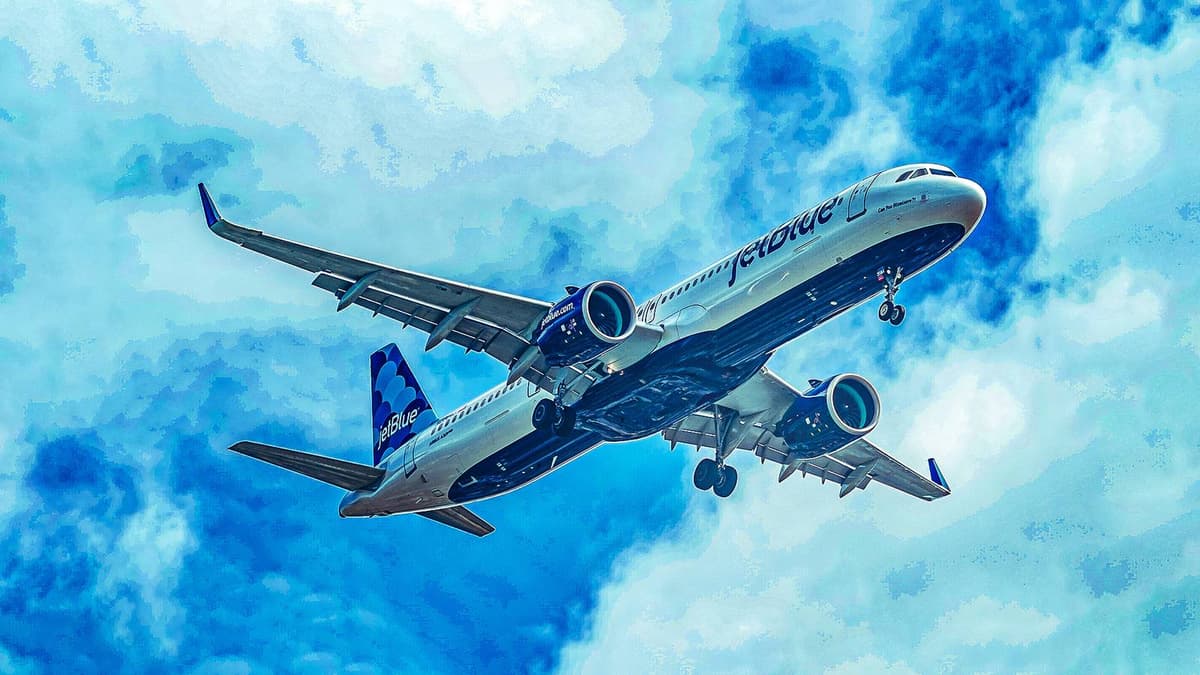
JetBlue Airbus A321neo departing New York John F. Kennedy International Airport.

Credit: Shutterstock

The only risk of riding a high‑speed jet‑stream air mass is an increased risk of clear‑air turbulence. This often occurs at the edges of the jet stream where wind speeds change rapidly. Pilots may need to slow down or change altitude if the ride becomes too bumpy for passenger comfort. The aircraft’s airspeed remains constant, so there is no increased aerodynamic load or mechanical wear on the wings, airframe, or engines.

An airliner cruising in the same direction as a powerful jet‑stream flow is like going down a moving walkway at the airport. From the aircraft’s perspective, it is still flying at its normal cruising speed relative to the surrounding air. Instead of a penalty, the jet stream provides a significant fuel‑saving benefit, as the engines do not have to work any harder to achieve the higher ground speed. They simply ride the moving air current and enjoy a quicker trip with the same amount of thrust and fuel burn.

Climate Change & the Jet Stream

A JetBlue A321LR is towed into its parking position for display at the 2023 Paris Airshow.

Credit: Shutterstock

Climate change is leading to more frequent record‑breaking fast eastbound flights, but also more significant delays and increased turbulence for westbound travelers. The changing jet‑stream patterns are leading to more prolonged severe‑weather patterns, according to the Arctic Council. As the high‑speed air masses slow down and trap weather systems from moving or dissipating, they can keep planes grounded for days instead of hours.

Read Original Article
0

Comments

Want to join the conversation?

Loading comments...