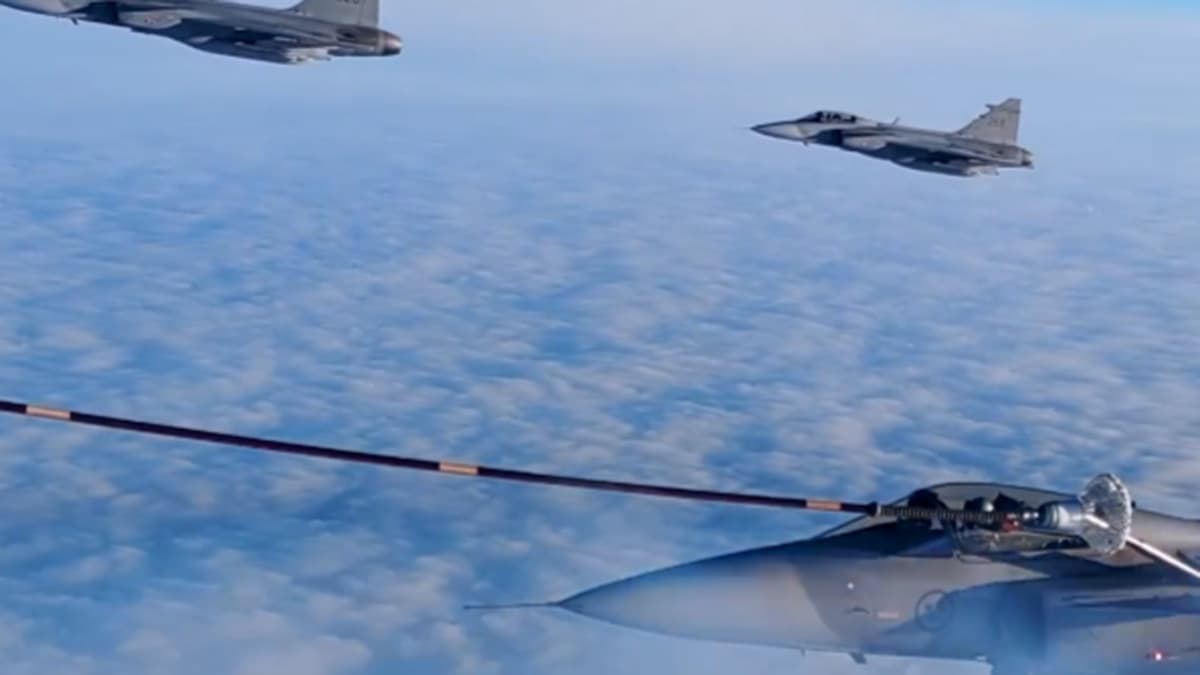
Swedish Gripens Take Lead in NATO Iceland Air Policing
•February 10, 2026
0
Key Takeaways
- •Sweden leads NATO Iceland air policing for first time.
- •Six Gripen jets and 110 personnel deployed to Keflavík.
- •Rotation runs until March 2026, maintaining continuous QRA.
- •Gripens refueled en route by French A330 tanker.
- •Mission boosts Arctic deterrence and NATO interoperability.
Summary
Sweden has deployed six JAS 39 Gripen fighters and more than 110 personnel to Iceland, marking its first leadership of NATO’s Icelandic Air Policing mission. The rotation, based at Keflavík Air Base, will run until mid‑March 2026 and maintain a continuous Quick Reaction Alert posture. The deployment underscores the Gripen’s modern sensors and NATO‑compatible command systems, while French A330 tankers provide mid‑air refuelling. By taking charge, Sweden reinforces collective defence across the critical North Atlantic corridor linking Europe and North America.
Pulse Analysis
NATO’s air policing over Iceland has been a cornerstone of the alliance’s northern flank, providing continuous surveillance of a vital air corridor between North America and Europe. By assigning Sweden to lead the mission, NATO signals confidence in the rapid integration of newer members into high‑stakes operational roles. The move also showcases the strategic importance of the Arctic region, where harsh weather and long distances demand robust, flexible air capabilities.
The Swedish detachment brings the JAS 39 Gripen, a multirole platform equipped with advanced radar, sensor fusion, and NATO‑standard data links. Operating from Keflavík, the six aircraft maintain a Quick Reaction Alert, ready to intercept unidentified contacts within minutes. Coordination with the Icelandic Coast Guard and NATO’s Combined Air Operations Centre in Uedem ensures seamless command‑and‑control, while French A330 Multi‑Role Tanker Transport aircraft extend the Gripens’ range through in‑flight refuelling. This logistical choreography highlights the alliance’s air‑mobility interoperability and the Gripen’s suitability for dispersed, high‑latitude missions.
Beyond the immediate operational benefits, Sweden’s leadership role carries broader geopolitical weight. It reinforces the alliance’s deterrence posture in the increasingly contested Arctic, where Russian activity and climate‑driven traffic are on the rise. For Sweden, the deployment demonstrates its commitment to collective defence and validates its recent defence investments, signaling to both allies and adversaries that it can field modern, network‑centric air power. Looking ahead, the success of this rotation could pave the way for more frequent Swedish contributions to NATO’s high‑north missions, deepening integration and enhancing overall alliance readiness.
Comments
Want to join the conversation?