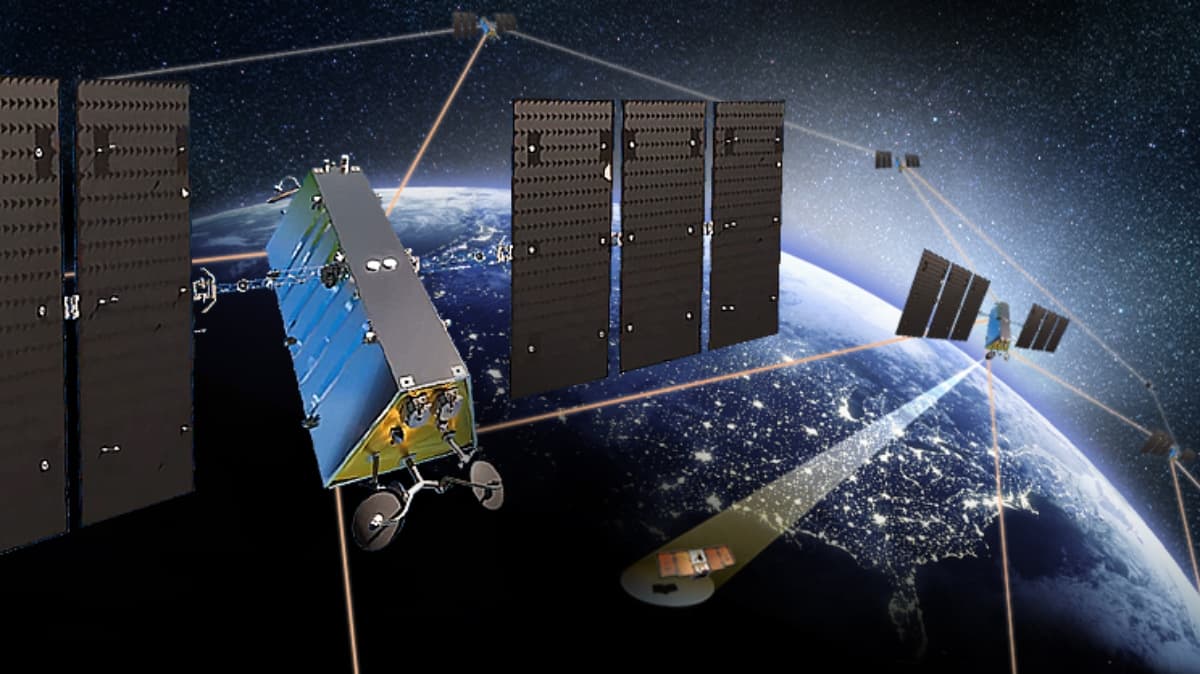
Telesat Government Solutions Wins Spot on U.S. Missile Defense Agency SHIELD Contract
•February 13, 2026
0
Why It Matters
The selection signals the Department of Defense’s shift toward resilient, low‑latency LEO networks, expanding commercial space’s role in national security and accelerating procurement cycles for critical defense capabilities.
Key Takeaways
- •Telesat secures spot on $1.51 B SHIELD contract.
- •Lightspeed LEO constellation targeted for contested battlefield communications.
- •Contract enables rapid procurement via 10‑year IDIQ structure.
- •Validates LEO satellites as alternative to geostationary systems.
- •Enhances DOD capability against hypersonic and ballistic threats.
Pulse Analysis
The Missile Defense Agency’s SHIELD program represents a strategic pivot in U.S. defense procurement, moving away from slow, traditional acquisition models toward an indefinite‑delivery, indefinite‑quantity (IDIQ) framework. By earmarking $1.51 billion over a decade, the MDA can rapidly integrate emerging technologies that address the evolving threat landscape, particularly the rise of hypersonic weapons that demand near‑instantaneous data transmission and processing. This contract underscores the Pentagon’s urgency to modernize its communications backbone, ensuring that sensor data, command directives, and intercept solutions flow without delay.
Telesat’s Lightspeed LEO constellation is engineered to meet these exacting requirements. Operating in low Earth orbit provides significantly lower latency than geostationary platforms, delivering deterministic performance essential for real‑time missile tracking. The architecture’s built‑in redundancy and advanced encryption offers the “network assurance” the Department of War seeks in congested, contested spectra. By positioning Lightspeed as a potential supplier, Telesat demonstrates how commercial satellite operators can furnish mission‑critical services traditionally reserved for legacy defense contractors, blending commercial agility with military rigor.
The broader implication for the space‑defense ecosystem is profound. As the DOD embraces commercial LEO solutions, partnerships between government agencies and private operators are likely to deepen, accelerating innovation cycles and reducing costs. This trend may reshape future procurement strategies, encouraging more IDIQ contracts that prioritize flexibility and rapid fielding. For investors and industry watchers, Telesat’s inclusion in SHIELD signals a validation of the LEO business model and hints at a growing market for resilient, high‑throughput space‑based communications in national security applications.
Telesat Government Solutions wins spot on U.S. Missile Defense Agency SHIELD Contract
0
Comments
Want to join the conversation?
Loading comments...