The 5 Most Advanced Military Drones In Service Today
Why It Matters
Advanced drones are reshaping force structures, offering persistent strike, ISR, and networked combat at lower risk and cost, while driving a global arms‑technology race. Their capabilities dictate future procurement and strategic deterrence postures.
Key Takeaways
- •MQ‑9 Reaper logs millions of flight hours across six nations
- •Bayraktar TB2 offers high payload despite piston engine
- •Wing Loong II matches Reaper performance at lower cost
- •Global Hawk’s $130 M unit faces retirement due to vulnerability
- •Ghost Bat provides modular loyal‑wingman capability for RAAF
Pulse Analysis
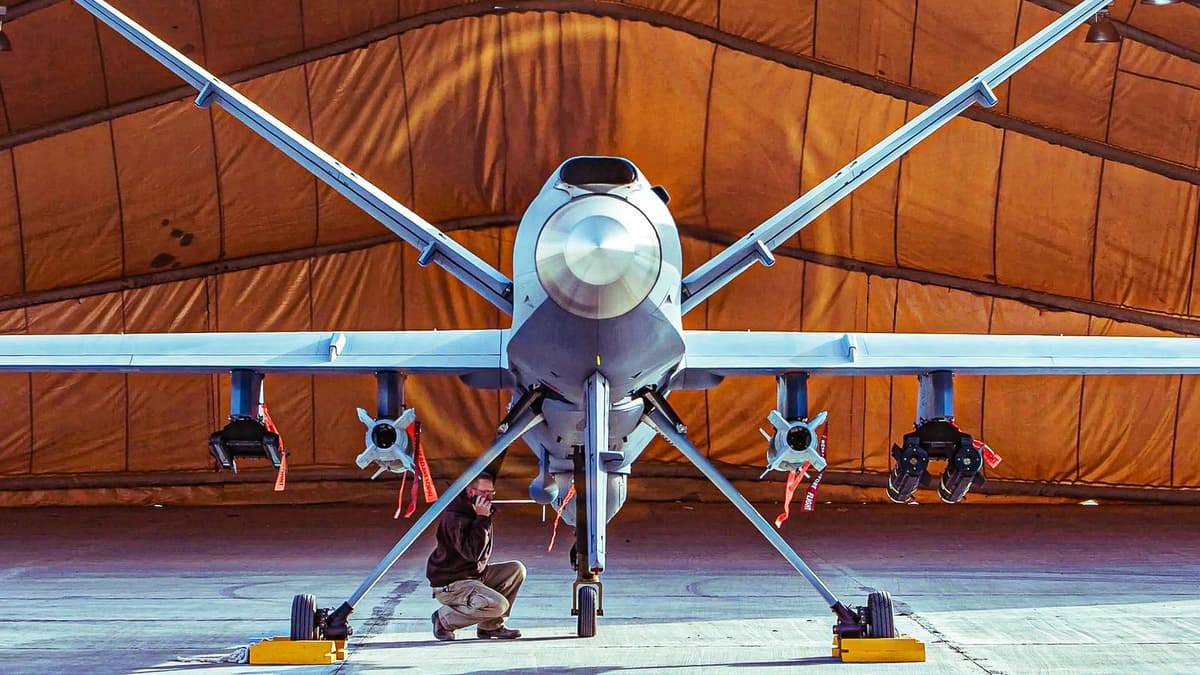
Unmanned Combat Air Vehicles have moved from niche surveillance tools to central pillars of modern air strategy. The MQ‑9 Reaper, with its 15‑fold payload increase over the Predator, now serves not only the United States but also the UK, France, Italy, India, and Japan, proving that high‑end UCAVs can operate across diverse threat environments. Meanwhile, cost‑effective alternatives like Turkey’s Bayraktar TB2 and China’s Wing Loong II demonstrate that comparable payloads and endurance can be achieved at a fraction of the price, expanding access for mid‑tier militaries and reshaping regional power balances.
The strategic value of high‑altitude, long‑endurance platforms remains evident despite the Global Hawk’s impending phase‑out. Its $130 million per‑unit price and near‑space surveillance capability have set a benchmark for ISR, yet vulnerability to advanced air defenses is prompting a shift toward stealthier, faster UCAVs. This transition underscores a broader industry trend: integrating intelligence, surveillance, and strike functions into a single, survivable airframe, reducing reliance on dedicated, unarmed platforms.
Looking ahead, the Ghost Bat loyal‑wingman concept epitomizes the next generation of collaborative combat. Developed by Boeing Australia, its modular nose allows rapid reconfiguration for ISR, electronic warfare, or kinetic payloads, enabling a single airframe to support multiple mission sets alongside fifth‑generation fighters like the F‑35. As nations seek affordable massed‑UAV solutions to augment manned fleets, such adaptable designs will likely become a cornerstone of future airpower doctrines, driving both procurement strategies and defense‑industry innovation.
The 5 Most Advanced Military Drones In Service Today
Comments
Want to join the conversation?
Loading comments...