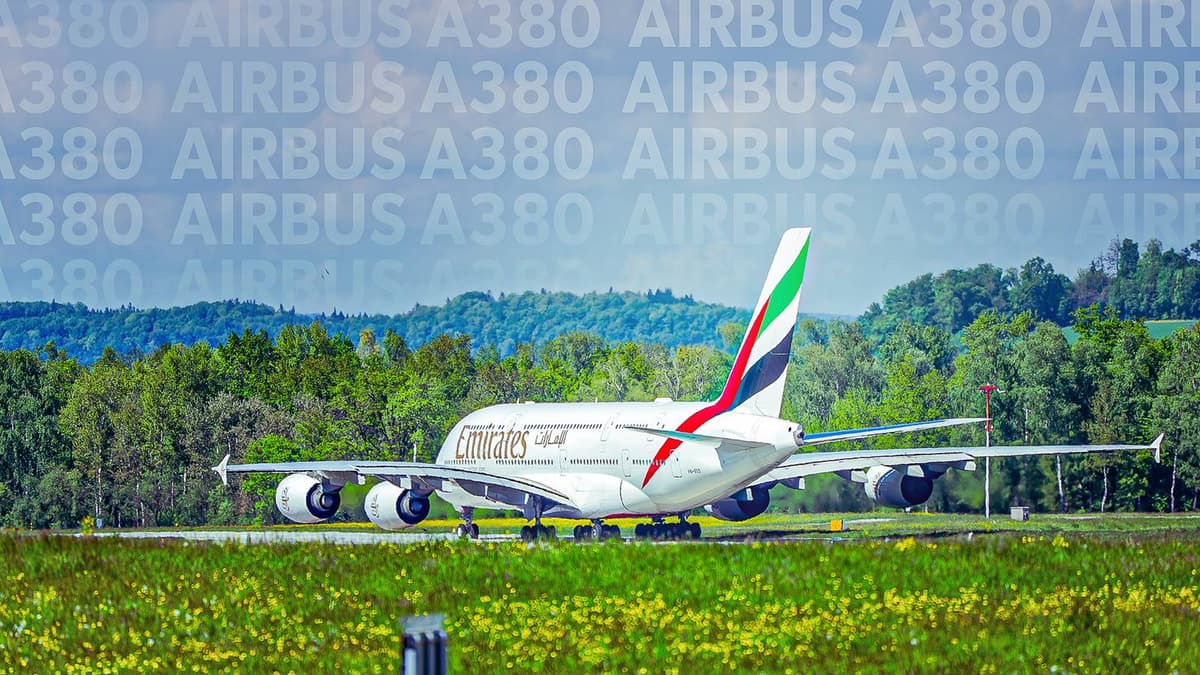
The Aircraft Replacing The Airbus A380 On High-Capacity Routes
Companies Mentioned
Why It Matters
The 777X reshapes the high‑capacity market, offering airlines a more economical, flexible alternative to the aging A380 fleet. Its adoption signals a broader industry shift toward fuel‑efficient twinjets for premium long‑haul routes.
Key Takeaways
- •Boeing 777X slated for entry into service 2027.
- •777-9 carries over 400 passengers, rivaling A380 capacity.
- •GE9X engine delivers 10% fuel savings versus A350.
- •Folding wingtips enable operation at airports without modifications.
- •Around 500 orders placed; Emirates biggest 777X customer.
Pulse Analysis
The retirement of many Airbus A380s has left a gap in the ultra‑high‑capacity segment, prompting airlines to seek a modern twin‑engine solution. Boeing’s 777X family, built on the proven 777 platform and infused with 787‑level technology, delivers the passenger volume of a superjumbo while retaining the operational simplicity of a twinjet. This hybrid approach aligns with post‑pandemic demand for efficient, high‑density routes without the infrastructure constraints of four‑engine aircraft.
Key to the 777X’s appeal are its technical innovations. The GE9X powerplant, featuring ceramic matrix composites and a 132‑inch fan, cuts fuel burn by roughly ten percent compared with the Airbus A350, translating into lower operating costs and reduced emissions. Carbon‑fiber composite wings provide a superior strength‑to‑weight ratio, and the pioneering folding wingtips shrink the aircraft’s ground footprint, allowing it to fit into existing gate bays and reducing airport retrofit expenses. These advances collectively give the 777X a compelling performance envelope for long‑haul markets.
Airlines have responded enthusiastically, with Emirates, Korean Air and several others committing to a combined order of about 500 aircraft. The shift promises to accelerate fleet modernization, as carriers replace aging A380s with a more versatile, fuel‑efficient platform. However, the program’s timeline has slipped—originally slated for 2020, the first delivery now targets 2026—due to stricter certification processes and labor challenges. Assuming the 2027 service entry proceeds as planned, the 777X could redefine capacity economics and set a new standard for wide‑body aviation.
The Aircraft Replacing The Airbus A380 On High-Capacity Routes
Comments
Want to join the conversation?
Loading comments...