The Canadian Space Agency Awards $2 Million for Lunar In-Situ Resource Utilization Studies
Why It Matters
The funding positions Canada as a key technology provider for Artemis, while the dual‑use research promises economic and strategic benefits on Earth, especially for isolated regions and critical‑material discovery.
Key Takeaways
- •CSA funds $2 M CAD (≈$1.5 M USD) for lunar ISRU research
- •CSMC receives two $500k CAD contracts for power and regolith processing
- •SpaceDIRT and Volta each get $500k CAD for autonomous drilling, architecture
- •Projects target dual-use tech for Moon and remote Canadian communities
- •Funding boosts Canada’s Artemis role and critical mineral mapping capabilities
Pulse Analysis
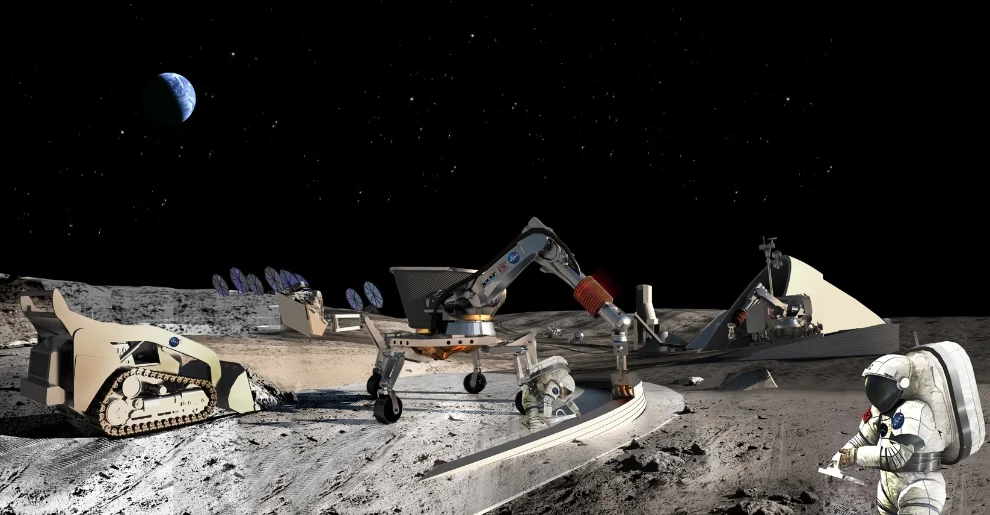
In‑situ resource utilization (ISRU) has become the linchpin of sustainable lunar exploration, and Canada’s latest $2 million CAD investment underscores the nation’s commitment to this paradigm. By channeling funds through the Lunar Surface Exploration Initiative, the Canadian Space Agency (CSA) is not only addressing the logistical nightmare of ferrying water, fuel and building materials from Earth, but also aligning with NASA’s Artemis agenda, which seeks permanent habitats on the Moon. The emphasis on power generation, regolith processing, and autonomous drilling reflects a broader industry shift toward self‑sufficient off‑world infrastructure, a capability that could redefine how future missions are planned and executed.
The awarded contracts to Canadian Strategic Missions Corporation, SpaceDIRT, and Volta Space Technologies bring together a mix of aerospace engineering, robotics, and materials science expertise. CSMC’s dual focus on lunar power distribution and oxygen extraction from regolith promises to unlock cheap, locally sourced energy and life‑support consumables. Meanwhile, SpaceDIRT’s autonomous drilling systems and Volta’s architectural studies aim to streamline the construction of habitats and industrial facilities. These technologies have immediate terrestrial spin‑offs: compact nuclear reactors for northern Canadian power grids, rugged drilling rigs for Arctic mineral exploration, and resilient communication networks for disaster‑prone regions.
Beyond the technical outcomes, the funding signals a strategic pivot for Canada’s space sector, positioning domestic firms as indispensable partners in the multinational Artemis enterprise. By cultivating home‑grown ISRU capabilities, Canada can capture a larger share of the emerging lunar supply chain, attract foreign investment, and create high‑skill jobs. The dual‑use nature of the research also dovetails with national defence priorities, offering hardened power solutions for remote bases. As the Artemis program progresses, Canada’s early foothold in lunar resource technology could translate into long‑term economic growth and a stronger voice in shaping the future of space exploration.
The Canadian Space Agency awards $2 million for lunar in-situ resource utilization studies
Comments
Want to join the conversation?
Loading comments...