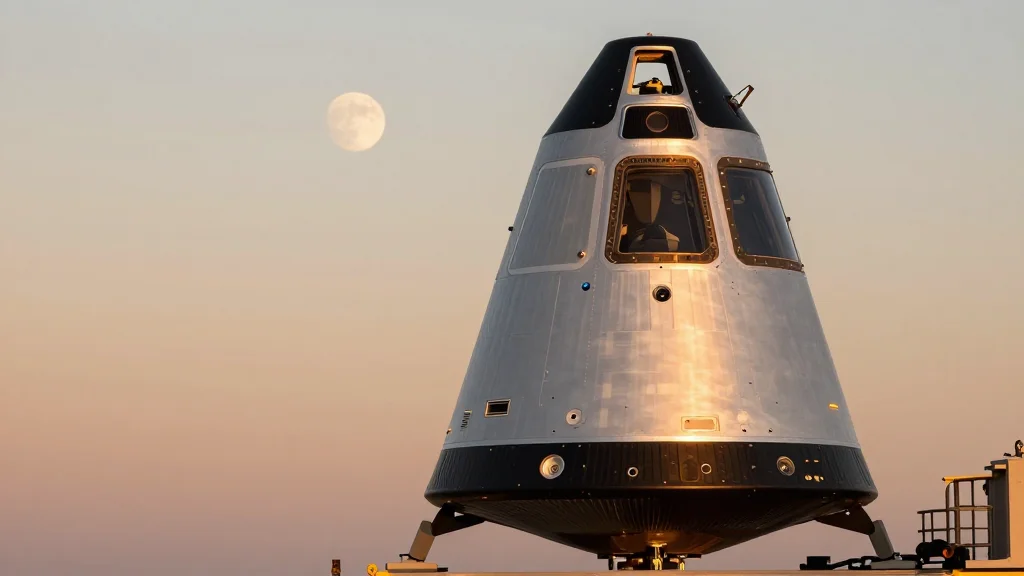
The Moon Is Back on the Menu
Companies Mentioned
Why It Matters
Ignition transforms the Moon from a sporadic destination into an operational commercial arena, driving massive demand for modular, mass‑produced space hardware and establishing standards that will shape the emerging lunar economy.
Key Takeaways
- •Artemis II validates heavy‑lift rocket and Orion crew capsule
- •NASA targets 10 lunar landings per year by 2027
- •Ignition creates LunaNet communications and navigation network
- •Space Reactor‑1 Freedom will supply 100 kW lunar power
- •Companies must adopt modular, mass‑production designs for lunar hardware
Pulse Analysis
The Ignition policy reframes NASA’s role from a mission‑centric agency to a lunar systems integrator, echoing the Apollo era’s industrial partnership model. By segmenting the lunar campaign into three progressive phases—technology demonstrations, semi‑habitable infrastructure, and permanent habitation—NASA is creating a predictable procurement pipeline. This structure signals to the commercial sector that demand for radiation‑tolerant semiconductors, autonomous navigation sensors, and compact power electronics will shift from sporadic contracts to a steady, high‑volume stream, encouraging investment in scalable manufacturing and standardized interfaces.
A cornerstone of Ignition is LunaNet, an interoperable communications and navigation framework that aims to extend Earth‑based 3GPP standards to the lunar surface. The network will support everything from rover telemetry to crewed habitat connectivity, opening lucrative opportunities for space‑hardened radios, optical transceivers, phased‑array antennas, and software‑defined networking solutions. Coupled with the deployment of the 100 kW Space Reactor‑1 Freedom fission plant and expanded solar and radioisotope power systems, the initiative creates a robust energy backbone, driving demand for power‑management chips, heat‑exchange modules, and high‑energy‑density batteries.
The aggressive cadence—ten landings annually by 2027—forces the industry to adopt design‑for‑manufacture practices, additive fabrication, and automated assembly lines. Supply chains must scale for specialty alloys, radiation‑hard components, and miniaturized scientific instruments, while maintaining aerospace‑grade quality. Companies that align with NASA’s emerging standards and modular architecture will not only secure contracts for the lunar program but also position themselves for downstream markets in cislunar logistics, asteroid mining, and eventual Mars exploration. Ignition thus represents a pivotal inflection point, turning lunar exploration into a sustainable commercial ecosystem.
The Moon is Back on the Menu
Comments
Want to join the conversation?
Loading comments...