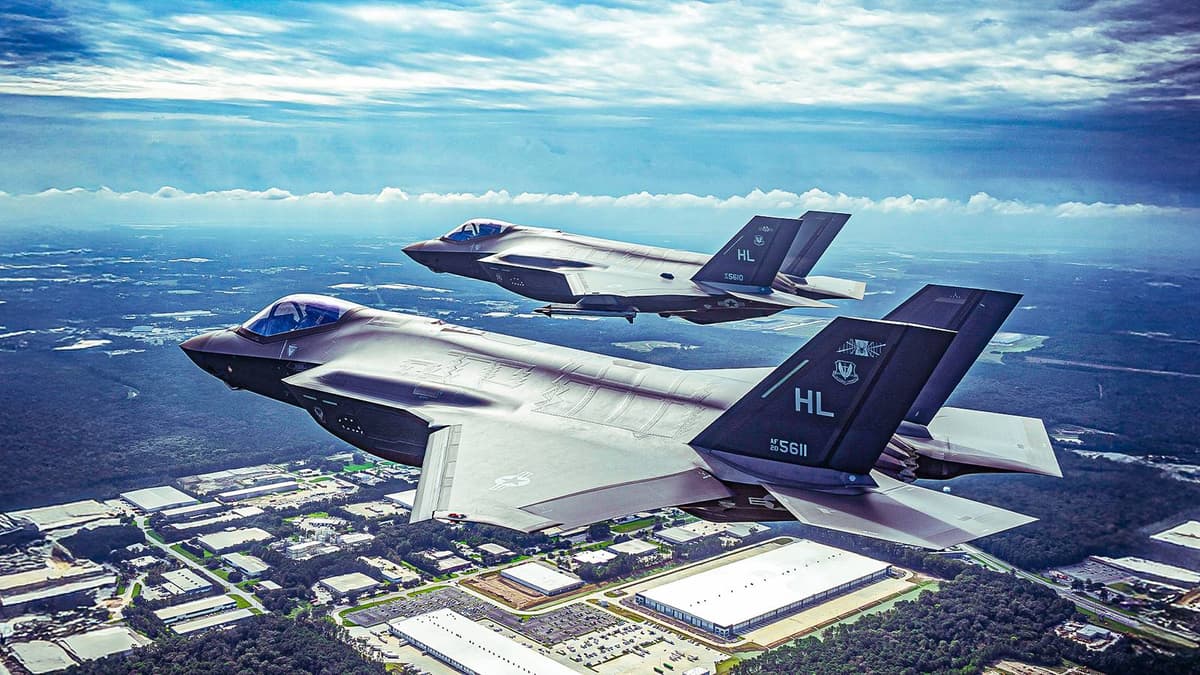
The Pentagon's Order For 85 F-35s Isn't Guaranteed: Over 50 Jets Depend On A Bill That May Never Pass
Companies Mentioned
Why It Matters
The outcome will shape U.S. air‑dominance, affect the defense industrial base, and influence strategic balance in the Indo‑Pacific as Congress decides on the reconciliation funding.
Key Takeaways
- •FY2027 budget seeks 85 F‑35s, up from 47 in FY26
- •Only 32 jets funded in base budget; 53 rely on reconciliation
- •Navy slated for 37 jets, highest ever, Marines only 10
- •Funding hinges on Congress passing reconciliation, uncertain amid budget battles
- •Increased F‑35 spend pushes defense outlays toward 5% of GDP
Pulse Analysis
The FY 2027 defense request marks a dramatic shift in U.S. military spending, expanding the overall budget by roughly $445 billion and pushing total outlays toward 5% of gross domestic product. This surge reflects a strategic response to China’s growing capabilities and the need to modernize legacy platforms. Central to the proposal is the F‑35 program, which the Pentagon hopes to ramp up to 85 aircraft, a figure that would restore procurement levels seen in the mid‑2020s after a dip in FY 2026.
Funding for the additional 53 jets hinges on a reconciliation bill that must clear the Senate and House. While the base budget secures 32 aircraft, the remainder sits in a legislative limbo that could be reshaped by competing priorities, such as the Navy’s F/A‑XX fighter‑replacement effort and broader defense‑spending caps. The Navy stands to gain the largest slice, with 37 F‑35Cs slated for carrier integration, whereas the Marine Corps faces its smallest order since 2016, signaling a transition away from legacy Harrier II jets.
If Congress approves the reconciliation package, the implications extend beyond numbers. A sustained production line would bolster Lockheed Martin’s supply chain, preserve skilled jobs, and ensure carrier‑deck compatibility for the next generation of aircraft. Conversely, a shortfall could delay carrier retrofits, strain the defense industrial base, and weaken the United States’ ability to project power in contested regions. The final decision will therefore be a bellwether for both U.S. military readiness and the health of its aerospace sector.
The Pentagon's Order For 85 F-35s Isn't Guaranteed: Over 50 Jets Depend On A Bill That May Never Pass
Comments
Want to join the conversation?
Loading comments...