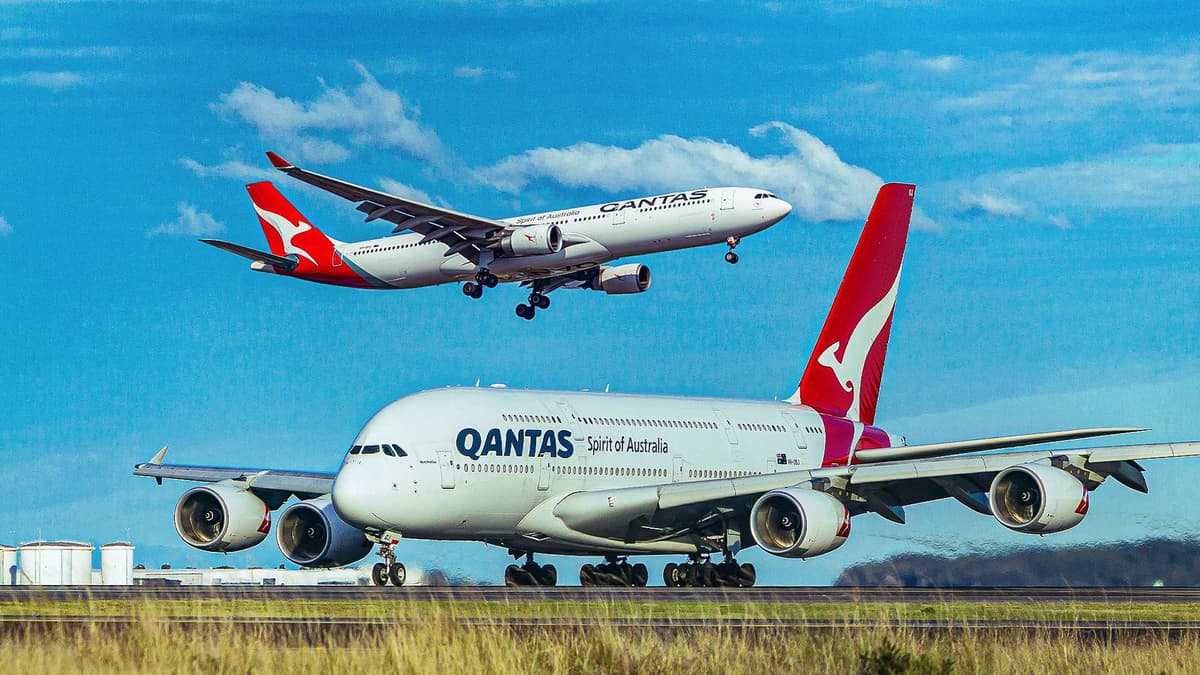
The Qantas Fleet Order In 2000 That Locked It Out Of The World's Most Popular Widebody
Companies Mentioned

Why It Matters
Qantas’ 2000 fleet choice limited its ability to leverage the 777’s fuel efficiency and lower operating costs, shaping its long‑haul cost structure and competitive stance while illustrating the power of regulatory constraints on strategic aircraft decisions.
Key Takeaways
- •Qantas' 2000 order favored Airbus A380, A330, and 747‑400ER over Boeing 777
- •Strict Australian ETOPS rules limited twin‑engine ultra‑long‑haul options then
- •Decision cemented Airbus presence, delayed Qantas adoption of 777 family
- •Project Sunrise later chose A350‑1000ULR, again bypassing Boeing 777‑8X
- •Quad‑engine jets enabled high‑density routes like Sydney‑Los Angeles in early 2000s
Pulse Analysis
The early 2000s were a turning point for global airlines as deregulation, rising fuel prices, and emerging Asian carriers reshaped network strategies. For Qantas, a legacy carrier with a strong national identity, the decision to sideline the Boeing 777 was driven by Australia’s unusually strict ETOPS regulations, which at the time barred twin‑engine jets from the ultra‑long‑haul routes to Johannesburg, Santiago, and other distant markets. By committing to Airbus’s A380 and Boeing’s 747‑400ER, Qantas secured the range and redundancy needed to maintain non‑stop services without compromising safety or regulatory compliance.
Economically, the choice had lasting repercussions. Quad‑engine aircraft like the 747‑400ER offered high passenger capacity but carried higher fuel burn per seat compared with the newer 777‑300ER, which quickly became the workhorse for competitors such as Emirates and Singapore Airlines. Qantas therefore faced higher operating costs on its flagship long‑haul routes, a factor that later influenced its pursuit of more efficient twin‑engine platforms. When Project Sunrise was announced, the airline again turned to Airbus, selecting the A350‑1000ULR for its 19‑hour Sydney‑London research flight, effectively reaffirming the legacy of the 2000 decision and signaling a strategic pivot toward fuel‑efficient, long‑range twins now permissible under relaxed ETOPS standards.
The broader lesson for the industry is clear: regulatory frameworks and network priorities can outweigh pure performance metrics when airlines shape their fleets. Qantas’ experience illustrates how early‑stage policy constraints can lock carriers into specific manufacturers, affecting cost structures, route economics, and competitive dynamics for decades. As ETOPS standards continue to evolve and new aircraft like the Boeing 777‑8X promise unprecedented range, carriers must balance regulatory risk, operational flexibility, and long‑term financial sustainability when making fleet commitments.
The Qantas Fleet Order In 2000 That Locked It Out Of The World's Most Popular Widebody
Comments
Want to join the conversation?
Loading comments...