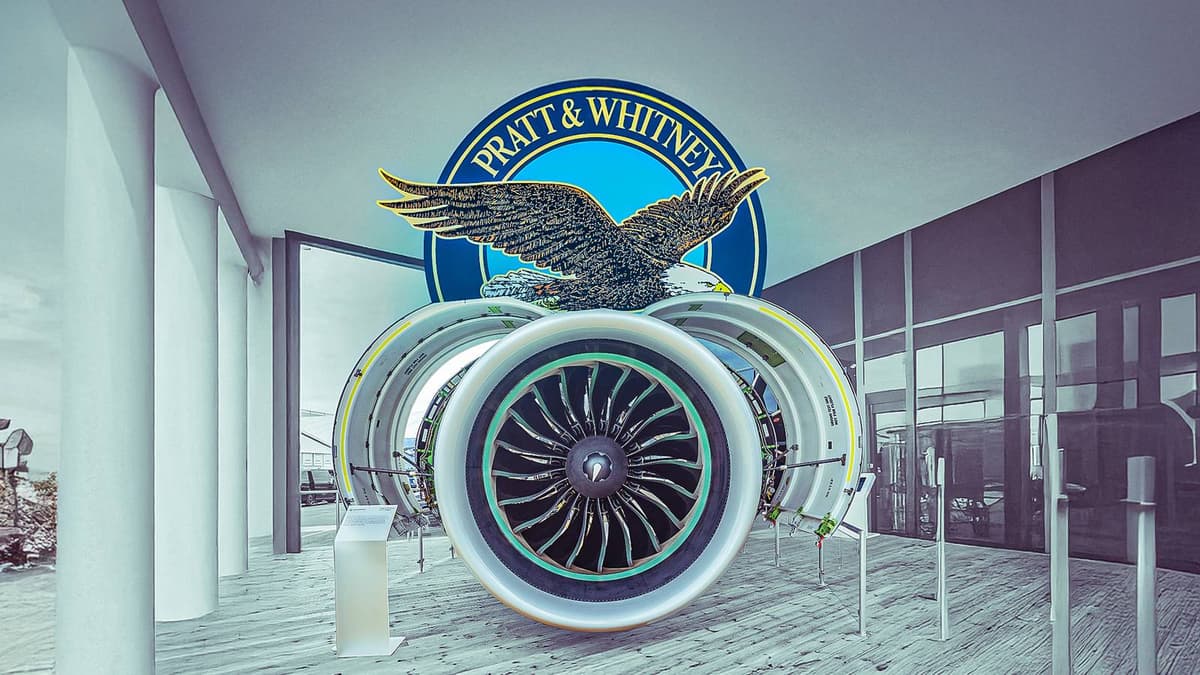
The Striking Differences Between Rolls-Royce & Pratt & Whitney Engines
•March 3, 2026
0
Why It Matters
The architectural split determines fuel burn, noise compliance and market positioning, directly influencing airline operating costs and fleet decisions. As narrow‑body traffic grows, Pratt & Whitney’s GTF gains share, while Rolls‑Royce’s UltraFan could reshape competition.
Key Takeaways
- •Rolls‑Royce uses three‑spool architecture for long‑haul efficiency.
- •Pratt & Whitney geared turbofan offers high bypass, low noise.
- •PW4098 remains most powerful engine; GE90 leads overall.
- •Rolls‑Royce UltraFan targets narrow‑body market with hybrid tech.
Pulse Analysis
Engine architecture is more than a mechanical curiosity; it drives the economics of airline operations. Rolls‑Royce’s three‑spool Trent line lets each compressor and turbine run near its optimal speed, trimming fuel consumption and emissions on intercontinental routes. In contrast, Pratt & Whitney’s geared turbofan separates fan and turbine speeds via a gearbox, delivering a larger bypass ratio that reduces specific fuel consumption and cabin noise, making it ideal for the growing fleet of single‑aisle jets.
The market landscape reflects these technical choices. While General Electric and its CFM International joint venture still command the largest share of commercial engines, Pratt & Whitney has surged to 35 %—just behind CFM’s 39 %—as airlines prioritize fuel‑efficient narrow‑bodies for point‑to‑point travel. Rolls‑Royce, with a 12 % share, remains focused on wide‑body platforms, but the shift away from hub‑to‑hub routes pressures it to broaden its portfolio. The PW4098’s 99,040 lb thrust showcases the upper limits of current turbofan power, yet the GE90 still outpaces it, underscoring the competitive edge of high‑thrust designs for legacy wide‑bodies.
Future developments could redraw the competitive map. Rolls‑Royce’s UltraFan promises a geared triple‑spool engine that blends the efficiency of a high‑bypass fan with electric motor assistance for taxiing and surge control, targeting both narrow‑ and wide‑body markets. If the hybrid‑electric concept delivers the projected 5 % thrust boost and operational flexibility, it may erode Pratt & Whitney’s GTF dominance in the narrow‑body segment. Meanwhile, Pratt & Whitney continues refining its GTF line, focusing on durability and weight reductions to maintain its noise‑quiet advantage. These parallel innovation tracks suggest a decade of rapid evolution in engine technology, with airlines poised to reap lower operating costs and regulators rewarding greener, quieter fleets.
The Striking Differences Between Rolls-Royce & Pratt & Whitney Engines
0
Comments
Want to join the conversation?
Loading comments...