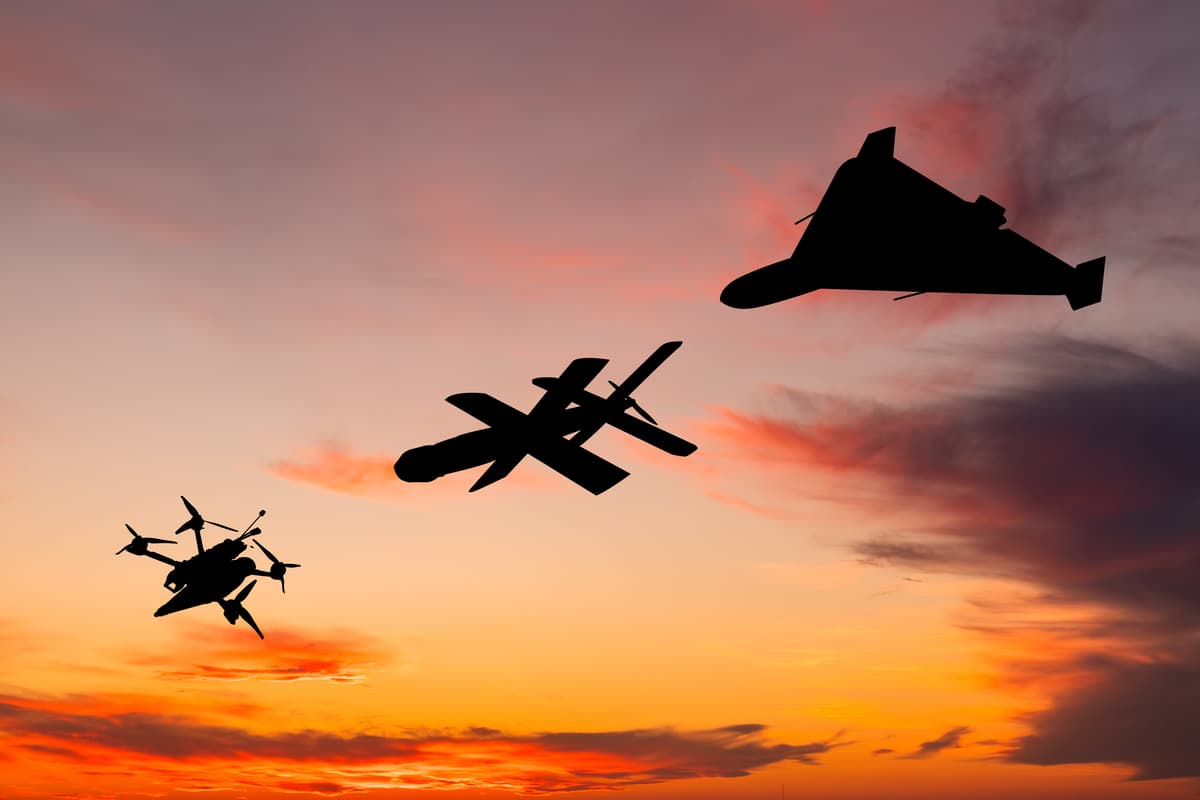
These Tiny Hunter-Killers Ram Shahed Drones Right From the Sky. America Wants Them, Too.
Why It Matters
AI‑enabled interceptor drones give militaries a cheap, rapid‑response tool to neutralize swarm attacks, reshaping counter‑drone strategy and reducing risk to personnel.
Key Takeaways
- •Bumblebee drones use AI to autonomously ram enemy Shahed UAVs
- •Ukraine's Bumblebee and US Bumblebee V2 share same low‑cost design
- •Pentagon's JIATF‑401 plans to field Bumblebee V2 for rapid counter‑drone
- •AI guidance still relies on human input for target acquisition
- •Experts warn AI drones complement, not replace, human pilots
Pulse Analysis
AI‑assisted interceptor drones like the Bumblebee series represent a pragmatic evolution in counter‑drone warfare. By mounting computer‑vision algorithms on a four‑rotor platform, the drones can identify, track, and execute a kinetic "hard kill" on hostile UAVs with minimal human oversight. The AI component primarily handles visual environment management, while operators launch the system and approve the final strike, ensuring a human‑in‑the‑loop safeguard against misidentification. This hybrid approach balances autonomy with accountability, delivering a low‑cost solution—often under a few thousand dollars per unit—far cheaper than traditional missile‑based defenses.
The U.S. Department of Defense’s decision to procure the Bumblebee V2 underscores a strategic pivot toward scalable, rapidly fielded counter‑drone assets. Produced by Perennial Autonomy, the V2 mirrors Ukraine’s battlefield‑tested design but adds a dual‑purpose ISR capability, allowing troops to gather intelligence while standing ready to intercept threats. JIATF‑401’s agreement, announced in February, signals an intent to equip forward units with a versatile platform that can be deployed at the tactical edge without extensive logistics. By standardizing a cheap, off‑the‑shelf solution, the Pentagon aims to close the capability gap against swarming drone attacks that have plagued recent conflicts.
Beyond immediate tactical benefits, the rise of AI‑driven interceptors reshapes broader military doctrine. Concepts such as the Forward Line of Robots (FLOR) and Forward Line of Sensors (FLOS) suggest unmanned systems will increasingly operate ahead of human forces, extending situational awareness and engagement ranges. However, experts caution that AI models are only as robust as the data they receive, and adversaries will develop counter‑AI tactics to spoof or overwhelm these systems. Maintaining a human‑in‑the‑loop, continuous model refinement, and integrating electronic‑warfare resilience will be essential to preserve effectiveness. As nations adopt similar technologies, the battlefield will become a contest of algorithmic agility as much as firepower, driving a new arms race in autonomous defense.
These Tiny Hunter-Killers Ram Shahed Drones Right From the Sky. America Wants Them, Too.
Comments
Want to join the conversation?
Loading comments...