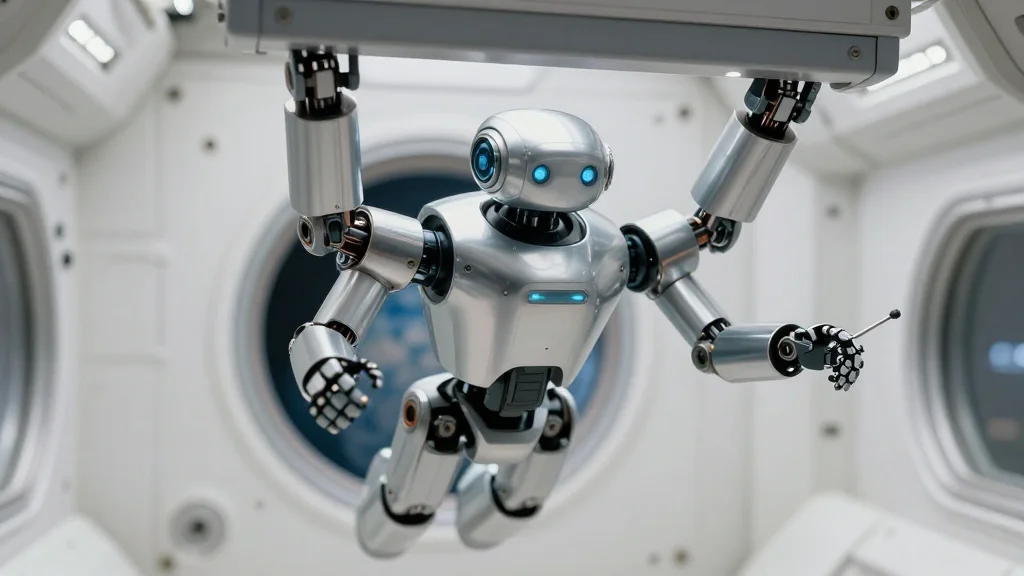
This Zurich Startup Built a Four-Armed Robot for Space Stations. Each Astronaut Hour It Saves Is Worth $140,000.
Why It Matters
By automating costly routine tasks, Helios could dramatically reduce operating expenses for current and future space stations, accelerating the economics of a commercial orbital economy.
Key Takeaways
- •Helios uses four arms to anchor and manipulate in microgravity.
- •Maintenance consumes 35% of ISS crew time, costing $140K per hour.
- •Tendon‑driven arms reduce weight while preserving range of motion.
- •Market expands as Starship lowers launch costs and more stations emerge.
Pulse Analysis
Helios represents a paradigm shift in space robotics, moving away from Earth‑centric humanoid designs toward form factors that exploit the unique physics of orbit. By anchoring with two arms and handling cargo with the other two, the robot achieves simultaneous stability and manipulation—something a traditional two‑arm robot cannot do in zero‑gravity. The tendon‑driven architecture places motors near the shoulders, routing force through cables to keep each limb lightweight, while the rolling‑contact elbow joint ensures smooth, controlled motions that prevent destabilization of delicate payloads.
The economic incentive behind Helios is compelling. Maintenance and logistics tasks consume about a third of astronaut time on the International Space Station, translating to roughly $140,000 per hour in labor costs. A single cargo‑unloading operation can stretch to 50 hours, meaning a robot that can perform the same work could save upwards of $7 million per mission. As SpaceX’s Starship and other heavy‑lift vehicles lower launch expenses, the number of orbital platforms—commercial stations, research habitats, and eventually lunar gateways—will rise, multiplying the demand for cost‑effective, autonomous servicing solutions.
While Orbit Robotics has yet to disclose pricing or production schedules, the company’s success hinges on securing contracts with agencies such as NASA, ESA, or commercial operators like Axiom Space. The broader robotics market is trending toward specialized, environment‑specific machines, and Helios fits that niche perfectly. If the robot can demonstrate reliability and integration with existing station infrastructure, it could become a cornerstone technology for the emerging space‑based economy, driving down crew costs and enabling more frequent, affordable access to orbit.
This Zurich startup built a four-armed robot for space stations. Each astronaut hour it saves is worth $140,000.
Comments
Want to join the conversation?
Loading comments...