Why It Matters
The rapid contract shift and launch underscore SpaceX’s agility in meeting defense needs, reinforcing its dominance in the commercial launch market. Its expanding launch cadence and reuse milestones pressure rivals and shape the future of U.S. space logistics.
Key Takeaways
- •SpaceX launched 25 Starlink satellites from Vandenberg.
- •Falcon 9 first stage completed 8th flight, landed on Pacific drone ship.
- •GPS III satellite launched from Cape Canaveral; first stage 7th flight.
- •Drone ship “Just read the instructions” reassigned for Starship, ending Falcon 9 use.
- •SpaceX leads 2026 launch race with 48 missions, outpacing China.
Pulse Analysis
SpaceX’s back‑to‑back Falcon 9 missions illustrate how rapid reusability is reshaping the orbital launch business. By recycling boosters for a seventh and eighth flight, the company cuts per‑launch costs while maintaining a high cadence that fuels both commercial constellations like Starlink and critical national security payloads. The dual launches also highlight the growing reliability of fairing reuse, with the two payload fairings each completing multiple flights, further driving down expenses for satellite operators.
The Department of the Space Force’s decision to move a GPS III launch from United Launch Alliance to SpaceX after a nozzle issue with ULA’s Vulcan underscores the strategic advantage of flexible, on‑demand launch services. The contract award‑to‑launch timeline set a new record for the agency, showcasing SpaceX’s ability to mobilize resources quickly—a factor that increasingly influences defense procurement. This shift not only dents ULA’s market share but also signals to other government customers that launch speed and cost efficiency are becoming decisive criteria.
Globally, SpaceX’s 48 launches in 2026 dwarf the combined output of China, Rocket Lab, and Russia, cementing its position at the apex of the launch race. The repurposing of the Atlantic drone ship for Starship operations signals the next phase of the company’s focus on heavy‑lift, interplanetary missions, while phasing out its role in Falcon 9 recoveries. As Starship matures, the industry can expect a new competitive dynamic, with legacy providers scrambling to match SpaceX’s launch frequency, cost structure, and integrated services.
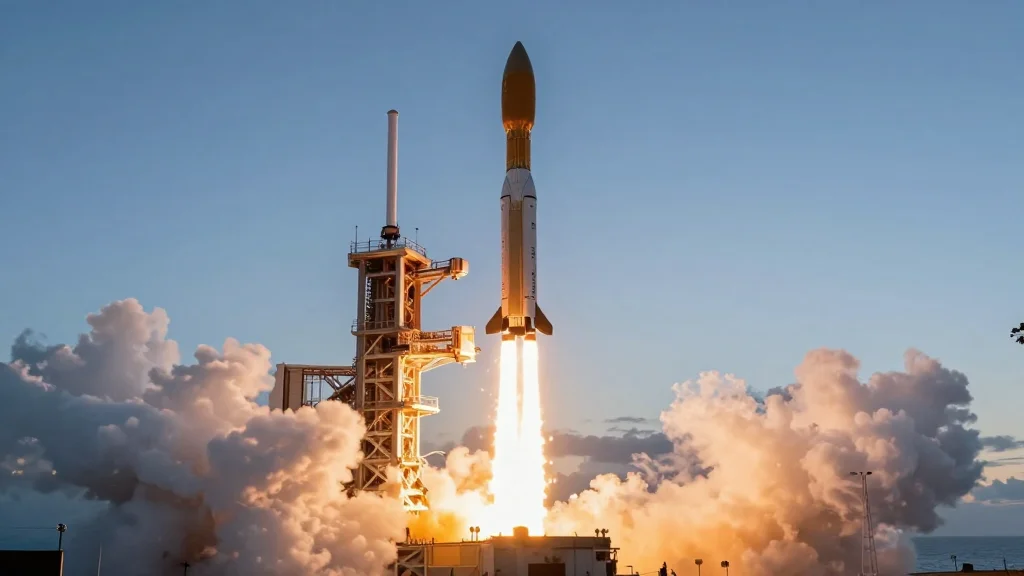
Two launches by SpaceX
Comments
Want to join the conversation?
Loading comments...